
From underwater worms to worldwide impact
Kersey Sturdivant Ph.D. ’11 invented the “Wormcam” while studying at W&M's Batten School & VIMS, launching a global environmental consulting career
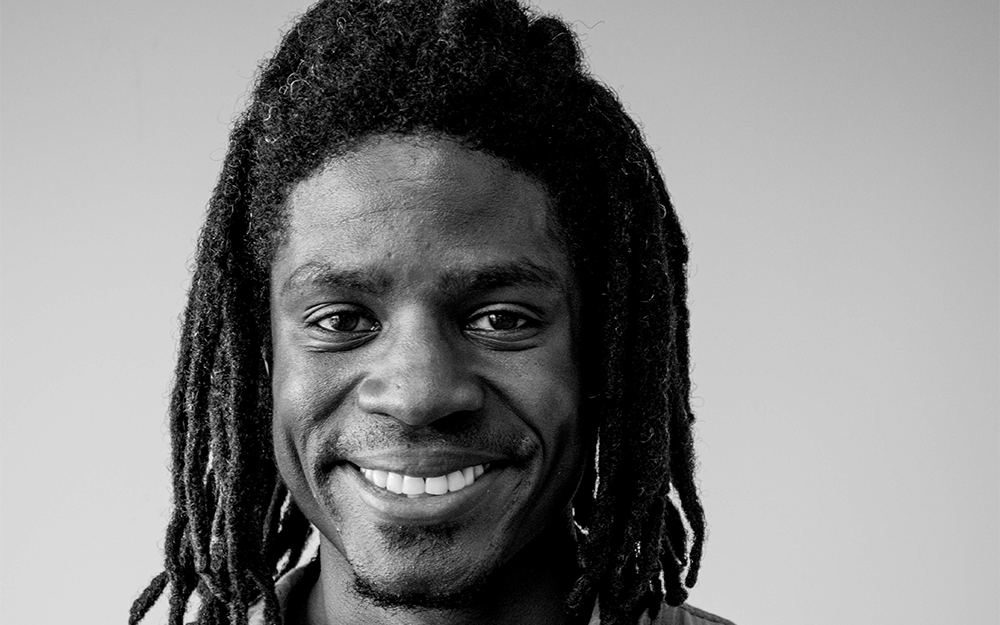 When Kersey Sturdivant arrived at William & Mary’s Batten School & VIMS, he was already certain of one thing: it was going to be about worms.
“I grew up landlocked in North Carolina,” he said, “so when I developed a passion for science and the environment, I very much thought my interests would be terrestrial.” However, after not enjoying an ecology camp where insects were especially prevalent, Sturdivant pivoted to marine science and enrolled at the University of Maryland.
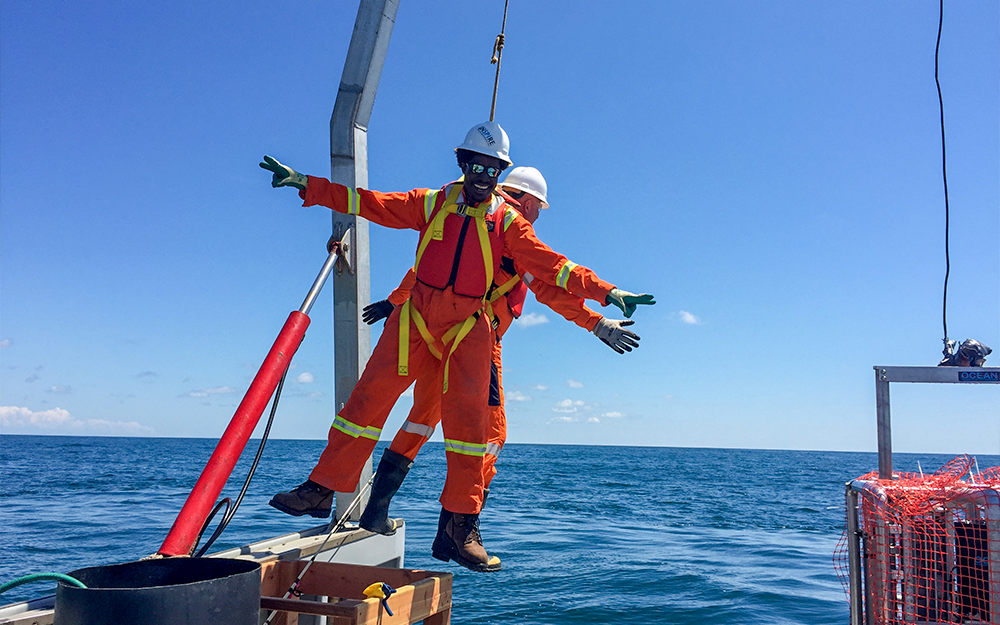 Sturdivant rigorously pursued a range of undergraduate internships, seeking exposure to every realm of marine science, from sea turtles and coral reefs to what became his eventual passion: marine worms.
“That’s how I ended up here; it was the worms that drew me in,” Sturdivant said of choosing the Batten School of Coastal & Marine Sciences & VIMS. Under the mentorship of professors Robert Diaz and Rochelle Seitz M.A. ’91, Ph.D. ’96, he studied how human activity affects the health and function of soft-bottom marine systems.
Sturdivant was specifically focused on how hypoxia affected the function of infauna, aquatic organisms that live within the sediment of the sea floor. Yet it was not just a research question that would shape his future — it was a device.
“My most memorable academic moment was when we finally got the Wormcam to work,” he said. The invention, an underwater imaging system designed to observe organisms in situ within benthic sediments, required persistence to finally achieve full functionality. In fact, after nearly two years, Diaz was ready to deprioritize the project, “but I just felt like it could work,” Sturdivant said.
The breakthrough finally came in the lab. “I remember thinking about the issues we were having, and finally realizing, ‘Oh, what if we put this groove here and add in an O-ring,’ and that was the answer all along.”
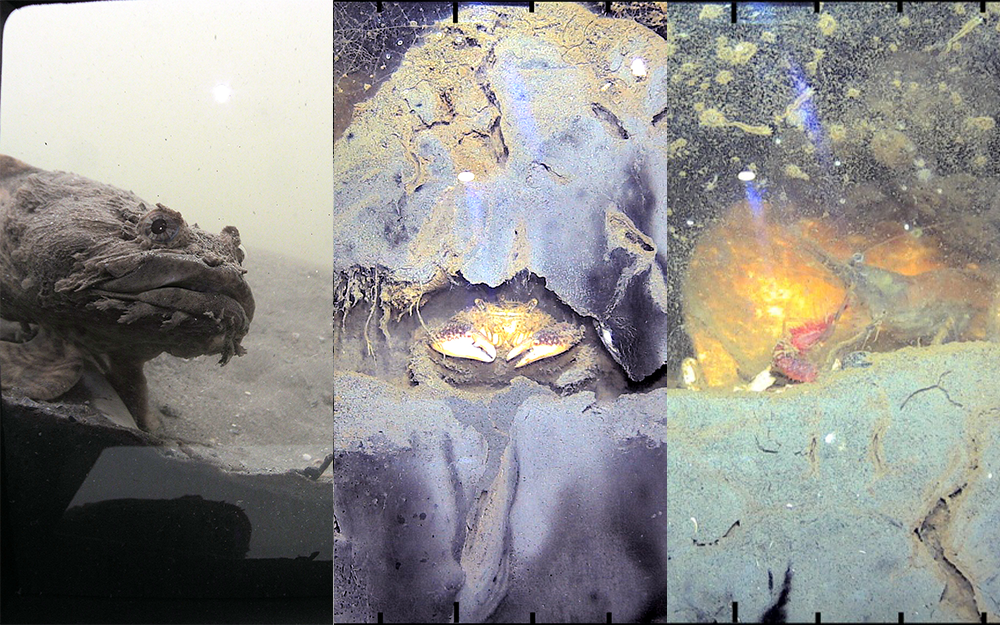 The solution successfully transformed a metal prototype into a functional plastic version that could withstand prolonged deployments of multiple months in the mud, saturated in a corrosive environment (seawater).
For Sturdivant, the Wormcam did more than collect data; it reshaped his scientific worldview. “It kind of made a name for me, but more than that it opened my mind to the value and the power of visual observation of cryptic systems,” he said. Observing organisms directly in their natural environment often challenged assumptions drawn from literature or lab experiments. That lesson would become foundational for his career.
After graduation, a National Oceanic and Atmospheric Administration fellowship became a full-time equivalent position in San Francisco, but Sturdivant was quickly drawn back to academia. He transitioned to Duke University, where he held a creatively structured faculty role that allowed him to build a lab and secure grants without immediately starting the tenure clock. During this period, Sturdivant began contracting applied science work for private clients, an approach he had seen modeled at the Batten School & VIMS.
That entrepreneurial spark eventually led to a pivotal decision. Rather than accept a traditional tenure-track path, Sturdivant joined two seasoned consultants to form what became INSPIRE Environmental. While the move carried uncertainty, he saw opportunity in applying rigorous science to real-world environmental challenges. And the Wormcam became central to that work.
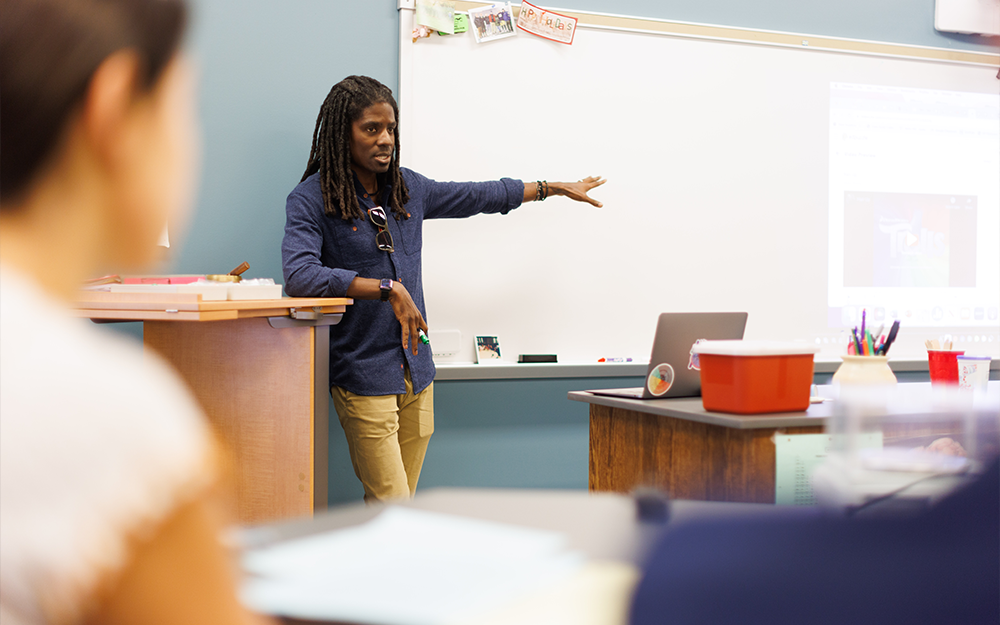
After getting their start in dredge material management and seafood waste monitoring, the company played a critical role in offshore wind development in the United States, including Block Island Wind Farm, the nation’s first offshore wind project. Using Wormcam technology, Sturdivant and his team helped establish environmental monitoring standards that shaped permitting and best practices nationwide. In 2022, the firm was acquired by a U.K.-based offshore wind services company, reflecting its leadership in the global market.
“It’s kind of surreal,” Sturdivant said of building a global career rooted in benthic worms. Now a Vice President of Data Acquisition, his path was anything but predictable. “My mother often says that it's hard to believe a career studying worms can take you so far. And that's how I feel when I look around at everything I’m doing now.”
Today, Sturdivant oversees large-scale field operations and business development across international markets, and he continues to engage in academic endeavors. Though his role has evolved, his identity has not changed. When asked if he identified more as being a scientist, inventor, academic or entrepreneur, he said, “I’m definitely a mix of all of them, but at my core, I’m a scientist.”
Sturdivant credits the Batten School & VIMS as a cornerstone to his success. “It was so instrumental in my individual maturation as a scientist,” he reflected. “It’s such a solid foundation that even as everything is piled on top, it’s just rock solid.”
Remaining deeply connected to the community, Sturdivant returns to campus when he can, visits Diaz annually and stays close with former classmates. He regularly attends campus events and has met with Dean & Director Derek Aday to explore ways he might support entrepreneurial thinking among students, “either within the structure of the pedagogy or just through encouraging students to pursue innovative careers.”
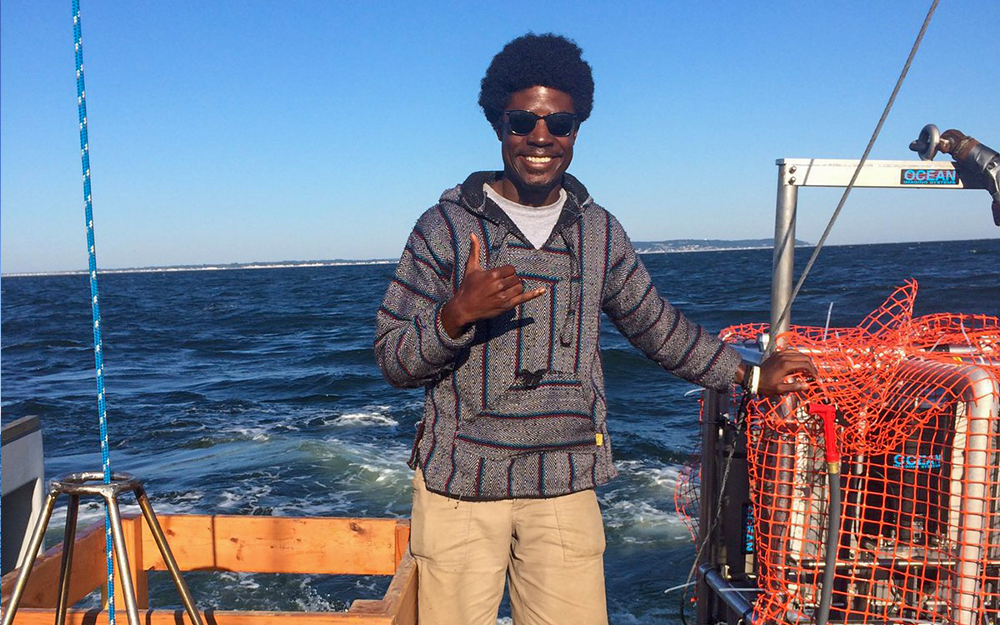 For current students, Sturdivant’s primary advice is to avoid paralyzing comparisons to advisors, older lab mates, or cohort peers. “You are not behind. If it feels difficult, that’s because it’s supposed to be difficult, so you’re right where you should be. And no matter what you do, keep perspective. Don’t lose yourself in the long journey of a career. It’s important you have a life outside of science.”
And for those considering unconventional paths?
“Almost every step of my journey, there have been doubters and detractors,” he said, “so be ready for that. But be honest with yourself and don’t stay in a place where you’re not happy or unfulfilled. Don’t be afraid to take calculated risks. Pursue your passion, because if you do so earnestly and with an open mind, it really can take you places far outside of what your initial conception might've been.”
Sturdivant gives that advice with the confidence of someone who knows firsthand that the path from underwater worms to worldwide impact begins with simply refusing to give up on risky ideas that just might work.
This alumni profile was published in April, 2026.