

Can Virginia stop the blue catfish? New research shows the Chesapeake Bay’s top invader is hard to control
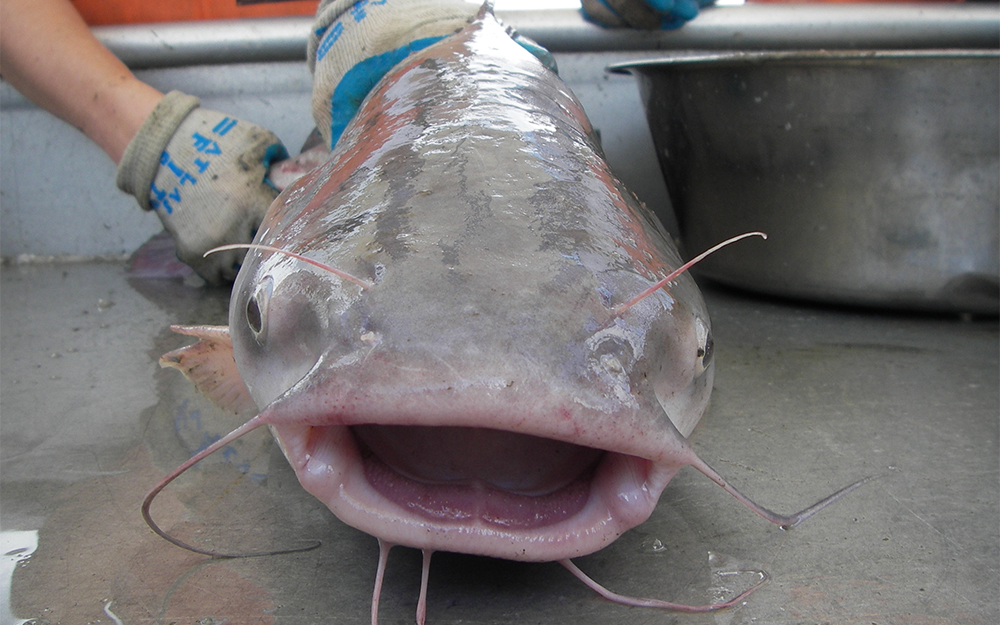 For decades, the Chesapeake Bay’s rivers and tributaries have been home to a troublesome guest whose presence continues to ripple through the ecosystem. The blue catfish — first introduced in the 1970s for recreational fishing — has since become an ecologically disruptive force in Virginia waters. In response, scientists at William & Mary's Batten School & VIMS are making critical discoveries about blue catfish biology, impact and commercial market potential, and playing a key role in advising how the commonwealth can address the challenge.
A growing ecological toll in the Bay
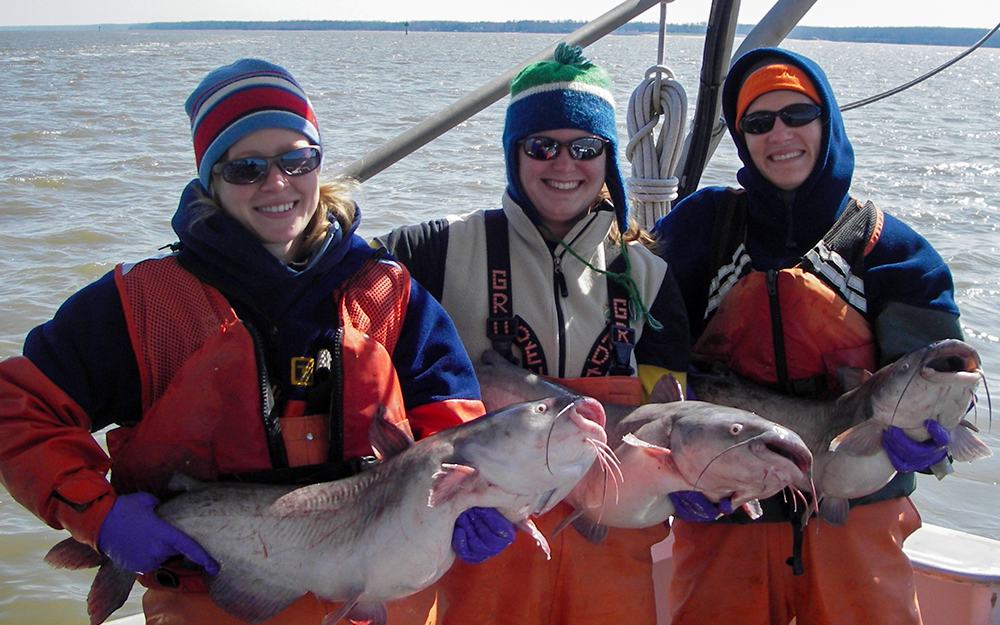
Through the long-running juvenile finfish trawl survey, Batten School of Coastal & Marine Sciences & VIMS Professor Mary Fabrizio, along with her students and colleagues, has documented both the spread of blue catfish and the corresponding decline of native species. “As the blue catfish population started to increase in our tributaries, we saw a decline in the native white catfish and white perch, which is likely due to predation or competition for resources,” she said. “And some of our colleagues in Maryland have evidence suggesting the blue catfish may be impacting striped bass, likely predating on the eggs and the juveniles.”
According to Fabrizio, another icon of the Chesapeake Bay may also be threatened: “The other effect is that blue catfish, especially the medium sized fish, are preying on blue crabs. And because there are so many medium sized blue catfish, that translates into a lot of removals. They’re eating a lot of blue crabs.”
To investigate that interaction, Fabrizio recently led a two-year diet study, published in Marine and Coastal Fisheries, which quantified blue catfish predation on blue crabs. “We worked with a commercial waterman who was setting gillnets out in the James River. He would bring back the catch, and we would examine the stomach contents,” she said. “We looked at predation year-round, which hadn’t been done before.”
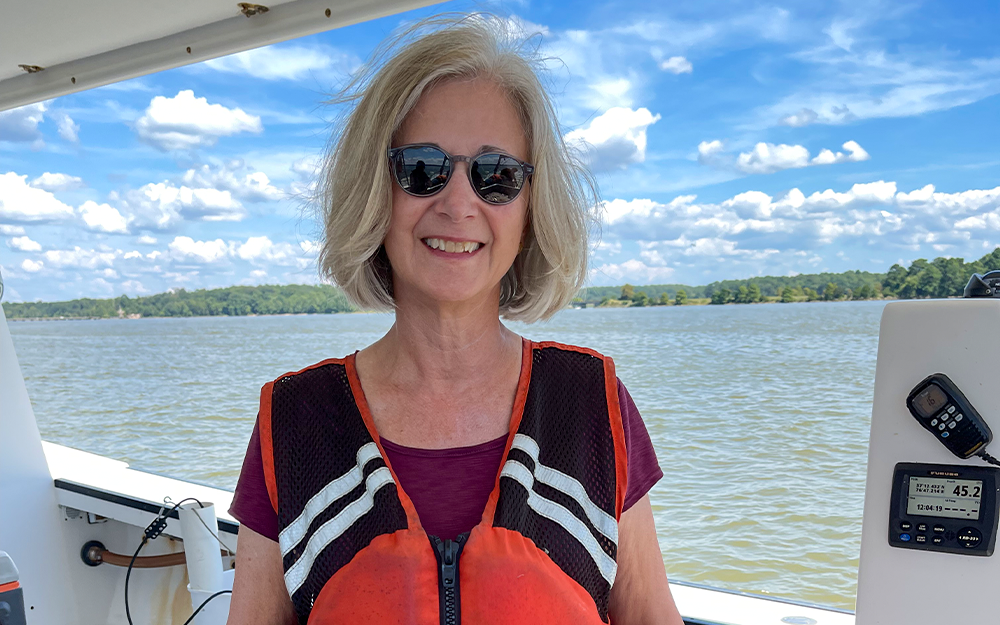 The results were sobering: “It turns out blue catfish are eating the same things in winter as in spring and fall, so there’s blue crab predation happening year-round,” said Fabrizio. Stomach content analysis also showed that blue catfish are specifically targeting juvenile crabs. “Older, larger crabs may be too feisty and fight back, or perhaps they’re faster and able to escape. Either way,” she said, “blue catfish are eating the juvenile crabs that Virginia counts on to sustain the future blue crab population.”
Helping Virginia respond to — and eat — blue catfish
The Virginia Institute of Marine Science serves as a non-partisan advisor to the commonwealth, with a statutory mandate to provide unbiased data to the lawmakers and regulators who ultimately determine policy. As such, several Batten School & VIMS researchers are involved in a variety of collaborative initiatives developing innovative solutions to the blue catfish issue.
One key contributor to this important work is Marine Business Specialist Shelby White Ph.D. ’23, who led the Batten School & VIMS’ participation in the Virginia Department of Agriculture and Consumer Services’ (VDACS) Blue Catfish Work Group. “It’s a broad collection of researchers, fishermen, processors and state agencies,” she said. “We’re trying to increase the market, while balancing stakeholder interests and minimizing impacts to the Chesapeake Bay.”
Within the Marine Advisory Program (MAP) at the Batten School & VIMS, White is the primary investigator studying how to expand the commercialization of blue catfish in Virginia. Working with Associate Professor Andrew Scheld, a marine resource economics expert, White has explored commercial watermen's interest in what is currently a relatively small fishery, even though watermen can harvest blue catfish year-round with more flexibility than other commercial species.
In a pair of recent publications, White and Scheld, along with additional co-authors, found that while low dockside prices and limited processors were the biggest barriers for watermen to harvest blue catfish, a majority of consumers have eaten or would be willing to eat blue catfish. They also found that messaging centered around the positive ecological impact of eating the invader significantly increased consumers’ willingness to try it.
 Batten School & VIMS researchers have additionally collaborated with VDACS’s Marine Products Board, which markets the state’s seafood. “We've worked with them a lot on our research and helped create outreach materials,” said White. She compares current marketing for “Virginia wild-caught blue catfish” to the once-disregarded Patagonian toothfish, which was rebranded in the 1970s and is now sold as the high-end “Chilean sea bass.”
“People sometimes think of catfish as the muddy bottom fish, but we've been working hard to transform that perception,” she said. “We need people to eat blue catfish, chefs to prepare it, processors to process it and watermen to catch it. Trying to do all those simultaneously is the trick.”
Recent changes in recreational policy
The Virginia Marine Resources Commission (VMRC) has attempted to get recreational fishermen involved in removing blue catfish from the water by eliminating a size limit on trophy fish of the invasive species. Fabrizio advised the agency, recommending “that they track the size and age of fish that were being captured following these changes,” she said. “That will help them know if the recreational fishery is actually reducing population size, or if they’re just skimming off the top.”
Fabrizio’s research has indicated that preserving a trophy fishery would be incompatible with protecting native species. A 2025 publication in Marine and Coastal Fisheries, coauthored by Fabrizio, confirmed the predicted correlation between a recreational fishery and the predation on blue crabs. “You can't continue a trophy fishery that maintains large fish in the population and not have an effect on native species like blue crabs and others,” she said.
However, Fabrizio also warned of unintended consequences: “Removing a certain number of large fish reduces the competition for resources in the ecosystem,” she explained. “With less competition, the fish that are left can grow faster, reach maturity earlier and lay more eggs — and that includes all the remaining medium sized blue catfish.”
 Complex choices across the Bay system
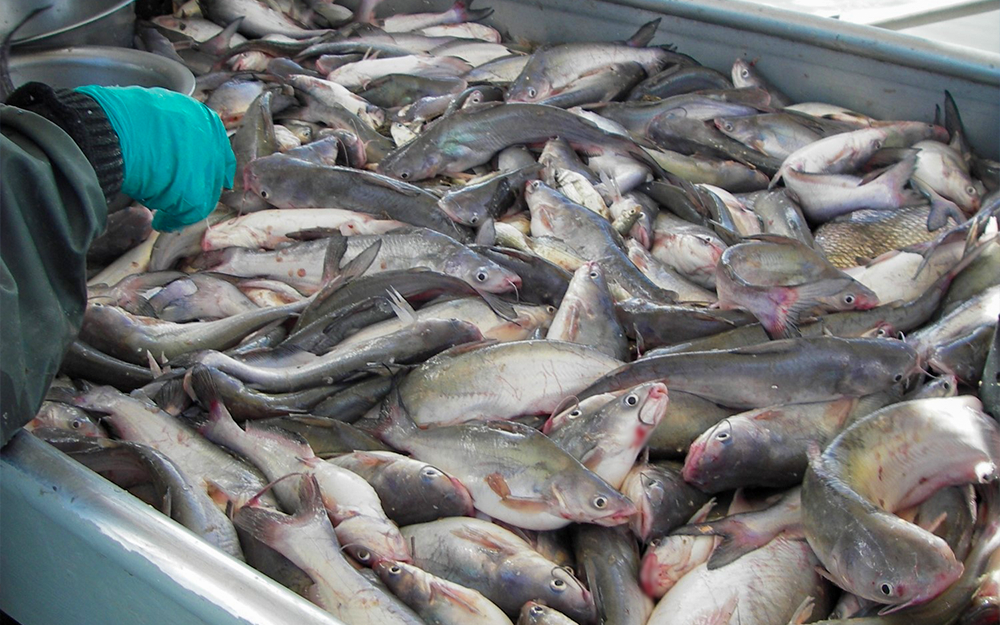
Coordination across the entire Chesapeake watershed remains difficult. “We need to make some progress on getting managers to agree on what we need to do for the Chesapeake Bay as a whole, and that’s been slow,” Fabrizio said. “There are three different goals — control the species, maintain a trophy fishery and build a sustainable commercial fishery — and they’re not always compatible.”
In pursuit of a holistic approach to watershed management of blue catfish, a diverse interstate working group meets twice a year to exchange information and coordinate their efforts. The Sustainable Fisheries Goal Implementation Team, organized by the Chesapeake Bay Program, includes representatives in research, policy, nonprofits, recreational fishing, commercial fishing and the culinary industry from across Virginia, Maryland, Delaware, Pennsylvania and the District of Columbia.
“This is where we report our findings and talk about what we know, what’s new and what we need to consider,” said Fabrizio. “It’s a lot of viewpoints and, because of that, it can be hard to agree on what we want, what we value and what we need to do for our system.”
Blue catfish are here to stay
A confluence of species characteristics has made the blue catfish a nightmare for ecological preservation, including dietary flexibility, a long lifespan and a protective nesting strategy. Energetic modeling work, led by Batten School & VIMS alumnus Vaskar Nepal Ph.D. ’20 and recently published in Ecological Modelling, revealed that the species can thrive — and reproduce — even when food is scarce. Still other studies have indicated an increasing tolerance of brackish conditions, which could allow the species to further expand from freshwater into estuarine habitats. In short, it’s a perfect storm of invasive advantages.
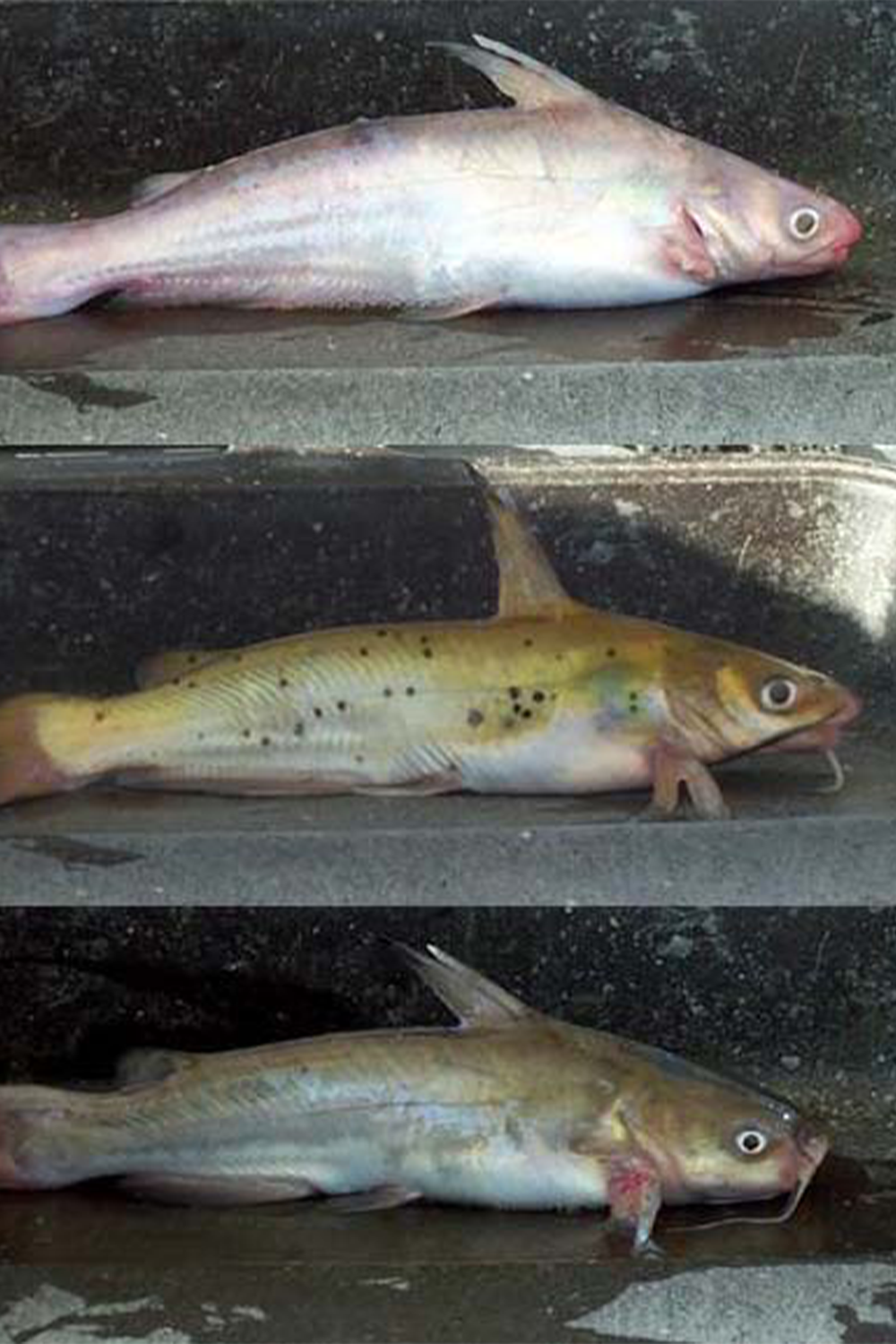 When asked if the blue catfish can ever be eradicated, Fabrizio doesn’t hesitate. “Not possible,” she said. “No question, we cannot get rid of them all. I’m sorry it’s not a happy end to the story, but there’s not enough money, not enough people, not enough time to do what would need to be done. And with climate change, these fish are pushing north; they're already in Delaware Bay.”
Scheld similarly cautions that any expansion of the commercial market will likely be gradual. “The market will probably remain relatively small. Yes, there’s some increase in consumer awareness and that may contribute to seafood dealers expanding sales, perhaps outside of our immediate region, but it will be slow.”
Still, new research continues. White and Scheld are currently working with North Carolina to test blue catfish for contaminants, meet with processors to understand factors influencing their participation and dig deeper on consumer preferences by having individuals sample products and provide feedback. They also have proposals under review to expand that work into Virginia. Meanwhile, Fabrizio is working with fellow professor Grace Chiu to study how predator-prey overlaps have shifted over time in the Bay.
There are also promising experimental solutions, beyond fishing removals, that could still be attempted. Fabrizio identified the “Trojan Y Male” method as a theoretical strategy for reducing the population over time by genetically influencing the fish to produce all-male offspring. However, she remains pragmatic: “You can’t just do one thing; what you want to do is combine multiple methods. It’s gotten out of control for too many years for there to be a single silver bullet, easy answer.”
Asked what success might look like decades from now, Fabrizio paused. “It would look like lowered ecological impacts of this species on our native species, but I’m not optimistic. We’re the cautionary tale,” she admitted. “People who really identify with and value this system need to speak up about what they want. It’s not up to science; we only provide the data. It’s up to the people who live and work and play in this area to decide what they want and if we will try to minimize the impact of blue catfish on the Chesapeake Bay.”