

Mangrove crab outruns its namesake in climate-driven coastal shift
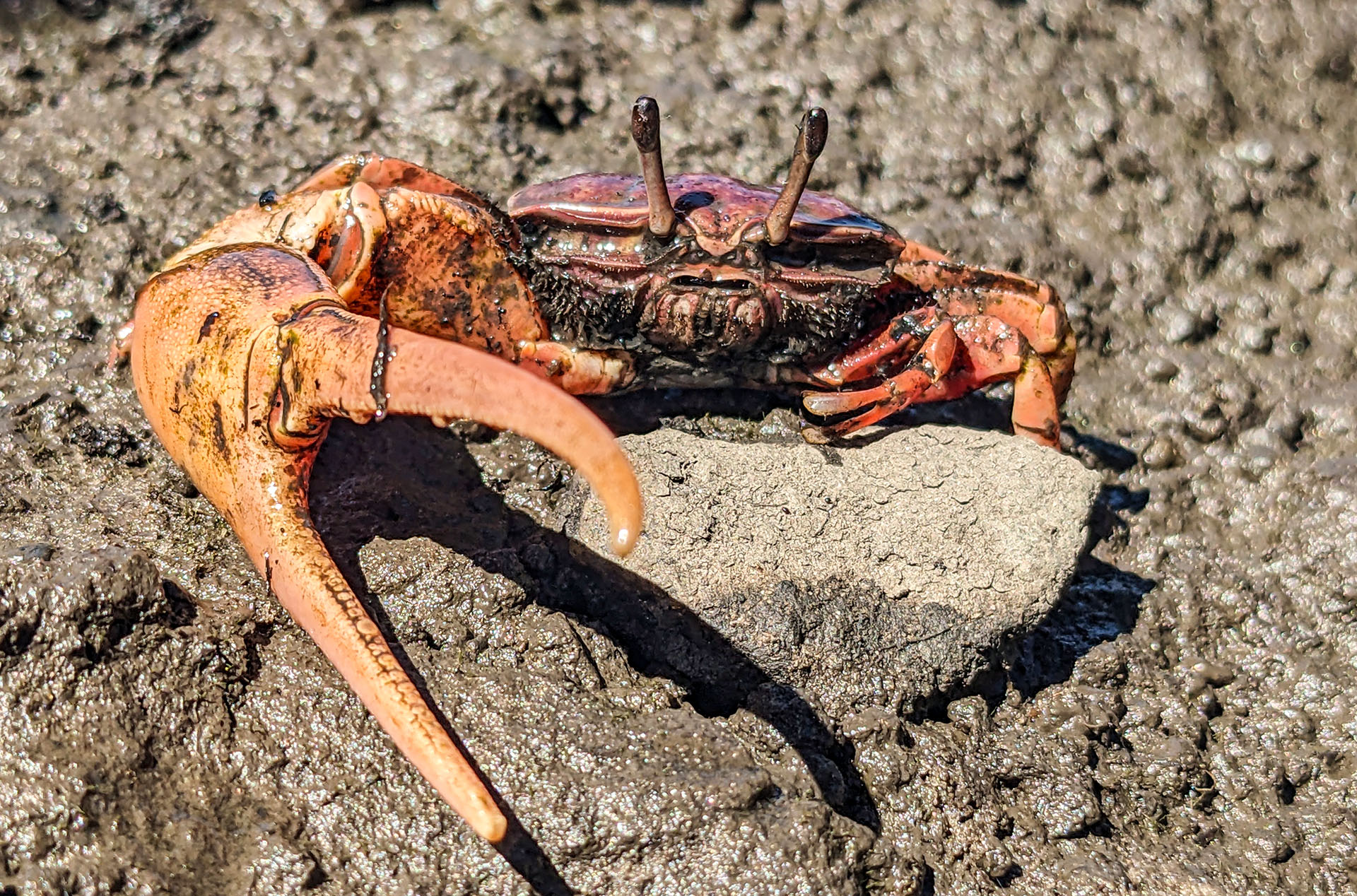 A crab named for mangrove forests is leaving them behind.
New research from William & Mary’s Batten School & VIMS shows the Atlantic mangrove fiddler crab (Leptuca thayeri) is settling into temperate salt marshes along the southeastern U.S. coast. Published in the Journal of Crustacean Biology, the study documents the species as far north as Beaufort, South Carolina, almost 200 miles north of its traditional range in Florida.
“You have the mangrove fiddler crab outrunning the mangroves,” said co-author David S. Johnson, associate professor at the Batten School of Coastal & Marine Sciences & VIMS. “That’s what makes this so fascinating. It’s one of the clearest examples of climate change that you can see.”
Driven by rising ocean temperatures, the expansion reflects a broader global pattern known as “tropicalization,” where warm-water species move poleward into cooler regions. In this case, the crabs are adapting to an entirely new habitat as they migrate north.
“The crabs hatch their eggs on the highest tide of a new moon, and the larvae spend about a month in the water. Currents can carry them north, but the temperature has to be within a threshold that allows them to complete their life cycle and move to land,” said lead author Valerie Acosta-Rodríguez, a laboratory specialist at the Batten School & VIMS. “Because of their flexible diet and behavior, these crabs have been able to move into salt marshes and thrive.”
Sea surface temperatures along the southeastern U.S. coast have risen steadily in recent decades, increasing by more than 1 degree Celsius over the past 20 years. Based on these trends, the researchers say the species could extend its range into North Carolina in about five years.
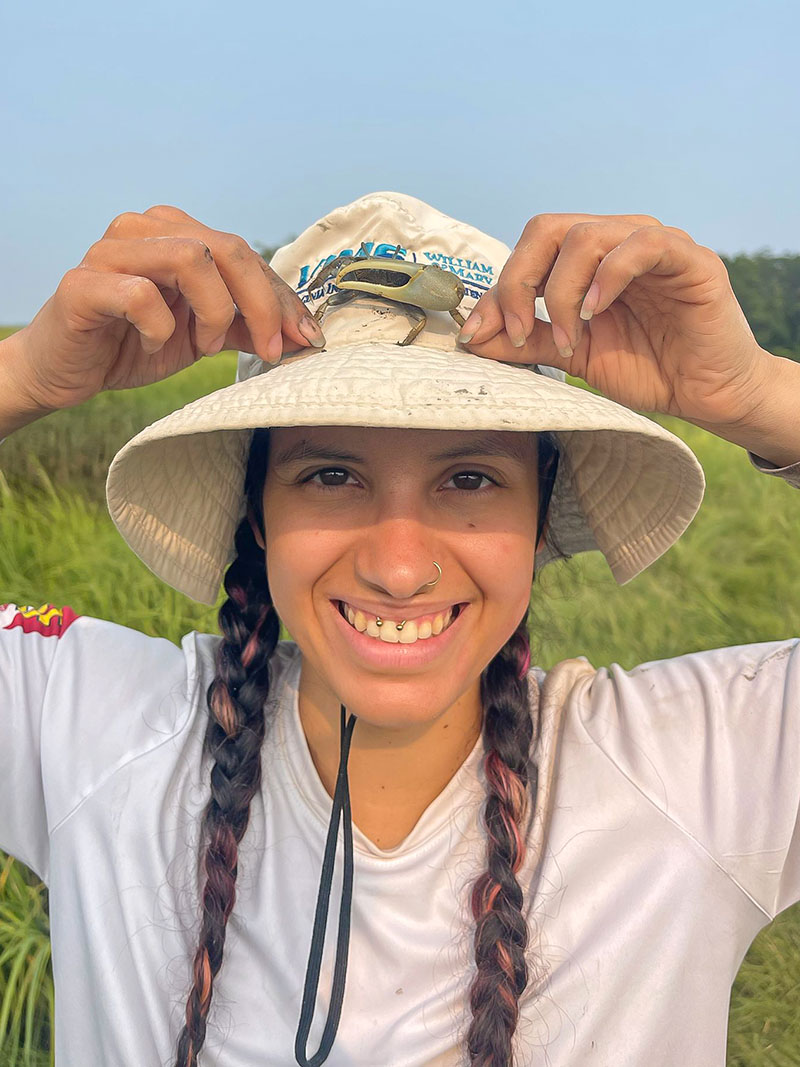 “Mangrove fiddler crabs burrow deeper than other species of fiddler crabs, which may help them survive the winter,” said Acosta-Rodríguez. “We also observed them next to hard structures like docks and around marinas where they have additional shelter.”
The findings build on a growing body of research from Johnson and colleagues at the Batten School & VIMS documenting climate-driven range shifts in marine species. This includes one of the earliest papers documenting the Atlantic marsh fiddler crab as far north as Cape Cod, Massachusetts, another study showing similar range expansion among lady crabs and ongoing research documenting the presence of stone crabs in Virginia waters.
“This is climate change you can hold in your hand,” Johnson said. “It’s happening now in ways people can observe for themselves. In fact, this study would not have been possible without citizen scientists.”
The research relied heavily on observations submitted to iNaturalist, a platform where users upload photos of plants and animals with location information. The scientists combed through the sightings and confirmed them with field surveys.
Acosta-Rodríguez said public participation will continue to play a critical role as researchers monitor how far the species spreads.
“We can’t be everywhere,” she said. “When people take photos and document what they see, it helps us understand how ecosystems are changing.”
Despite its arrival in new areas, the researchers emphasize the species is not invasive but rather a native organism responding to shifting environmental conditions. The team now hopes to better understand what the crabs’ presence means for the ecosystem.
“Fiddler crabs are known as ecosystem engineers. They burrow into sediment, influencing plants and nutrient cycling,” Acosta-Rodríguez said. “They’re going to interact with other species, compete for resources and become part of the food web. This isn’t necessarily a bad thing. In fact, they may benefit the ecosystem.”
For Johnson, the takeaway is simple: “The world around us is changing, and anyone can help record it.”
View the full manuscript of the study.