

Scientists collaborate with aquaculture industry on ocean acidification resiliency
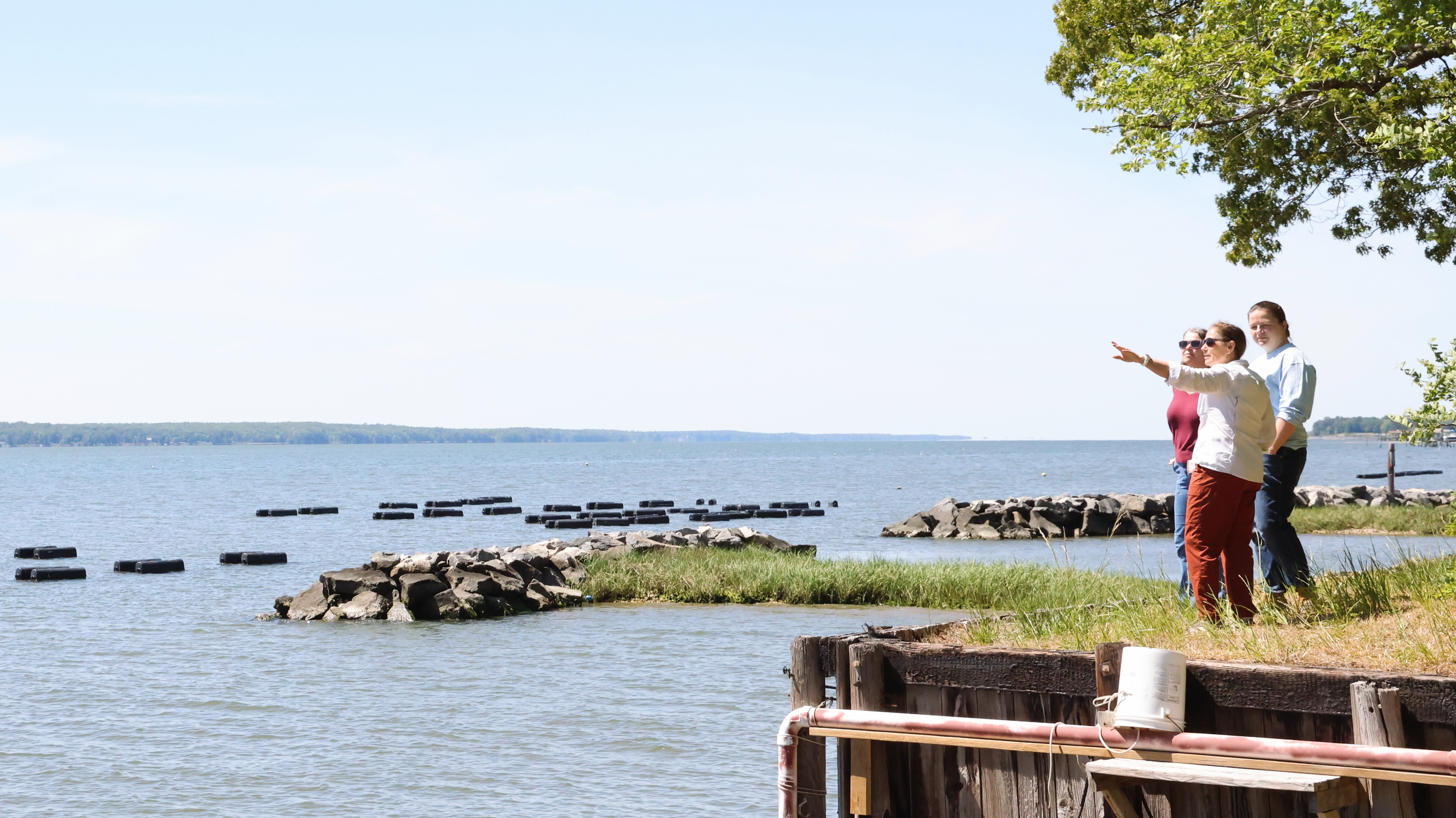
An innovative new research project led by William & Mary’s Batten School & VIMS is bringing together scientists, shellfish farmers and community planners to prepare for emerging environmental challenges related to ocean and coastal acidification (OCA) in the Chesapeake Bay.
“It isn’t something that we’re thinking about on a daily basis, but that doesn’t mean that we shouldn’t begin planning for it now,” said Marcia Berman, co-founder of Cappahosic Oyster Company. “Aquaculture is a vulnerable industry, and more science is always welcome in helping us prepare.”
Supported by a $1.2 million grant from the National Oceanic and Atmospheric Administration’s Ocean Acidification Program, the Regional Vulnerability Assessment (NOAA RVA) study combines traditional coastal and marine science with community research to develop adaptation resources and strategies for the aquaculture industry.
With an advisory committee comprised of Batten School & VIMS experts, members of the region’s shellfish industry and community planners, work is now underway to develop a dynamic, web-based dashboard featuring user-friendly tools that will support businesses and municipalities through complex decision-making processes in the decades ahead.
An invisible shellfish stressor approaches from both land and sea
OCA is the result of both global and local processes. On a global scale, acidification occurs when the ocean absorbs excess carbon dioxide from the atmosphere, reducing the water’s pH and making it more acidic. In coastal regions like the Chesapeake Bay, freshwater runoff introduces nutrients to coastal waters, inducing processes that can lead to further acidification.
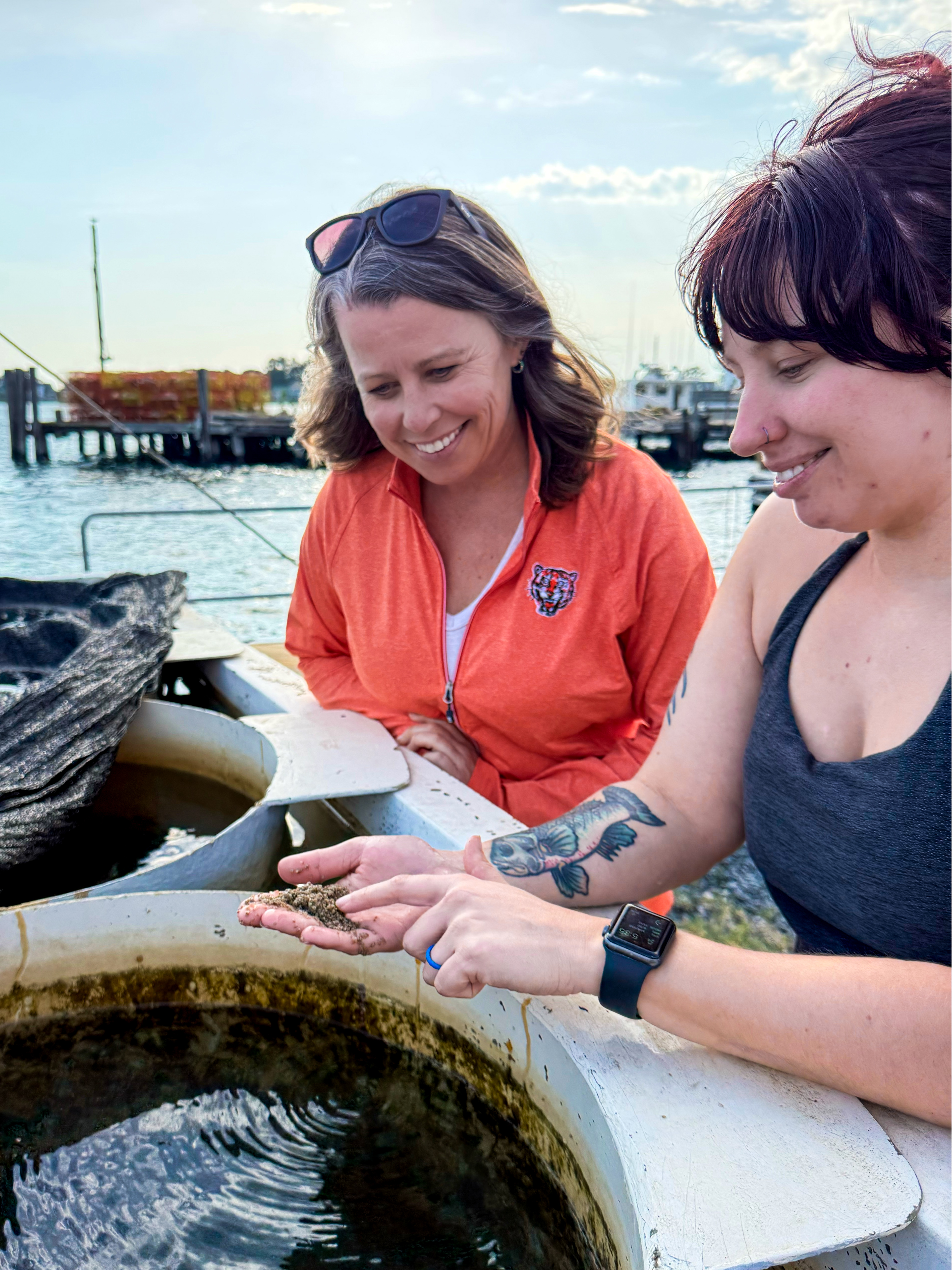
“It's this hidden stressor sneaking up on us and on the shellfish,” said Emily Rivest, an associate professor at the Batten School of Coastal & Marine Sciences & VIMS and the project’s primary investigator (PI). “Animals like oysters and clams that build their shells out of calcium carbonate provide valuable environmental services and are particularly vulnerable to acidification. Understanding the impact of [OCA] on shellfish, and on shellfish farmers, is critical if we want to support the ecosystems and communities that depend on them.”
Rivest considers this research effort an opportunity for the region’s shellfish industry to prepare for, rather than react to, the impacts of acidification like their industry partners out West.
“We’re fortunate in the sense that, unlike in the Pacific Northwest, we’re not seeing catastrophic crashes linked directly to acidification yet,” Rivest said. “But the train is coming down the track. That means we have time to build resilience and think strategically about how communities and industries can adapt.”
For hatchery operators, visualizing real-time water quality data and forecasts can make a big impact on their product and business.
“In our line of work producing oyster larvae and seed, we often need data faster than we can get it, and that leads to stressful moments of reacting to issues in real time,” said Sam Glover, with Oyster Seed Holdings. “With the tools and resources being discussed in this study, we’d have access to the information necessary to take a more proactive approach to our work. It would be a game changer.”
Centering communities in the scientific process
The OCA advisory committee brings community planners, business owners and scientists together to develop tools and resources tailored to communities and their unique needs.
For Adriane Michaelis, an assistant professor at the Batten School & VIMS and a co-investigator on the project, prioritizing human experience is essential.
“We have to make sure our science and the products based on that science resonate with people and communities we’re working with,” Michaelis said. “That means talking directly with farmers and understanding the challenges that business owners are navigating. The goal is to study the industry by working on behalf of the industry, integrating our science and their lived experience into solutions that look familiar and feel useful.”
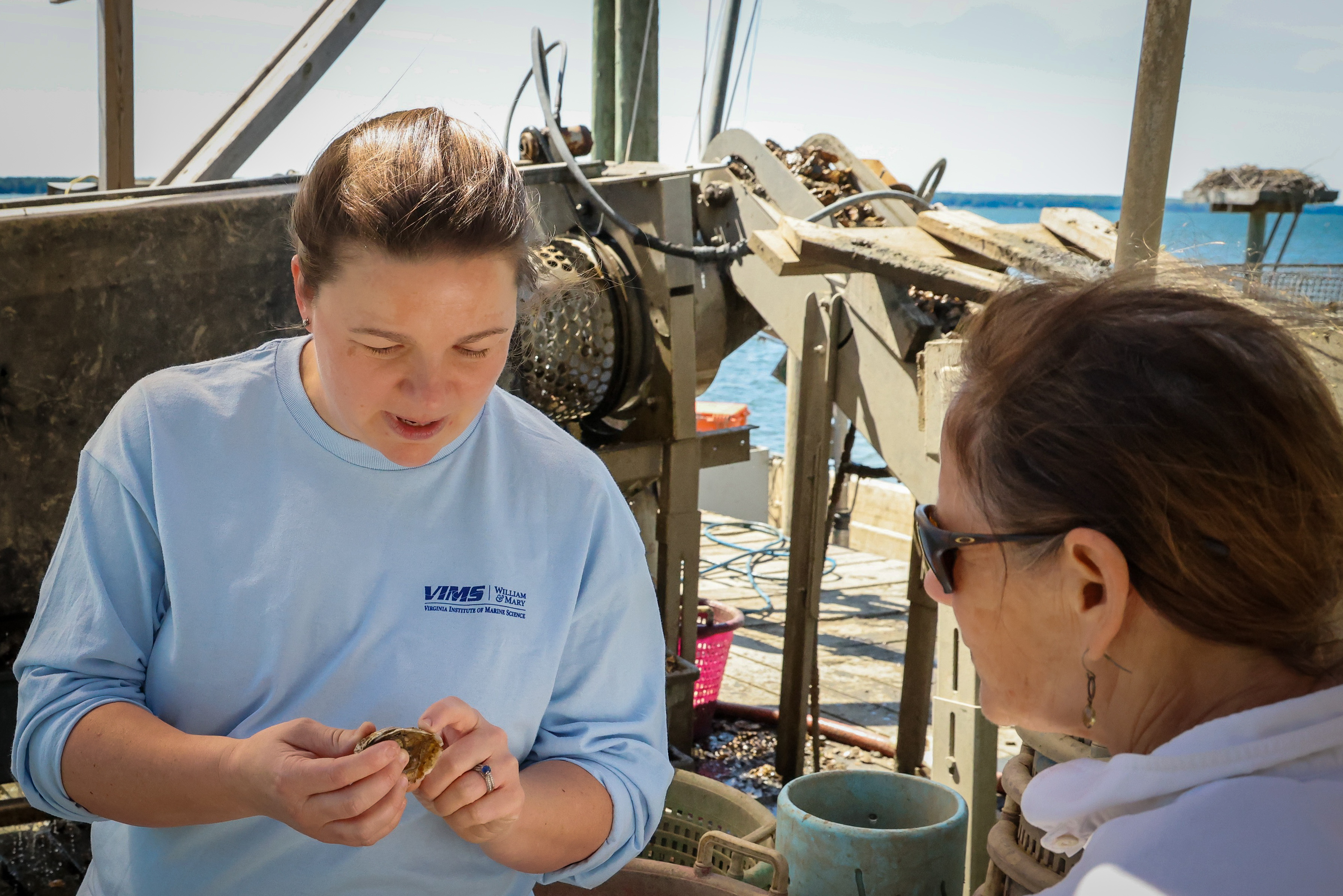 Alongside co-PI David Wrathall, from the University of Oregon, Michaelis will apply a social science lens to existing vulnerability data for communities in all three aquaculture areas to inform vulnerability indicators and produce region-specific adaptation strategies.
“This is really a co-production approach,” Michaelis explained. “We’re bringing information to communities, asking them how they interpret it, and working together to develop strategies that make sense in the real world. We want to take our research, our data, and empower people with it by delivering it to them in a format that’s useful and guided by the needs they have shared with us.”
The work builds on a long history of industry collaboration at the Batten School & VIMS.
“There’s this older mindset that scientists, farmers and communities were at odds with one another, and I just don’t think that’s the case any longer,” said Alex Lambert of Lambert Shellfish. “I hope people see the advisory committee as an example of those groups working together on a better way forward.”
Transforming data into a decision-making dashboard
The community adaptation and resiliency resources that Michaelis and Wrathall are developing will be made available to the public, part of an interactive dashboard that will serve as a central location for decision-making and user-friendly support around shellfish production and aquaculture planning in the Bay.
Batten School & VIMS Professors Marjorie Friedrichs, Pierre St-Laurent and Mark Brush are integrating advisory committee input into modeling tools as part of this effort.
The site will feature an expanded version of VIMS' Chesapeake Bay Environmental Forecast System (CBEFS), a modeling platform that provides real-time and short-term forecasts of a variety of conditions in the Bay. Soon, CBEFS will include visualizations of how acidification conditions may impact shellfish growth in specific locations over time.
The dashboard will also provide access to user-friendly modeling tools like EcoClam and EcoOyster, where farmers can enter their own water quality data and receive instantaneous feedback on oyster and clam survival and growth.
While these resources are focused on the needs of the aquaculture industry, research findings may have wider implications for the management of native shellfish populations that provide direct ecological services to the Chesapeake Bay.
Broad impacts for people and profit, now and into the future
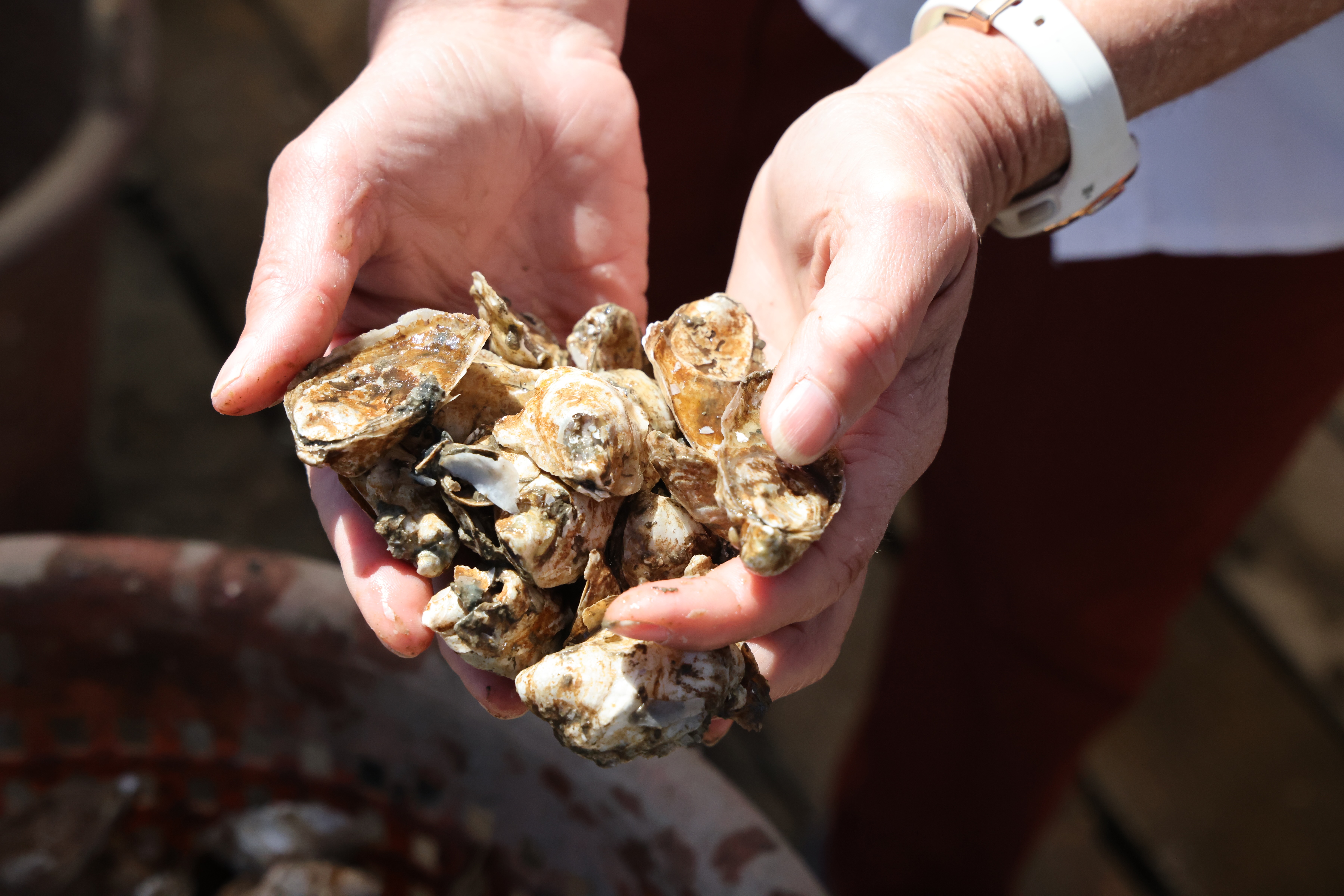 "Each day at the farm can feel like a grind," reflected Lambert from his Eastern Shore oyster farm. "But there's always that moment when I pick my head up and remark at how much progress we’ve made in the last eight years. There's always that daily reminder of why I love this work so much to go along with the grind."
Shellfish aquaculture in the Virginia portion of Chesapeake Bay has grown rapidly in the last decade. As of 2024, Virginia is the top producer of eastern oysters and hard clams in the U.S. with an annual farm-gate value of $81 million.
“Whether you're in the shellfish industry, enjoy seafood, spend time out on the water or simply care about the health of Chesapeake Bay, this issue matters,” Rivest said. “Healthy ecosystems support the economies and communities that define this region.”
The timing of this work aligns with adaptation planning underway in Virginia and the Mid-Atlantic region that the team believes could benefit from their findings. The work may also inform state and regional OCA management activities that prioritize identifying vulnerabilities, monitoring resources and implementing adaptation pathways for the dual benefit of industries and communities.
In combining environmental modeling, biological research and community engagement, the team hopes to provide a roadmap not only for shellfish aquaculture but for how society responds to emerging environmental challenges.
“With this study, we’re learning how acidification impacts our ecosystems as well as our communities,” Rivest said. “This allows science to move beyond understanding a problem. It can start helping people and making their lives better — that’s more satisfying than any paper I could get out of this.”