

Organizational restructure and new hires expand leadership capacity and prepare the Office of Research & Advisory Services for the future
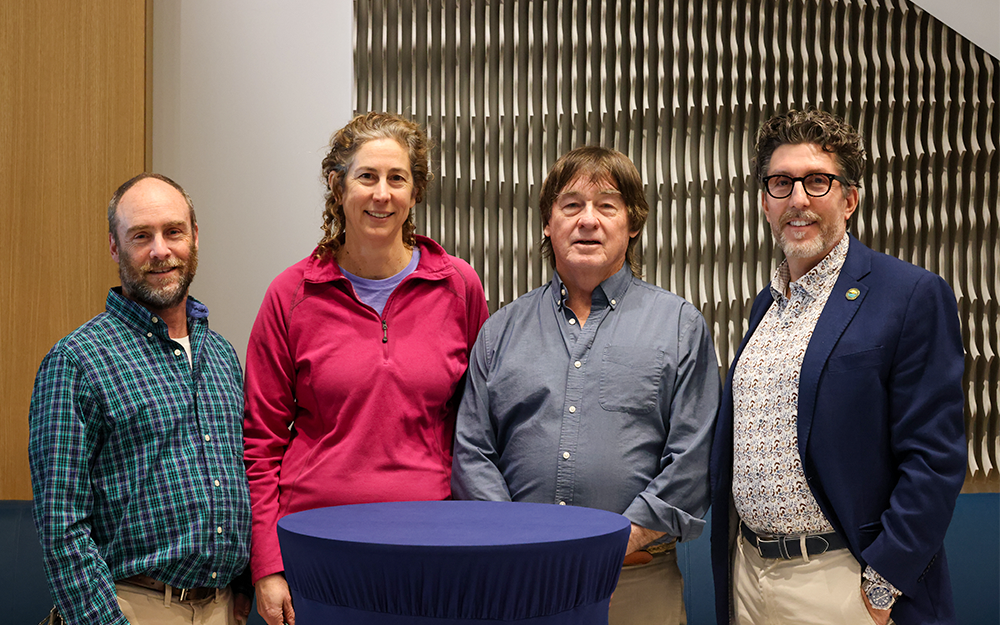 The Office of Research and Advisory Services (ORAS) at William & Mary's Batten School & VIMS is entering a new chapter designed to strengthen both its research efforts and its longstanding advisory mission to the Commonwealth of Virginia.
The Virginia Institute of Marine Science has a statutory mandate to provide unbiased data and nonpartisan advice to the public and to policymakers. The ORAS implements that mandate by supporting research endeavors and connecting experts in coastal and marine sciences to decision-makers across Virginia. Yet in a rapidly evolving research and policy landscape, Derek Aday, dean of the Batten School of Coastal & Marine Sciences and director of VIMS, saw an opportunity to better serve the commonwealth.
“Work in the ORAS underpins strategy and drives outcomes across two of our three institutional mission areas,” Aday said. “As we have nearly doubled research expenditures over the last five years while simultaneously growing and expanding our advisory work, it became clear that we could benefit from additional leadership across these endeavors.”
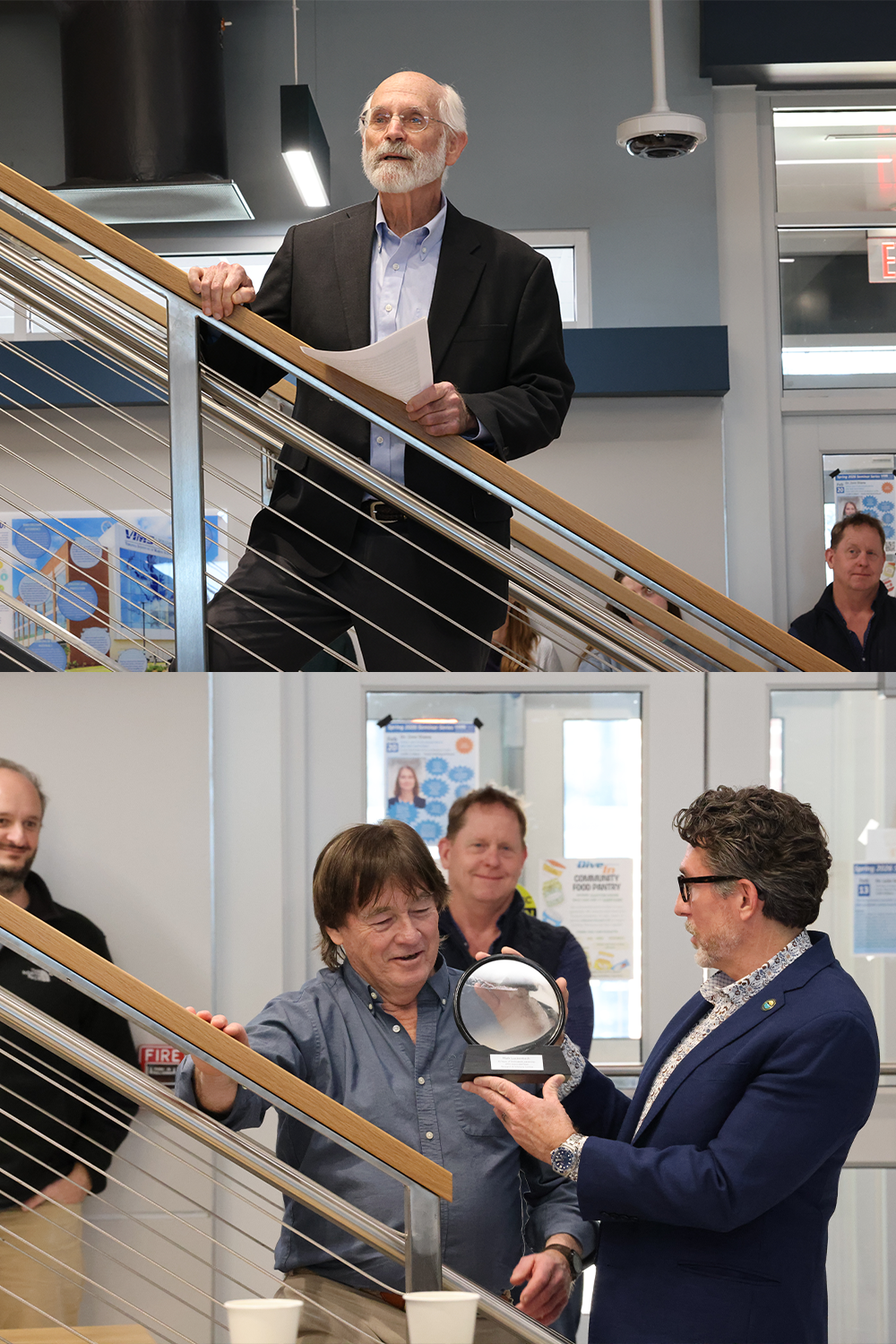 Helping to oversee much of that growth was Mark Luckenbach, who recently retired as associate dean of research and advisory services after more than 13 years. Aday, in collaboration with the Batten School & VIMS Faculty Council, determined the leadership transition could catalyze a strategic shift, one that would foster and expand institutional research while enhancing the ability to respond to advisory needs.
In January, the Batten School & VIMS welcomed Megan La Peyre M.A. '95 as she assumed the role of associate dean of research and advisory services. Then, in February, David Rudders M.S. ’99, Ph.D. ’10 stepped into the role of assistant dean, a newly created position that brings additional oversight to advisory services in order to allow La Peyre to dedicate more time to advancing research.
“The new structure,” said Aday, “empowers the associate dean to work with our scientists and agency leaders to develop forward-looking research strategy while collaborating closely with the new assistant dean, who has primary responsibility for overseeing our advisory work.”
La Peyre echoed those sentiments: “There’s a new landscape of federal funding, state priorities and public perceptions of science. Research is becoming more collaborative and multidisciplinary, funding is relying more on large grants and the growth of research and advisory services at the Batten School & VIMS has been both rapid and dramatic. With this new model, we can use the office to better help bring people together and empower their work.”
Rudders, who most recently served as associate director of the Marine Advisory Program (MAP), sees his new role as an opportunity to continue and expand that work. “I'll be able to draw on the experiences and skills that I've learned with MAP and broaden them out, make them applicable to the whole Institute, which I'm really excited about,” he said.
He emphasized the importance of maintaining a two-way flow of information between scientists and stakeholders. “Research directions and state needs don’t always follow each other, but they can certainly go hand-in-hand and inform each other,” Rudders said. “Our office can be a conduit to ensure that happens.”
La Peyre is excited to collaborate with Rudders. “Dave is the perfect person for this position, because he already has longstanding relationships with the public, industry and the state,” she said. “He brings a wealth of knowledge and experience.”
Looking to the future, La Peyre says their overarching goals are for the Batten School & VIMS “to continue to be the leader in providing science-based information, and to be on the cutting edge of new innovations in not only coastal and estuarine research, but also in solutions and decision-making. We will continue to grow our research capacity while also being a reliable resource for technical advice based on the best available science.”
“This is an exciting time for the Institute,” said Aday, “and I'm confident that these two new leaders will work well with our outstanding and experienced ORAS staff to position us for even more innovative and impactful science in the years ahead.”