

Seaside Scholars summer camp inspires Eastern Shore students to discover marine science in their own backyard
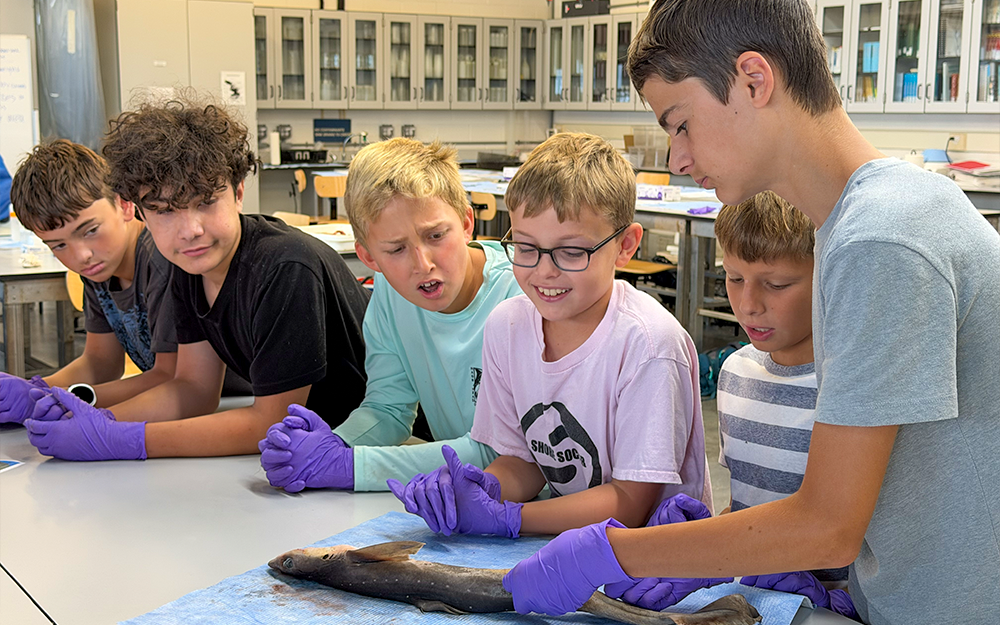
 Nine-year-old Tucker had already found a few things inside his spot croaker: a kidney, a swim bladder and a stomach. His verdict on the experience was nuanced.
“It was cool and gross at the same time,” he said.
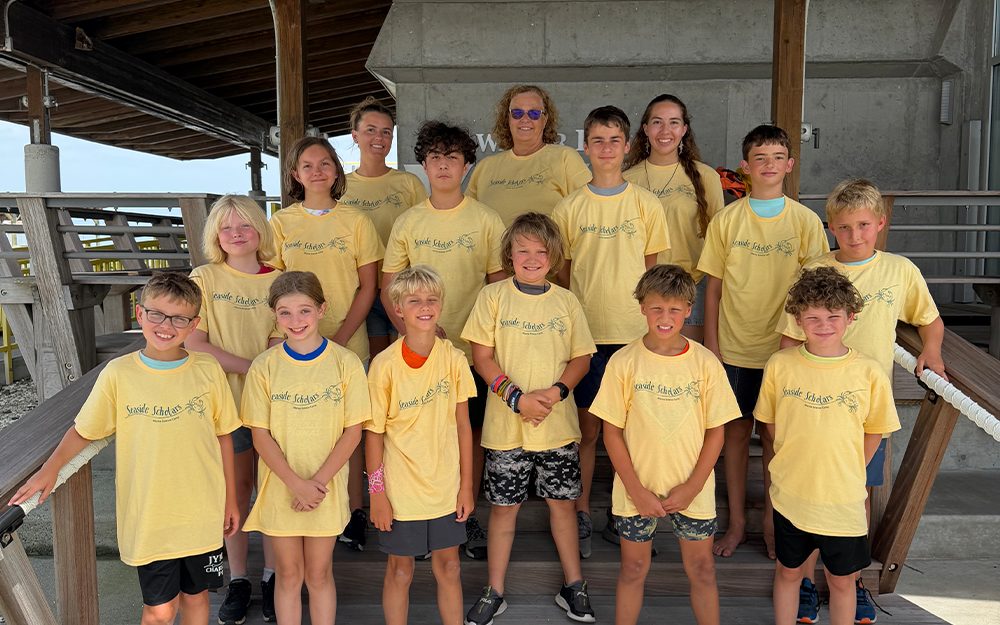
Tucker was one of a dozen students participating in the first of two identical sessions of Seaside Scholars, a free summer day camp hosted by William & Mary's Virginia Institute of Marine Science Eastern Shore Laboratory (VIMS ESL). The program is organized in collaboration with the Eastern Shore Soil and Water Conservation District (SWCD) and gives young learners between the ages of 9 to 13 the opportunity to spend several days exploring the marine world practically outside their front door.
 Based at VIMS ESL in Wachapreague, Virginia, Seaside Scholars combines the resources of a working marine laboratory with the coastal ecosystems surrounding it, enabling the kind of immersive, hands-on science that can be difficult to experience during the typical school year.
“The Eastern Shore is often forgotten, and a lot of our kids don’t ever leave the area, so it’s nice to give them this chance right where they live,” said Julie Head, education director for the Eastern Shore SWCD. “VIMS ESL really has the perfect location here to do a marine science camp. The kids get to do a lot of things that they don’t do in classrooms anymore, so we’re making learning fun again.”
The connection between Eastern Shore children and their own environment has been central to Seaside Scholars since the camp began three years ago. Meadow Noonan, outreach and education coordinator at VIMS ESL, grew up in the area and intentionally developed the program with Head to help campers recognize the important diversity of local organisms and habitats.
View the full Seaside Scholars Week 1 photo gallery
“I knew from growing up here that students don’t always learn about our marsh ecosystems, so getting campers excited about the surrounding environment is really gratifying,” said Noonan. “Inspiring interest in marine science is the primary goal, but I also really want kids to love where they’re from; the Shore is such a hidden treasure.”
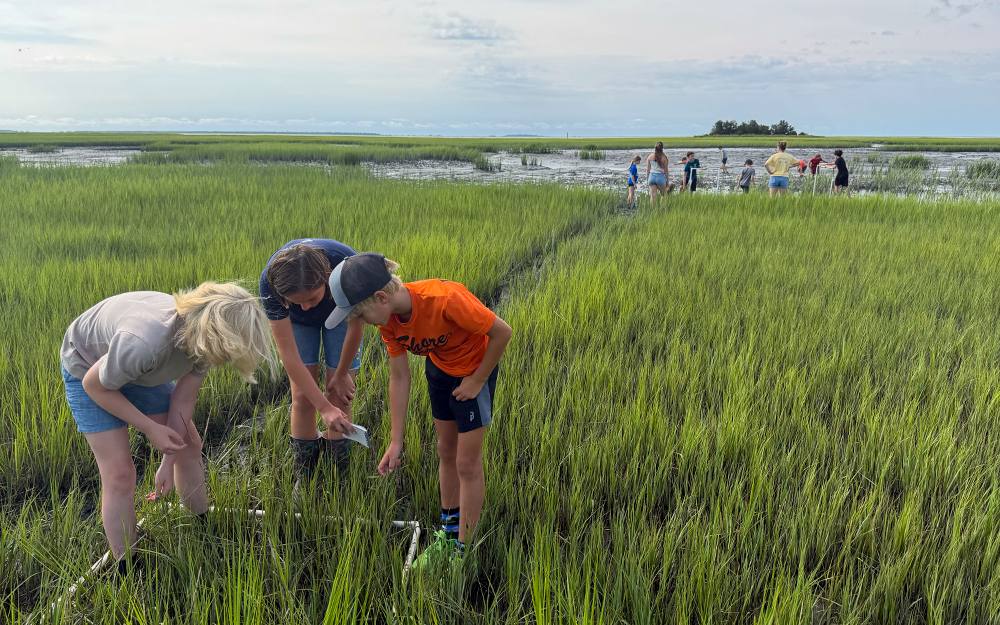
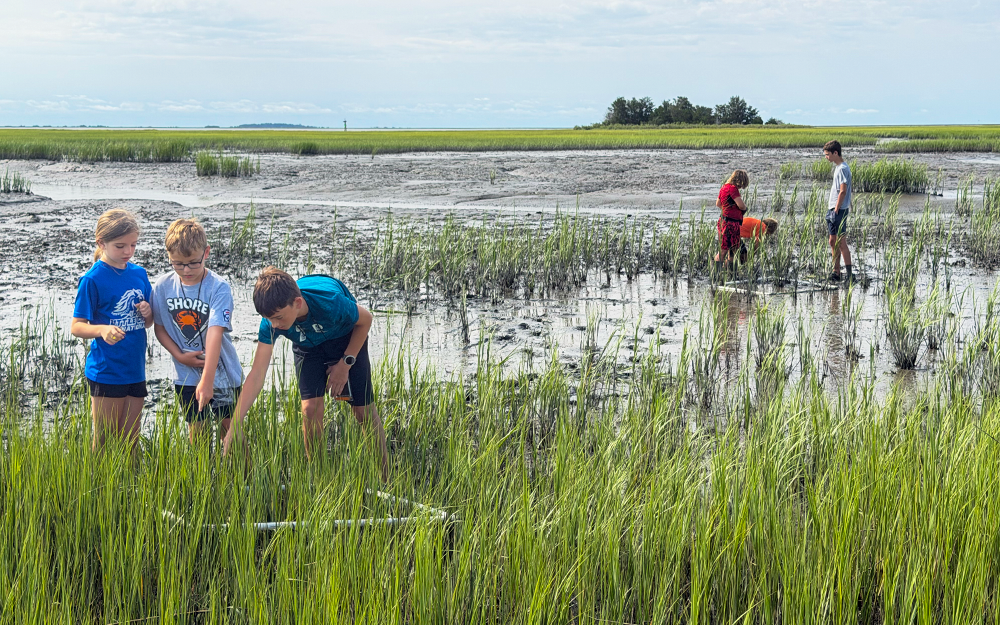
 Largely hosted in the waterfront VIMS ESL Seawater Laboratory, within short walking distance of the marsh, Seaside Scholars intertwines science and play. Campers search the marsh for plants and animals, conduct quadrat surveys modeled on scientific field techniques, wear oversized waders during a relay race and explore marine food webs. They also create algae-based paint, use real specimens to make fish prints on t-shirts and design model plankton for a competition to see which sinks slowest.
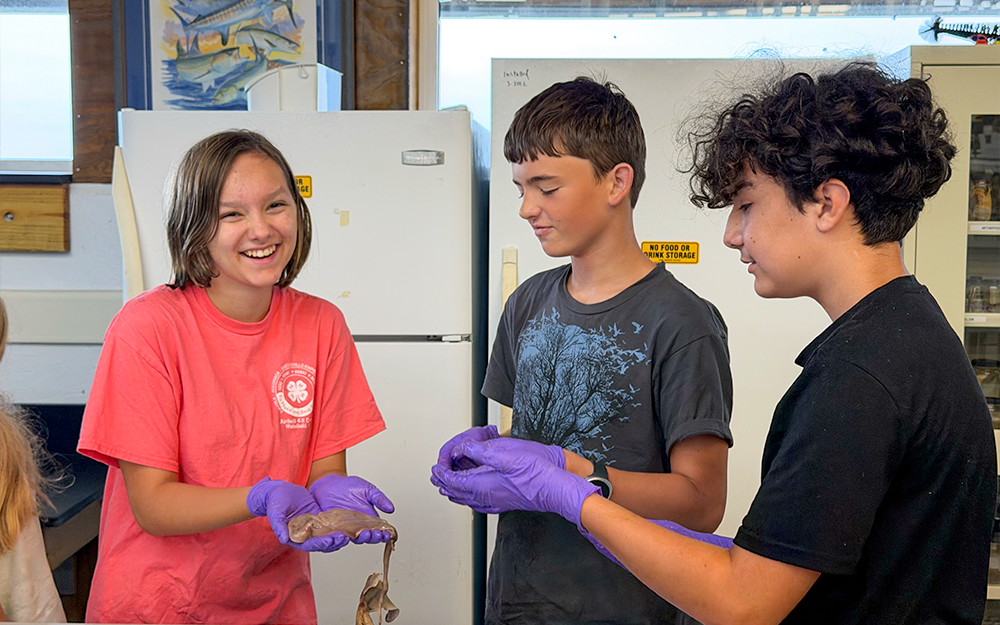
The 2026 iteration of summer camp included a new activity, which quickly became a favorite among the children. Former VIMS ESL Director Richard Snyder made a guest appearance to lead campers through individual dissections of spot croaker and group dissections of a pair of dogfish sharks, teaching them about fish anatomy and what researchers can learn from stomach content analysis.
It was an educational experience that 13-year-old Hayden would not have had outside of Seaside Scholars. “We don't get to dissect animals in school,” she said. “The closest thing we've ever done is dissecting a strawberry.”
Students are not the only ones who appreciate the uniqueness of the summer camp. Parents also see value in the experience, so much so that long waiting lists during the program’s first two years led organizers to expand the camp to two sessions this summer, allowing more families to participate.
 Megan Donaway was the very first to register her child for the 2026 Seaside Scholars camp, having seen the impact it had on him in the previous year. “He learned so much last year and enjoyed it so much and has actually applied those lessons into our daily living, so we wanted to see what more he could learn,” she said. When asked what she’d say to fellow parents, Donaway had an immediate answer: “Sign up as soon as possible!”
“Experiences like this are absolutely essential,” agreed Jennifer Martin Ph.D. ’15, whose daughter was experiencing camp for the first time. “It’s so important that they get to engage with other kids who are interested in marine science and think freely and make discoveries for themselves. And the fact that the camp is free and accessible to anyone, that’s huge. It’s creating the next generation of coastal and ocean scientists.”
Over the past two years, Seaside Scholars has also been made possible by the Onancock Elks Lodge, which has provided funding for items including t-shirts, field notebooks, dissection gloves and other supplies. VIMS ESL and the Eastern Shore SWCD also contribute through their own education budgets.
With additional resources, Noonan envisions that Seaside Scholars could expand to include experiences beyond the lab and marsh. “Exploring more areas of the Shore would be amazing,” she said, “but it would require new funding to purchase things like canoes, kayaks, child-sized life jackets and child-sized boots, like what we have for adults in the VIMS ESL Bootery.”
 If you’d like to philanthropically support the Seaside Scholars summer camp program, consider making a gift to the VIMS ESL Foundation (3525).
In the meantime, participants in the recent Seaside Scholars program left campus feeling inspired and already looking forward to next year.
Tucker, who said “of course” he wants to return to the summer camp in 2027, had this recommendation for his young Eastern Shore peers: “If you like science, you’ll love this camp!”