
Model-Data Comparison
Observational data is available at various locations throughout the Chesapeake Bay. Two sets of observational data that are readily available nearly as soon as it is collected are from the Virginia Estuarine & Coastal Observing System (VECOS), the Chesapeake Biological Laboratory (CBL), and the Chesapeake Bay Interpretive Buoy System (CBIBS). VECOS and CBL provide a range of real-time data, including near-surface salinity, water temperature, and pH. CBIBS provides a range of real-time data, including near-surface salinity and water temperature. CBEFS automatically downloads the most recent VECOS, CBL, and CBIBS data throughout the day and compares the modeled to observed values. Another data source is National Oceanic and Atmospheric Administration (NOAA) water level gauges. Additionally, NOAA has installed vertical arrays of sensors at six locations in the Bay that provide high-frequency data at multpile depths in the water column.
This model-to-data comparison webpage provides line-plots comparing the recent-past and forecast CBEFS near-surface salinity, water temperature, pH, and water level (water surface elevation) to the observed data. These plots provide a general understanding of how the forecast relates to observed values at the same location. Basic statistics of the accuracy of CBEFS relative to the observed data are provided below the line plots. At times, these real-time data will be unavailable, so it is not guaranteed that observed data will always be available on these line plots.
Real-time comparisons of forecast-to-observed waves are provided on the CBEFS waves webpage. Comparisons of CBEFS dissolved oxygen to Water Quality Monitoring Program data are provided on the dissolved oxygen line plots webpage. Comparisons of CBEFS salinity and temperature to Water Quality Monitoring Program data are provided on the Bay-wide Salinity and Bay-wide Temperature webpages.
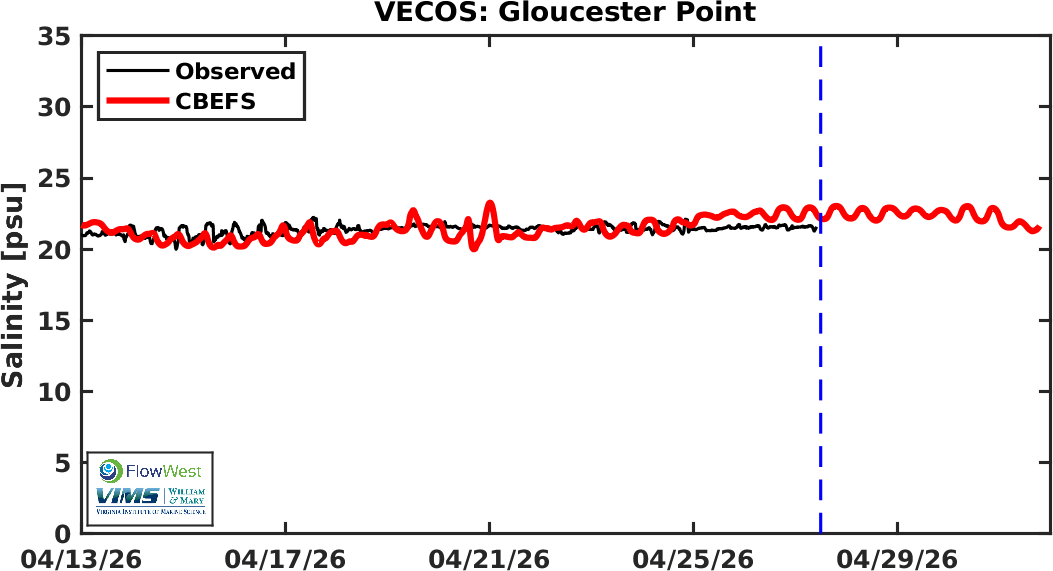
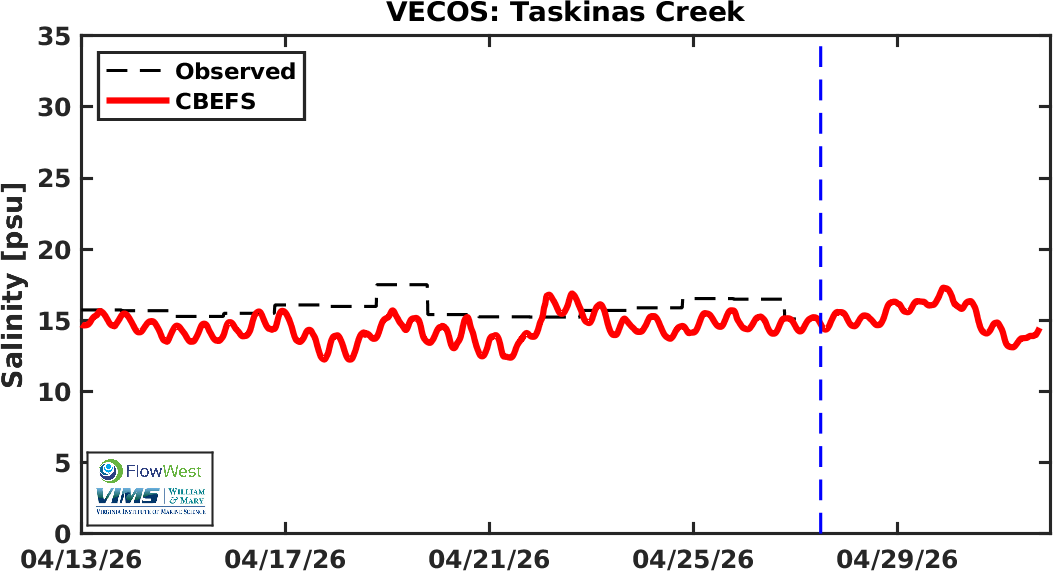
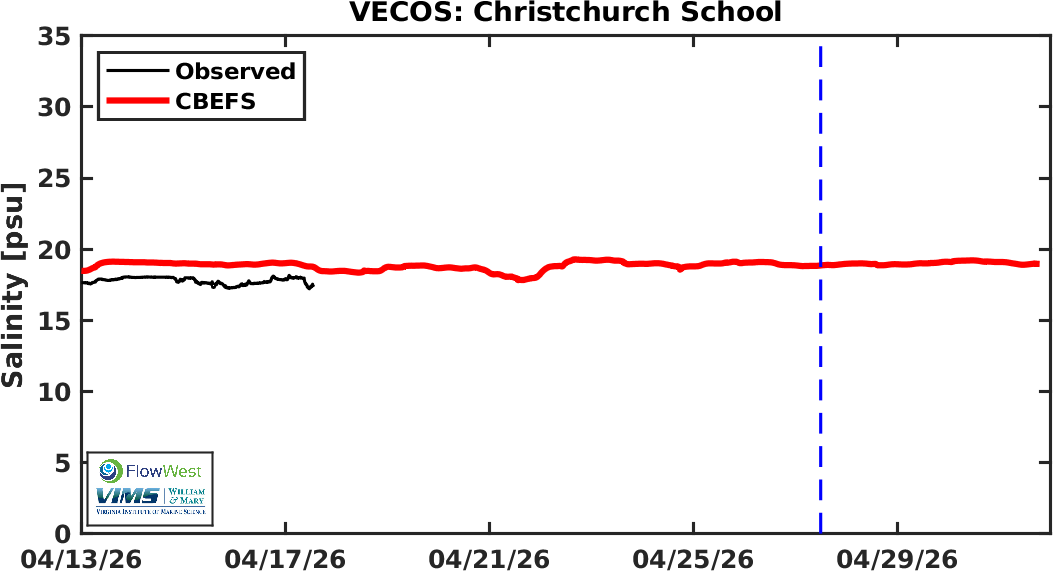
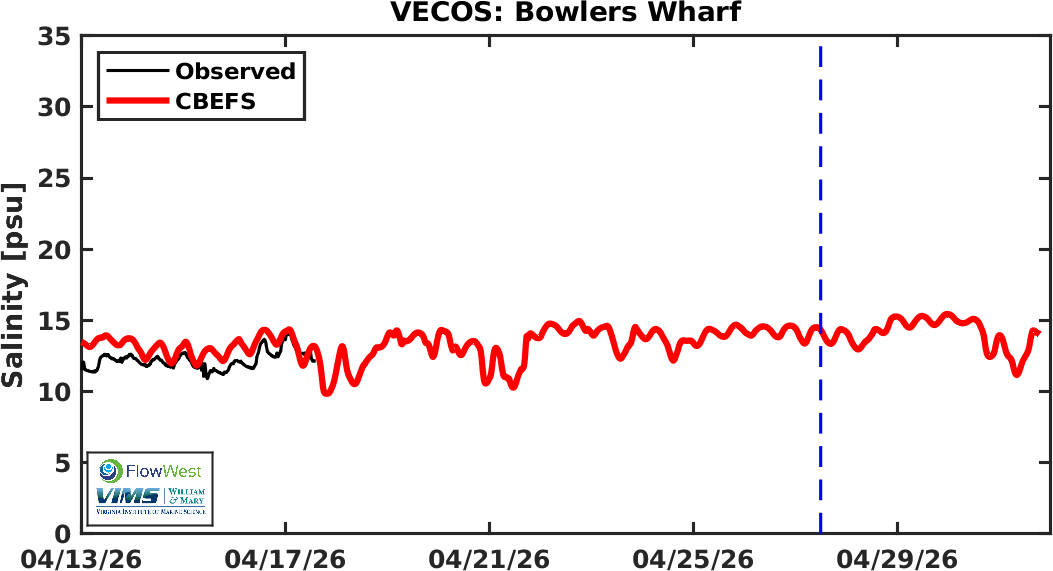
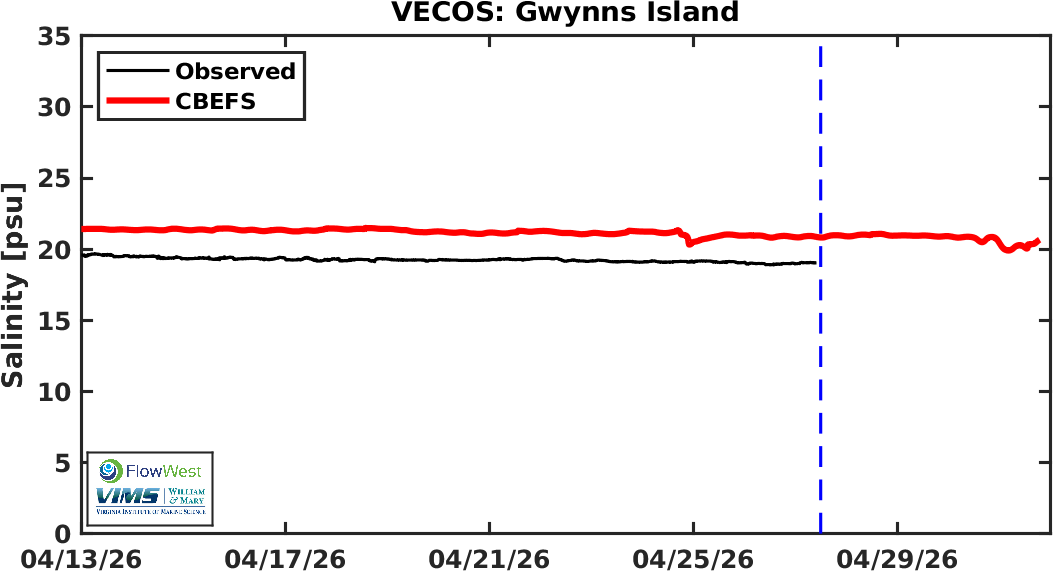
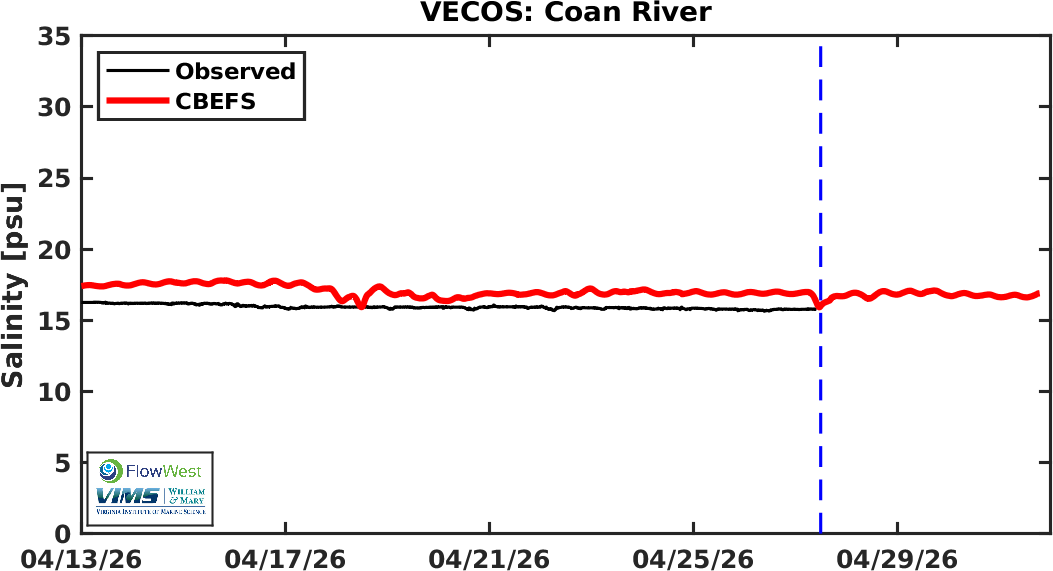
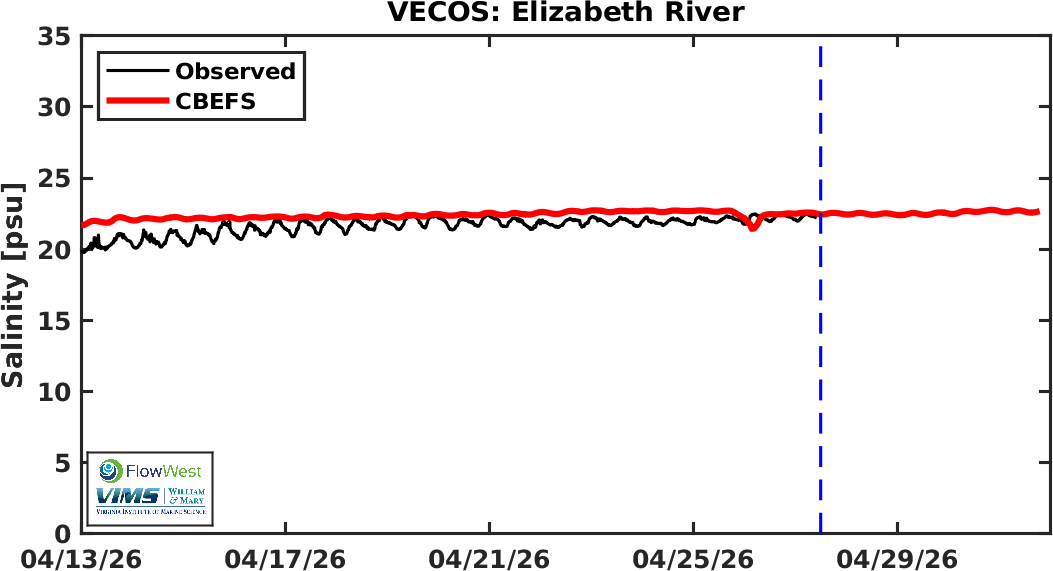
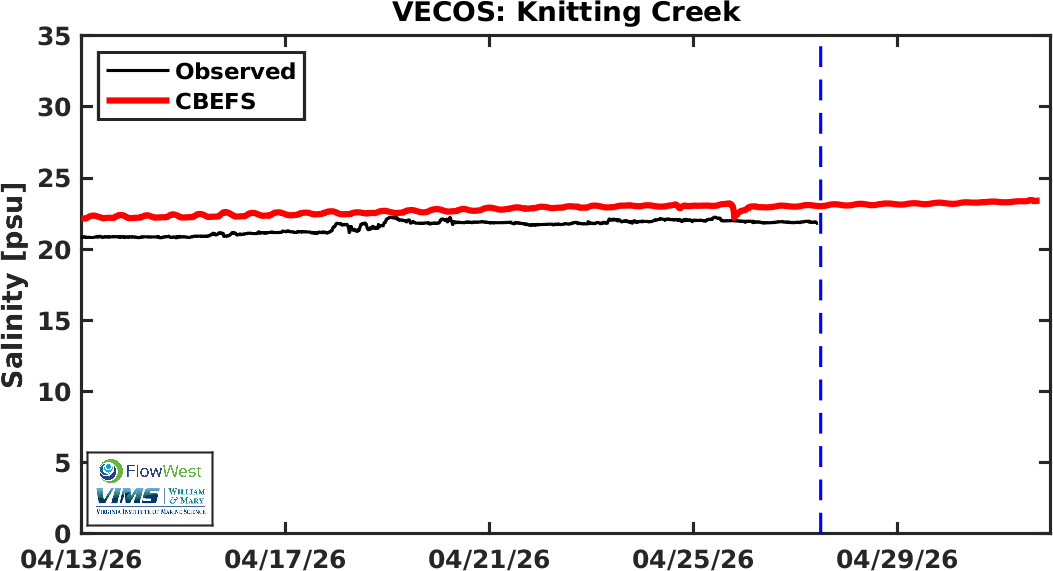
VECOS: Salinity (Near Surface)These images show the CBEFS (red) and the observed (black) salinity over the last 14 days and for the 5-day forecast. The current date and time is marked with a dashed vertical blue line; the dashed blue line moves throughout the day marking the time of day to the latest hour. These images are used to visually determine how well the CBEFS values and the timing of increases or decreases matches the observed values.
|
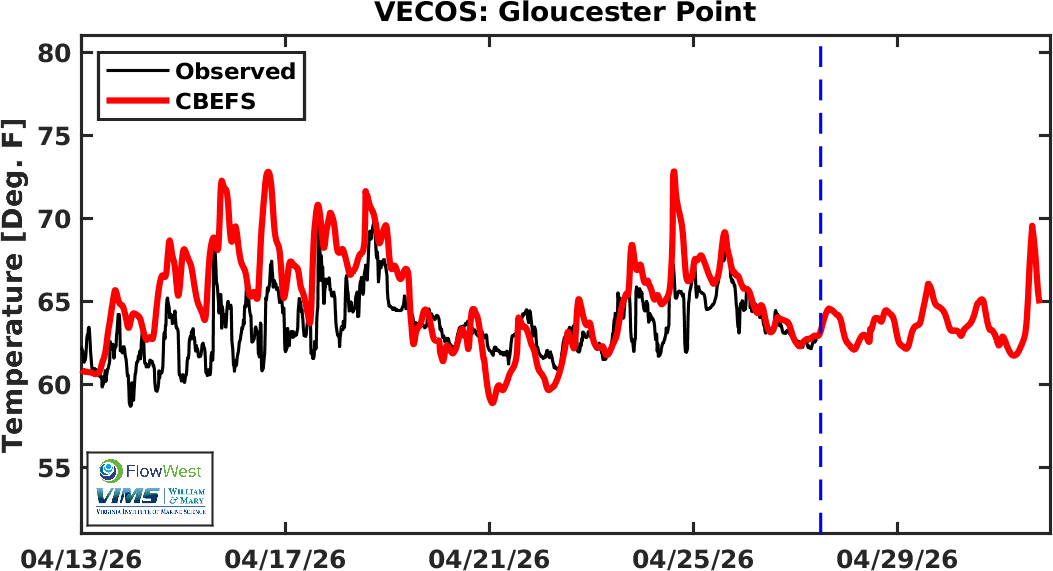
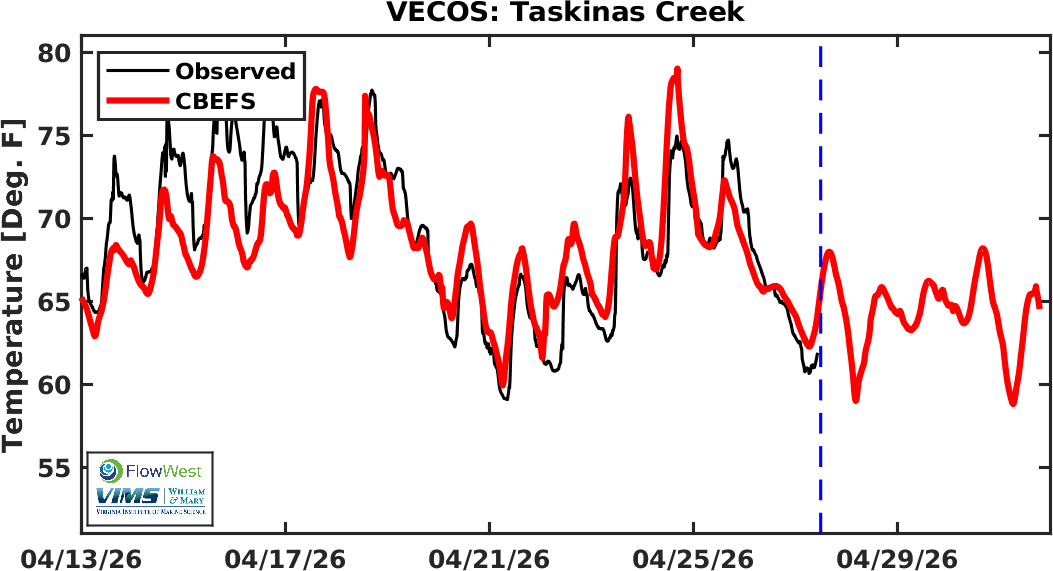
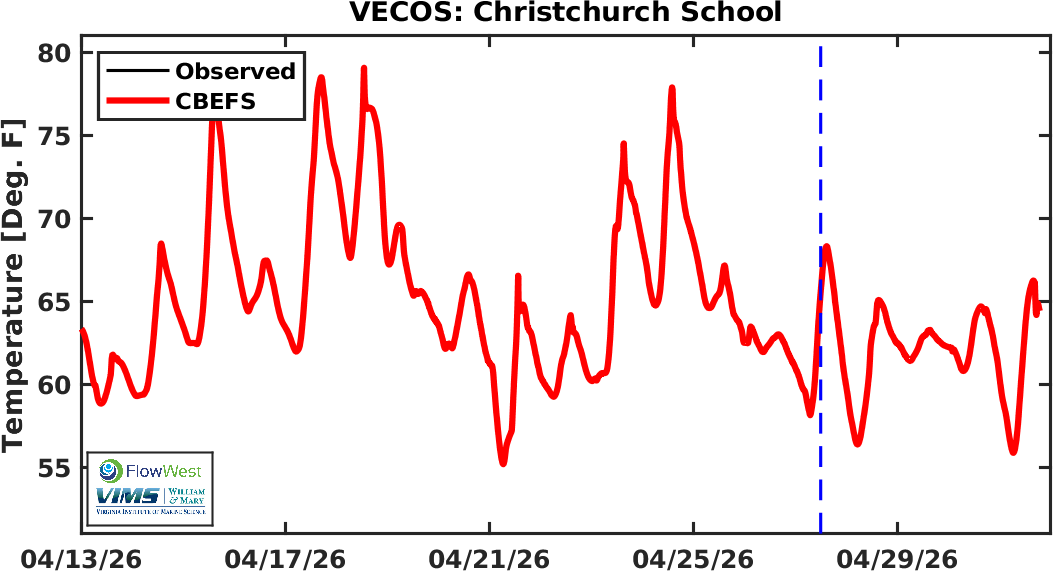
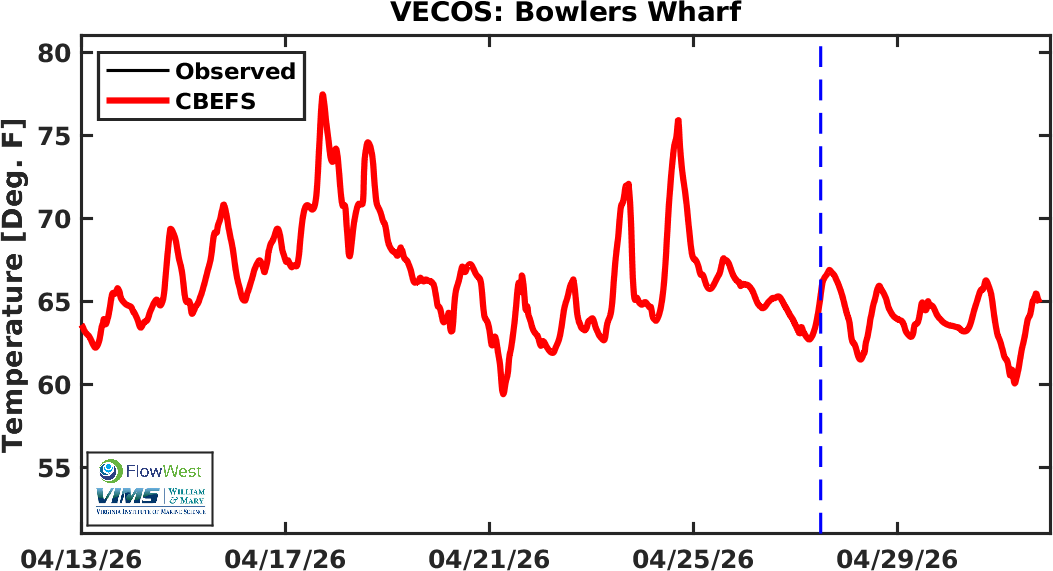
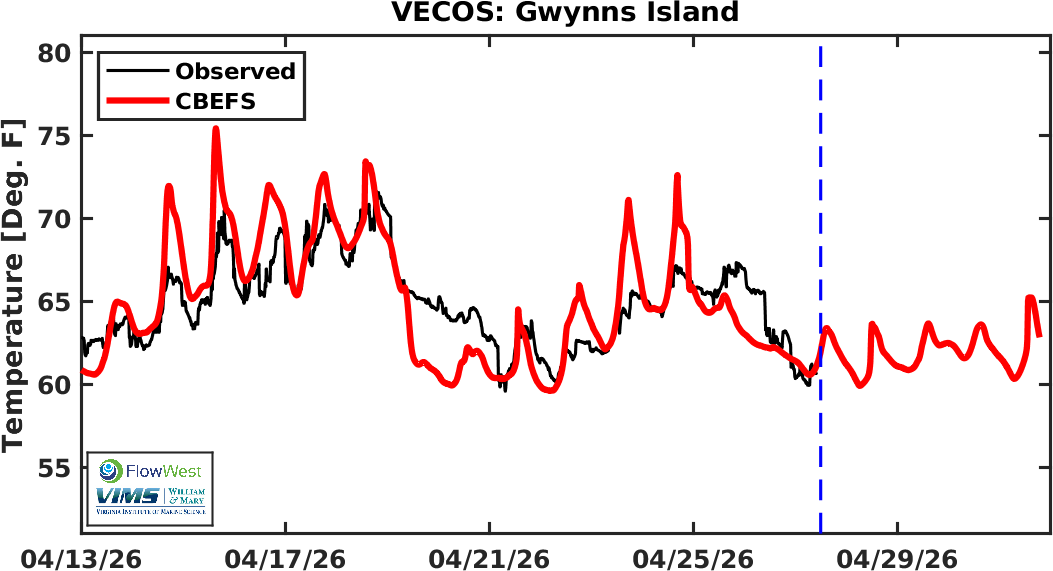
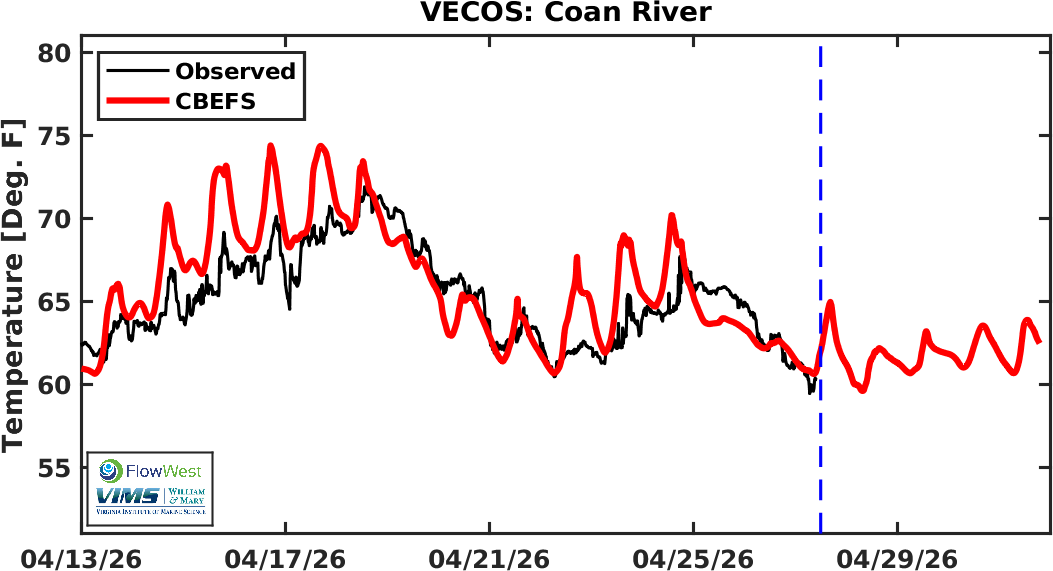
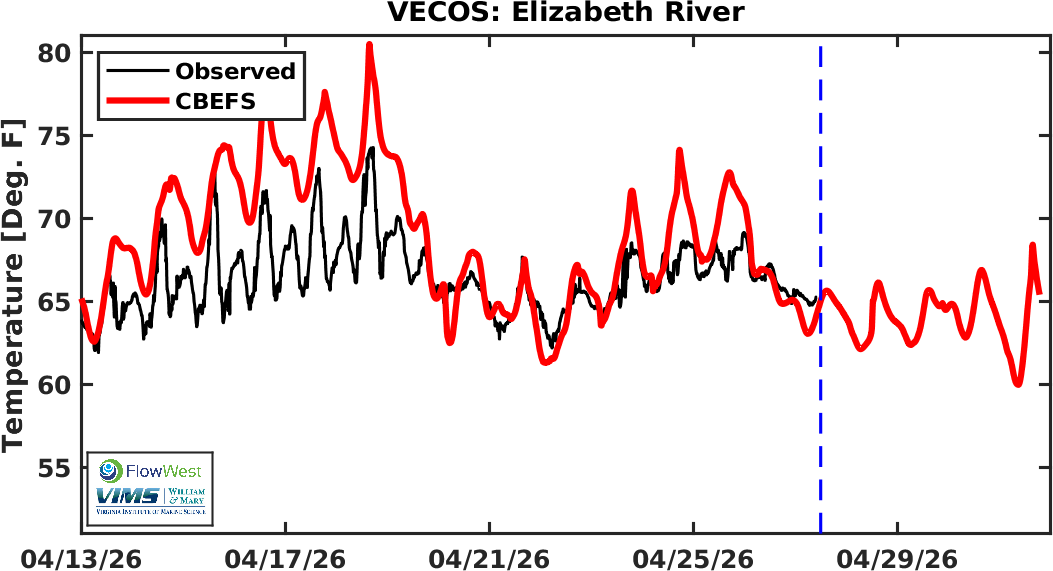
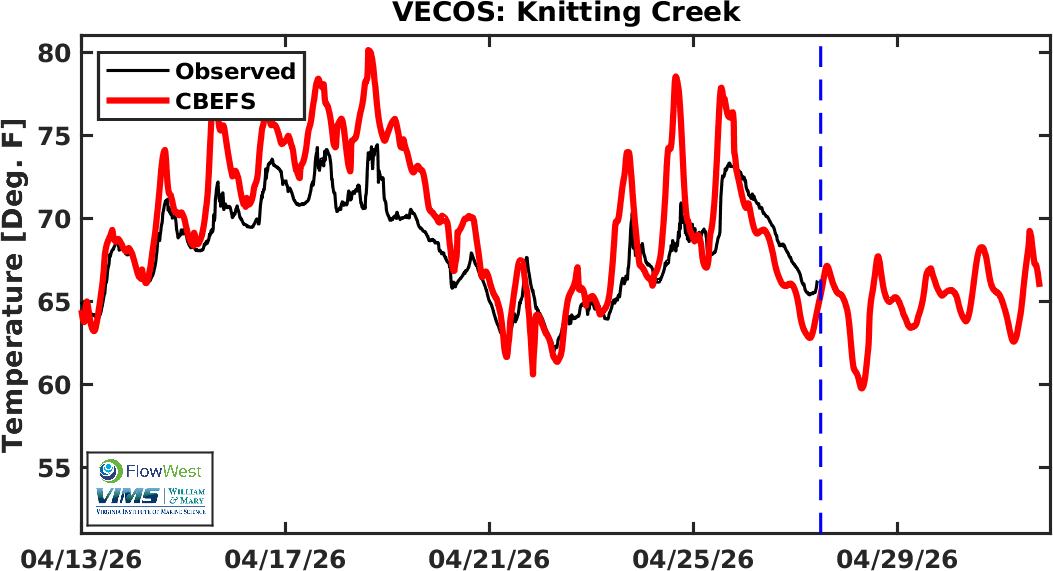
VECOS: Water Temperature (Near Surface)These images show the CBEFS (red) and the observed (black) water temperature over the last 14 days and for the 5-day forecast. The current date and time is marked with a dashed vertical blue line; the dashed blue line moves throughout the day marking the time of day to the latest hour. These images are used to visually determine how well the CBEFS values and the timing of increases or decreases matches the observed values.
|
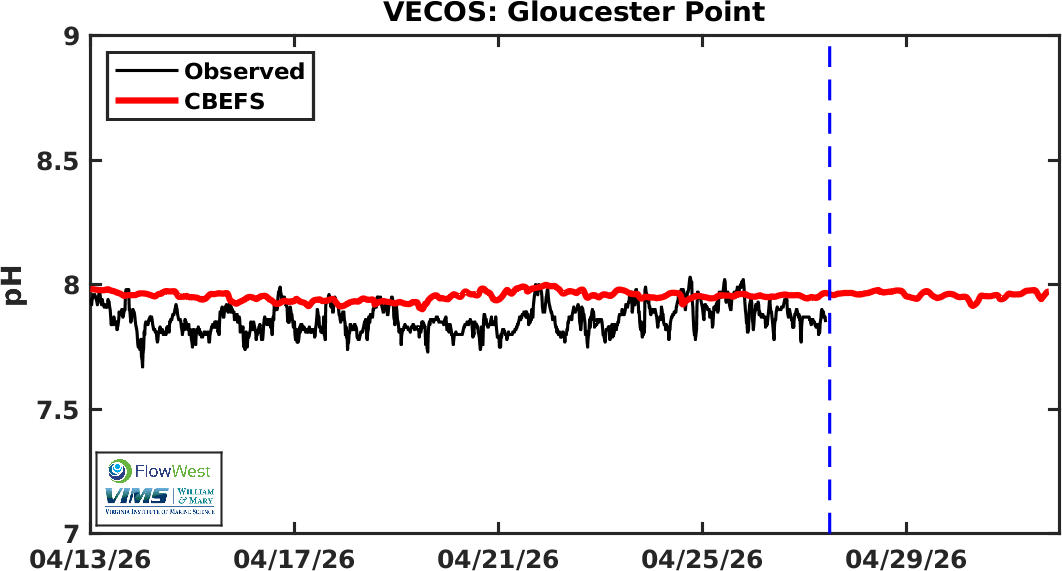
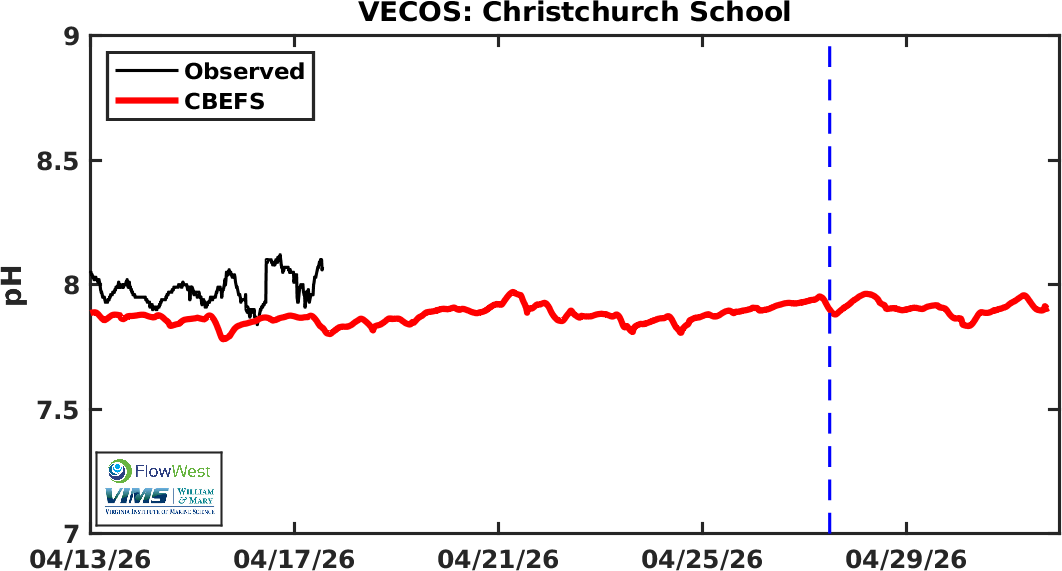
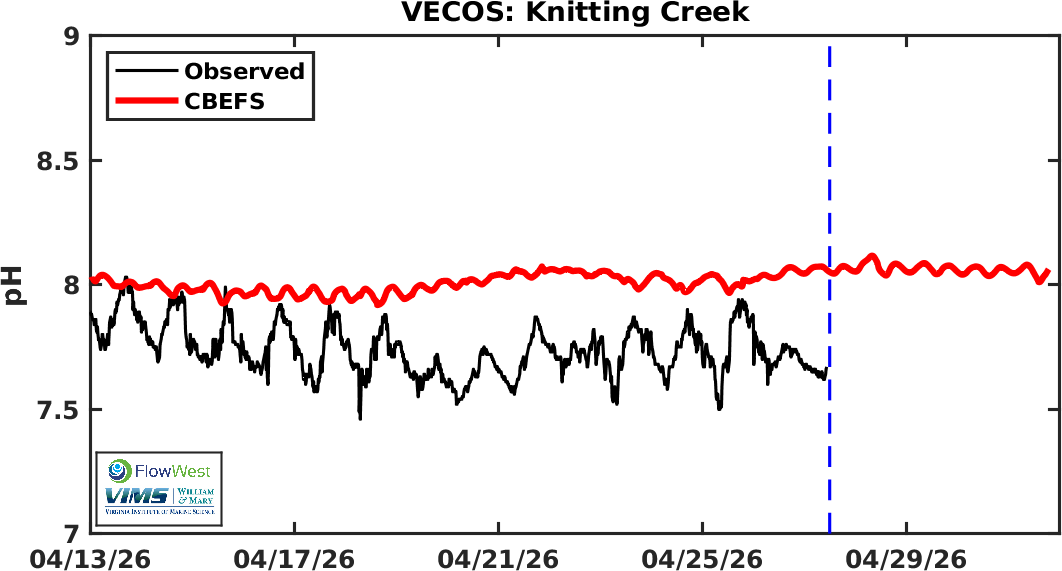
VECOS: pH (Near Surface)These images show the CBEFS (red) and the observed (black) pH over the last 14 days and for the 5-day forecast. The current date and time is marked with a dashed vertical blue line; the dashed blue line moves throughout the day marking the time of day to the latest hour. These images are used to visually determine how well the CBEFS values and the timing of increases or decreases matches the observed values.
|
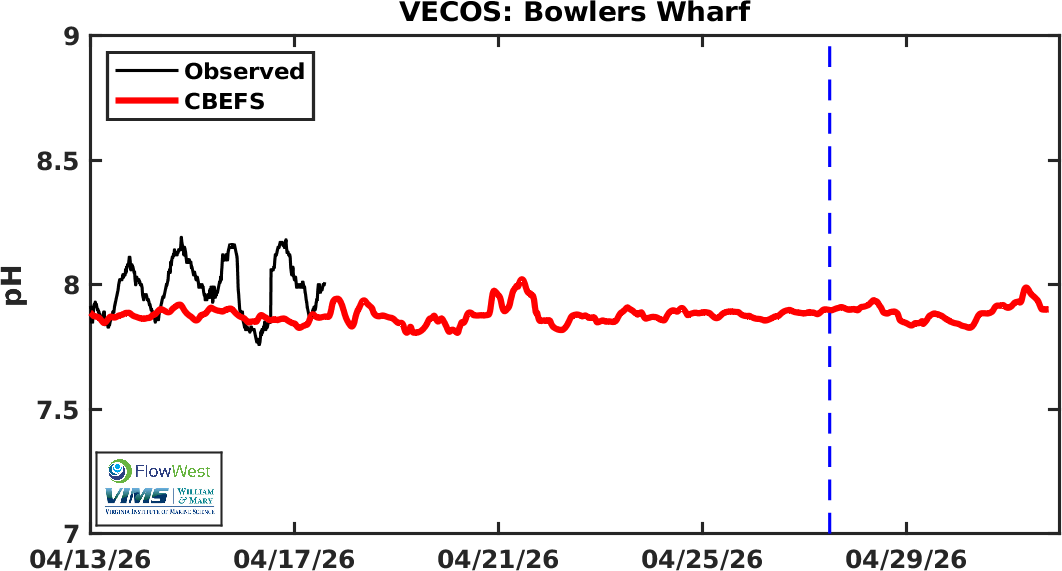
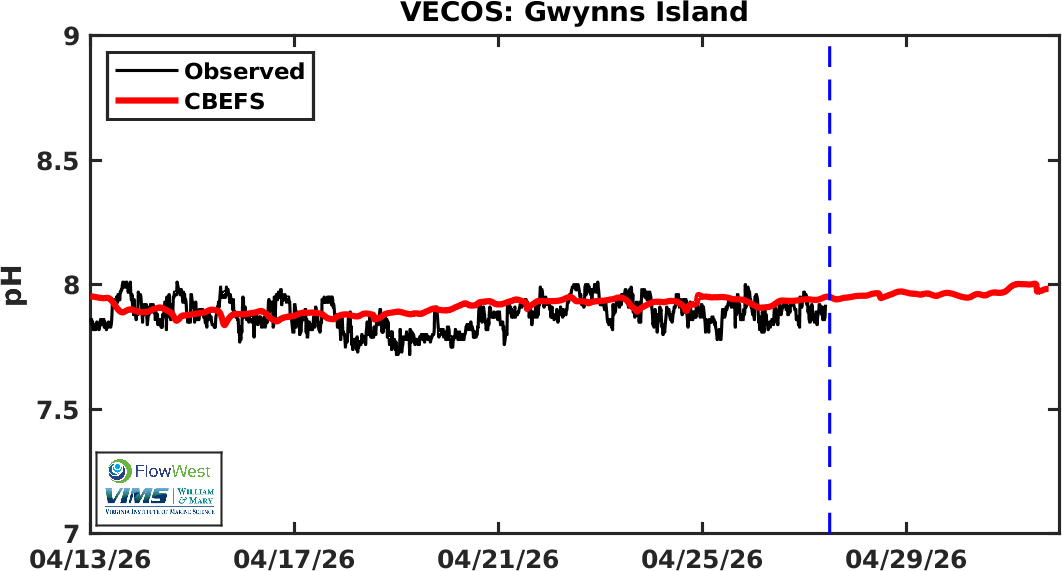
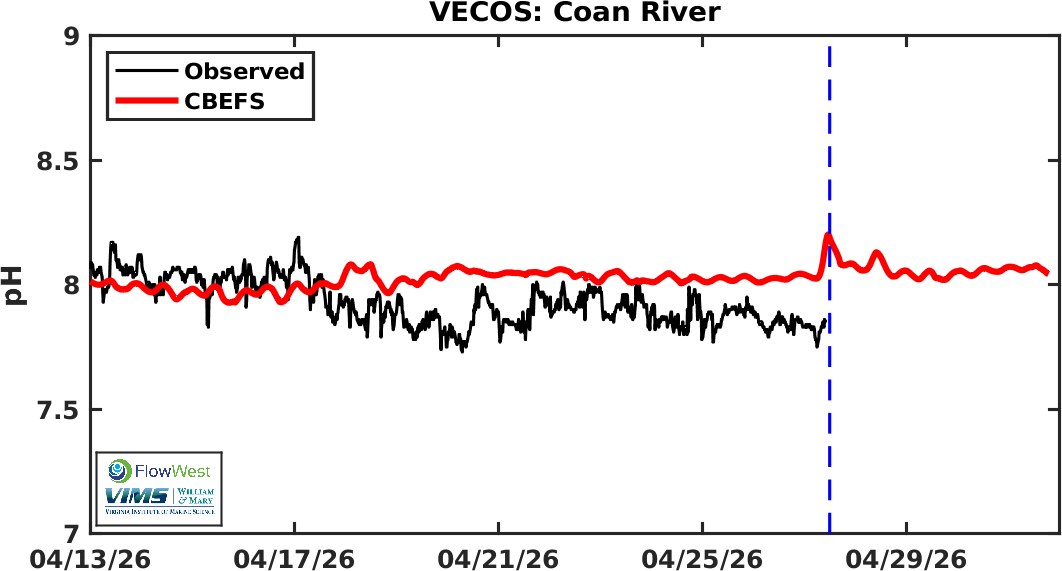
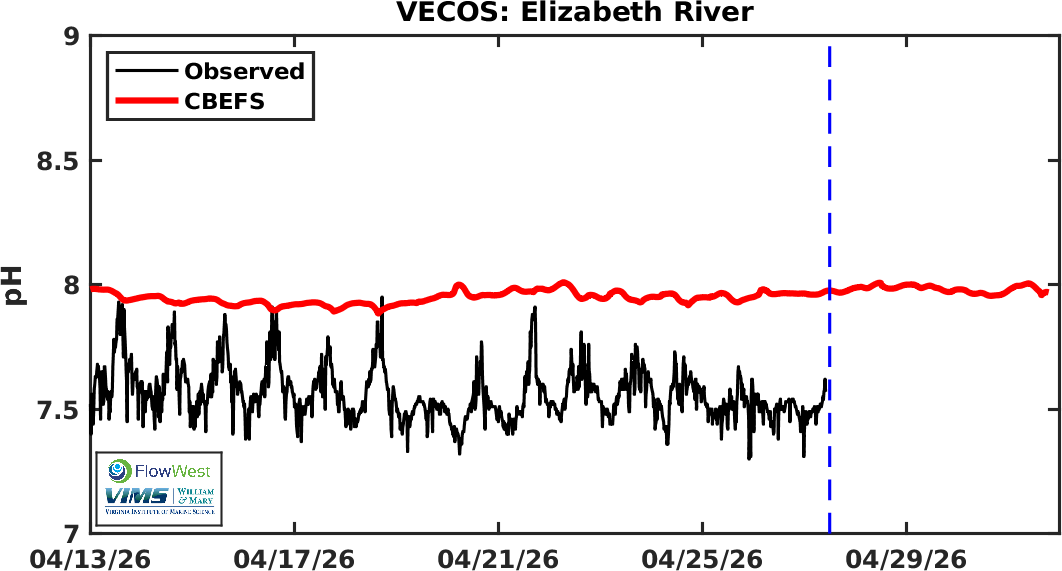
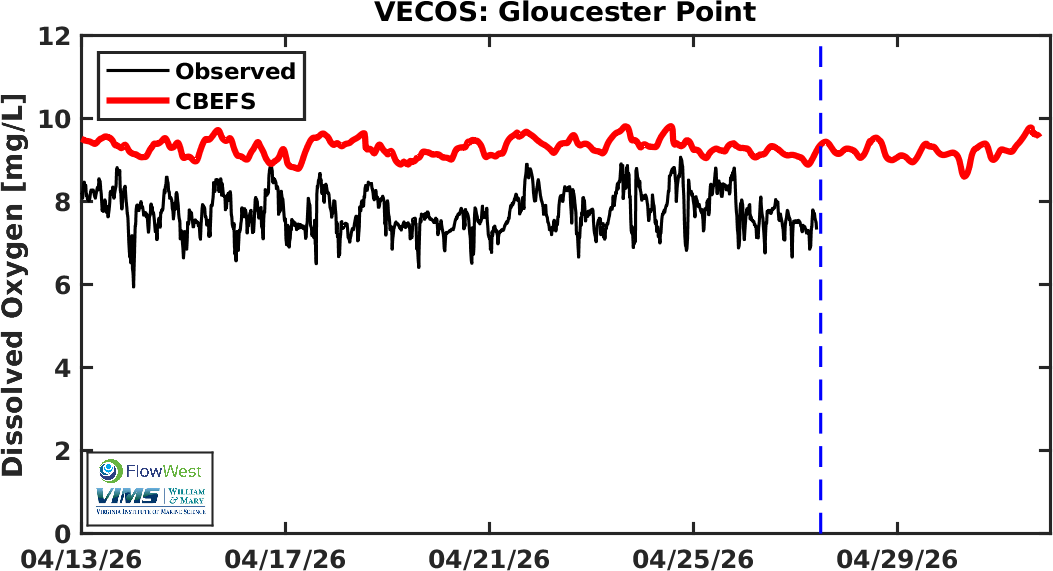
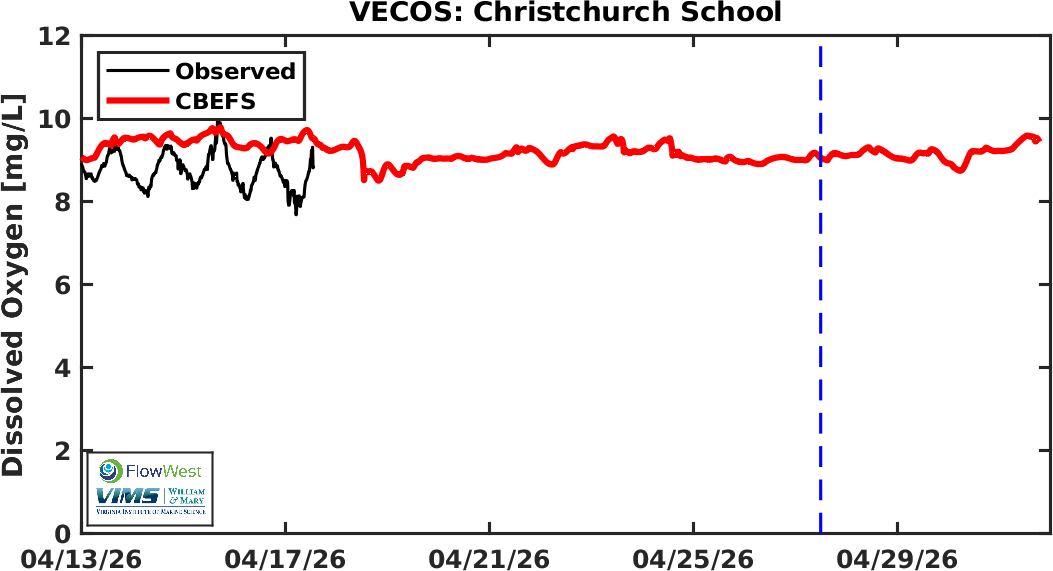
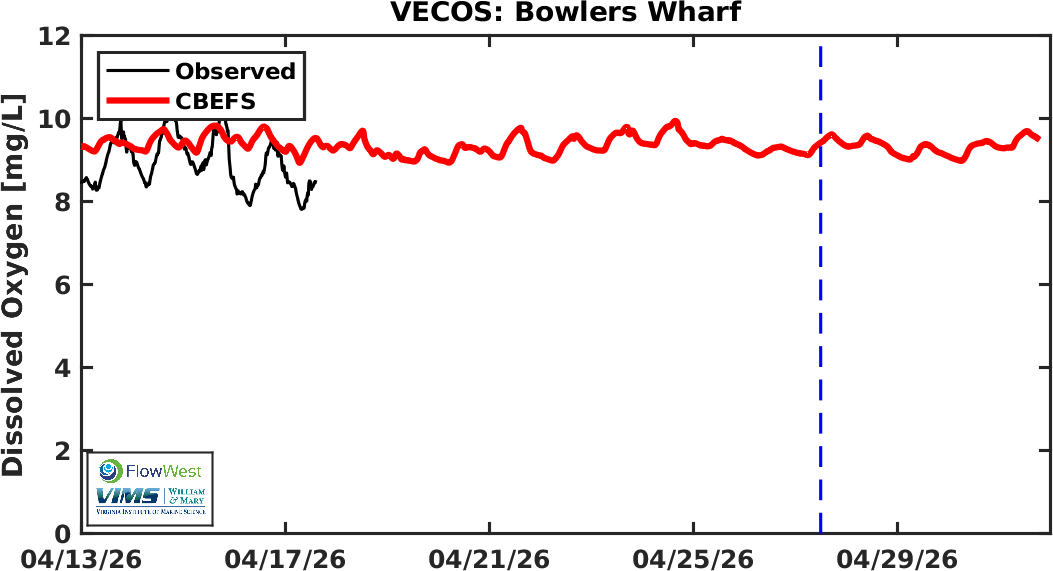
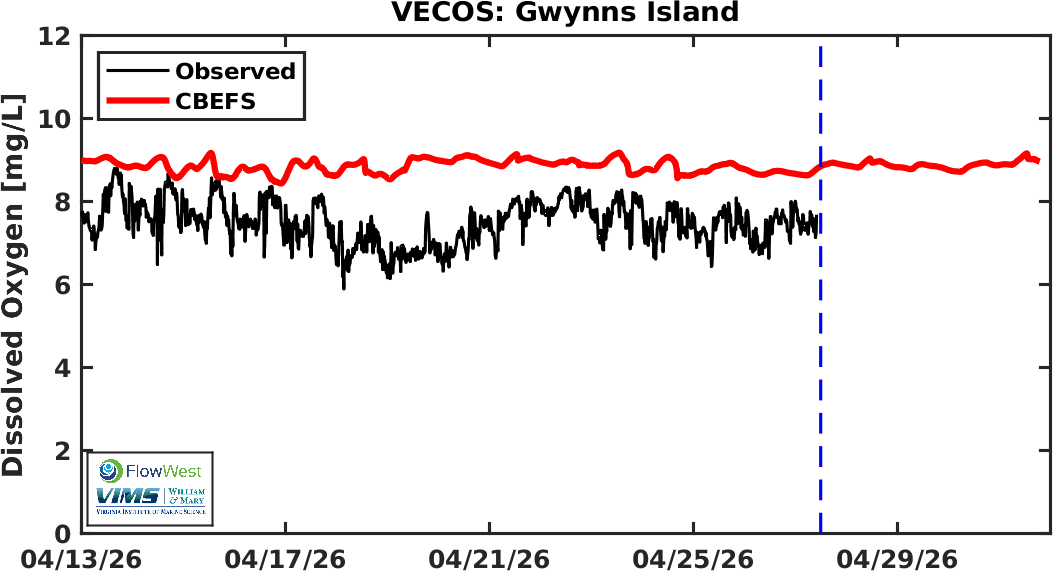
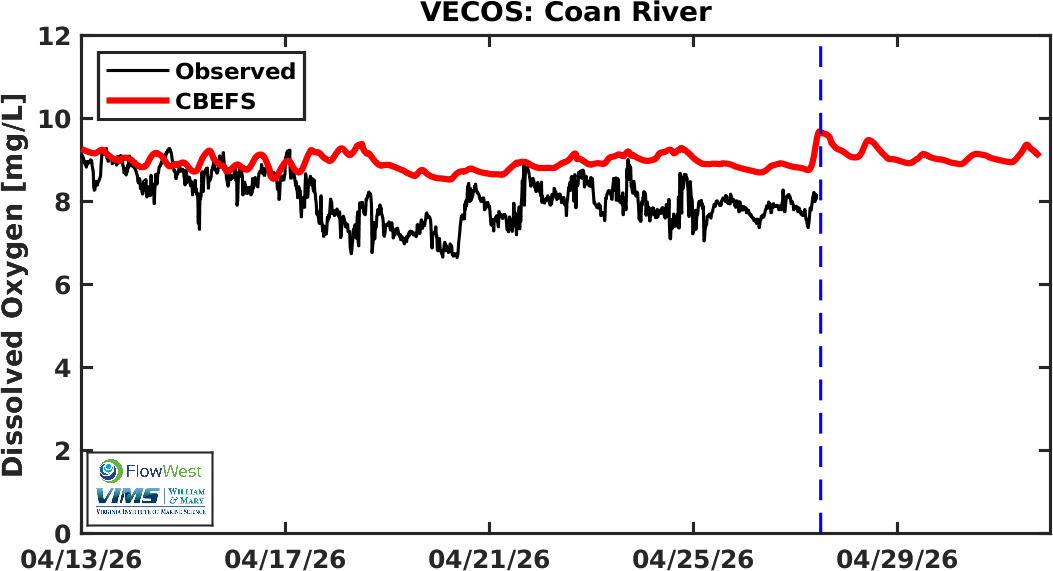
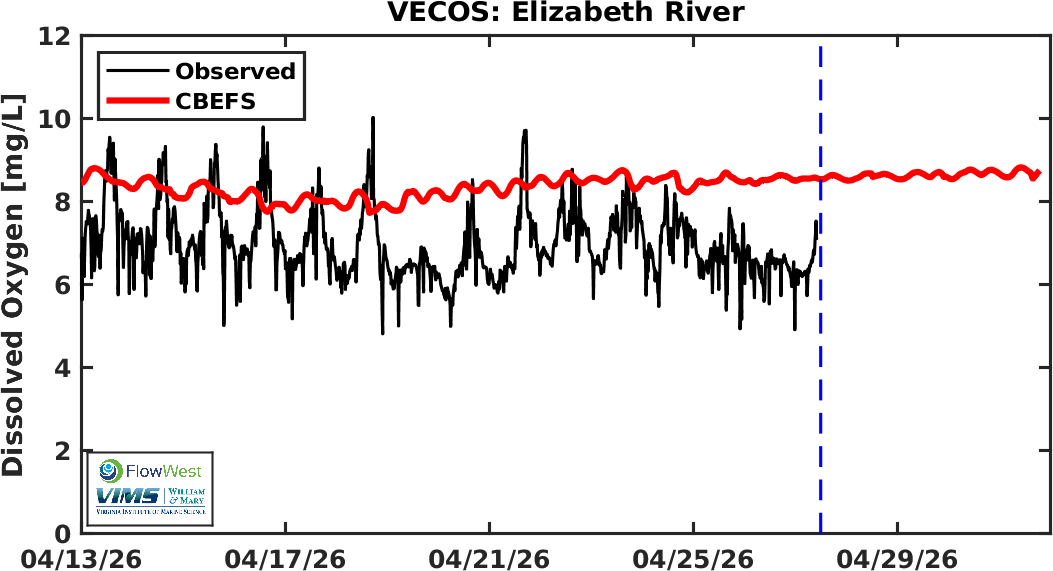
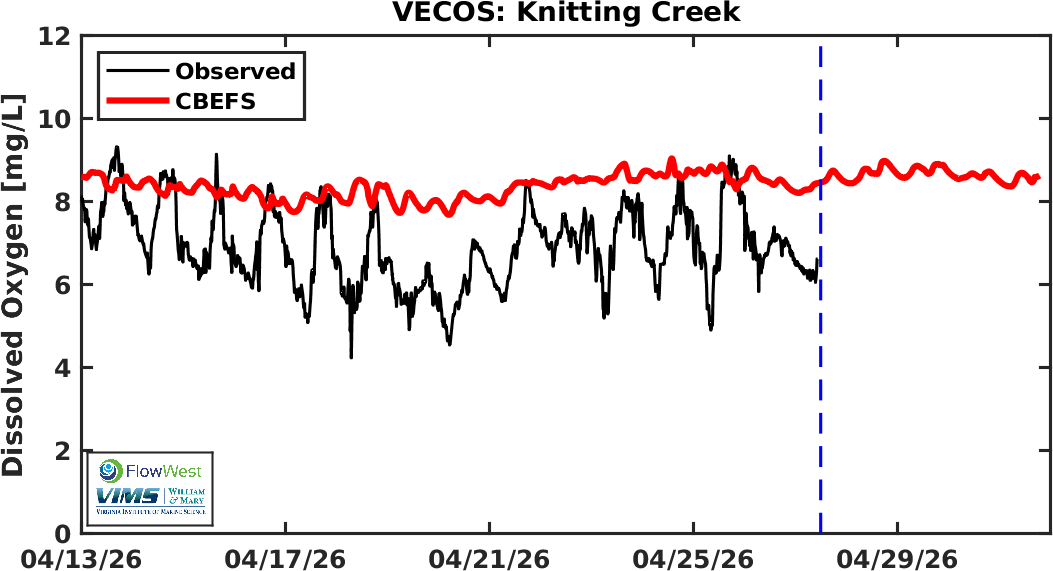
VECOS: Dissolved Oxygen (Near Surface)These images show the CBEFS (red) and the observed (black) dissolved oxygen over the last 14 days and for the 5-day forecast. The current date and time is marked with a dashed vertical blue line; the dashed blue line moves throughout the day marking the time of day to the latest hour. These images are used to visually determine how well the CBEFS values and the timing of increases or decreases matches the observed values.
|
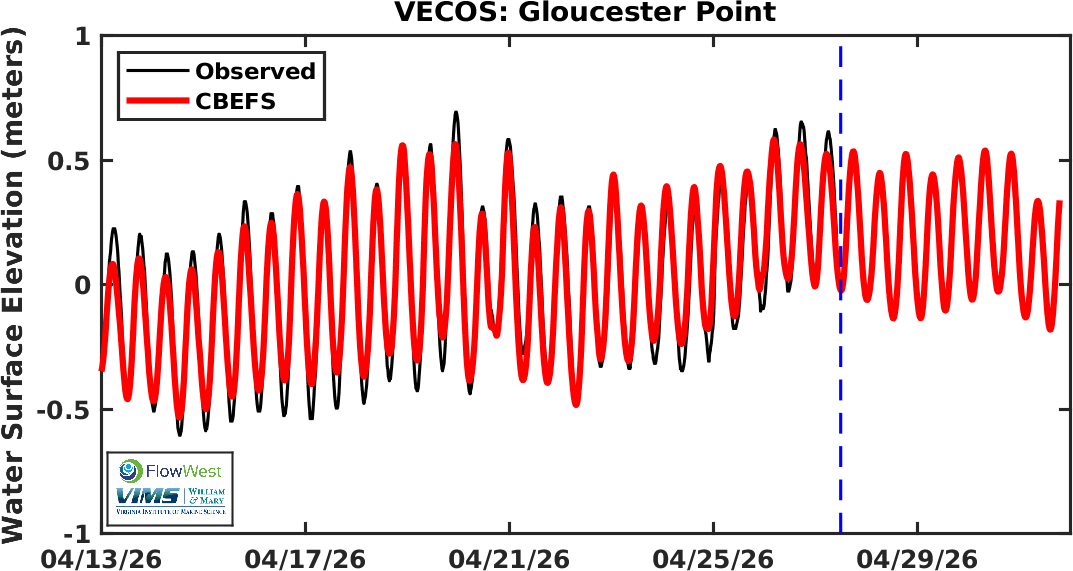
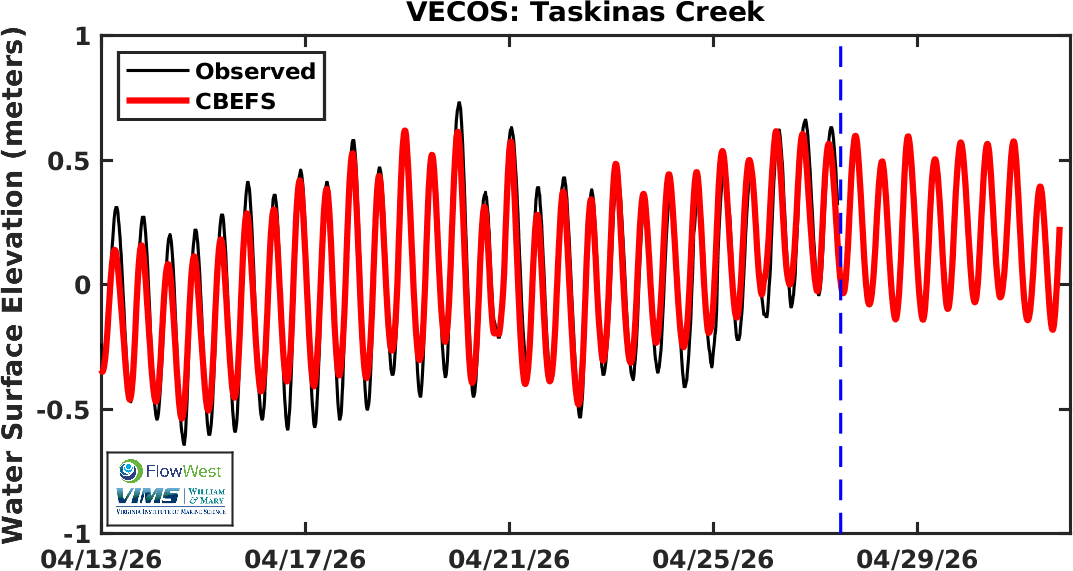
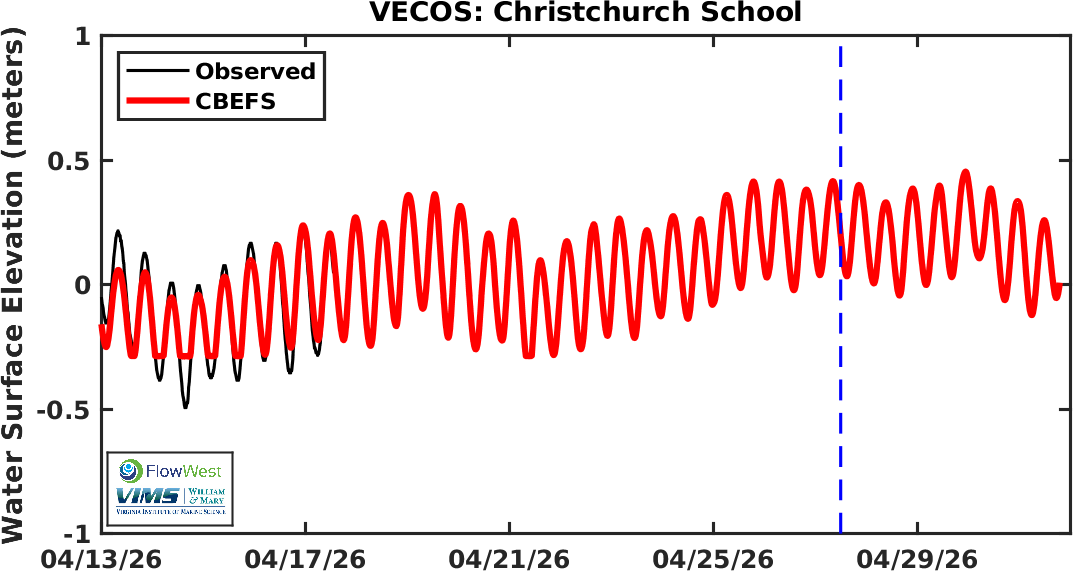
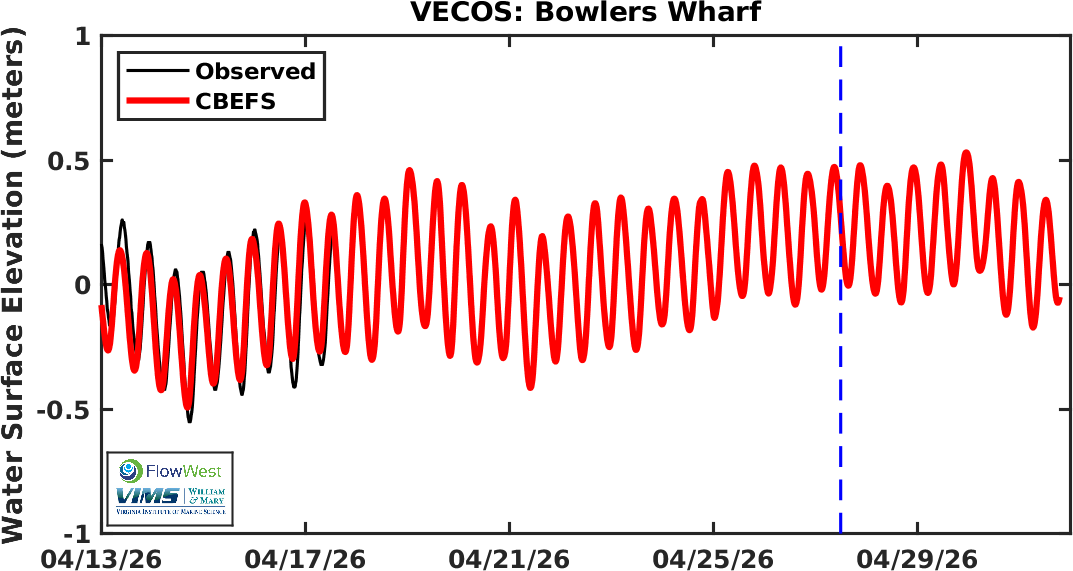
VECOS: Water Surface ElevationThese images show the CBEFS (red) and the observed (black) water surface elevation over the last 14 days and for the 5-day forecast. The current date and time is marked with a dashed vertical blue line; the dashed blue line moves throughout the day marking the time of day to the latest hour. Note that VECOS data is provided as water depth; to estimate water surface elevation from water depth the mean of the data is set equal to the mean of CBEFS. These images are used to visually determine how well the CBEFS values and the timing of increases or decreases matches the observed values.
* Note: the CBEFS model grid cell goes dry at low tide at the Knitting Creek VECOS location, creating the minimum water surface elevation in CBEFS. This simply means the model grid cell is a little shallower than the exact location of the VECOS data collection instruments. |
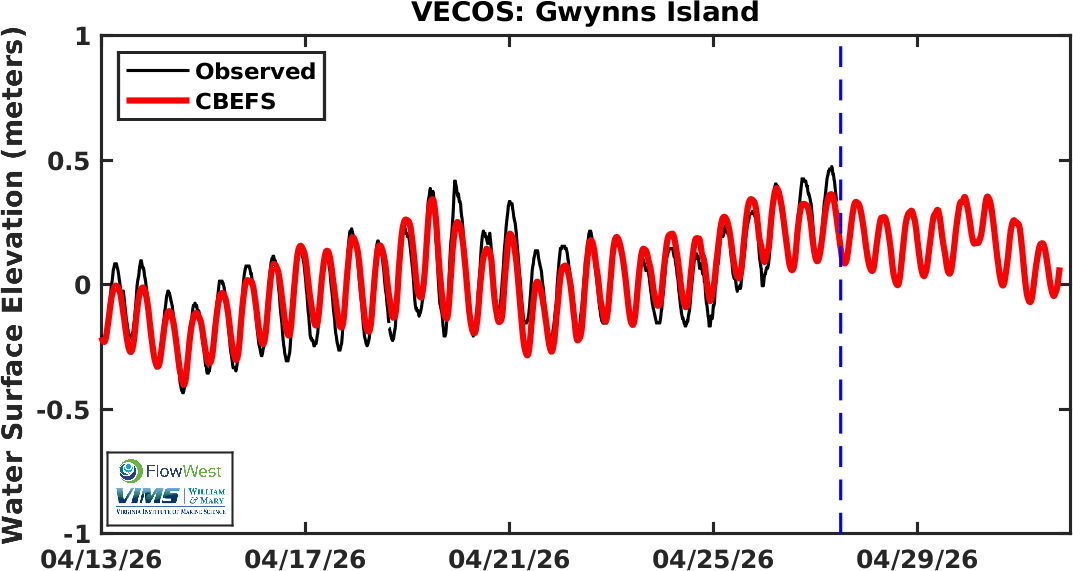
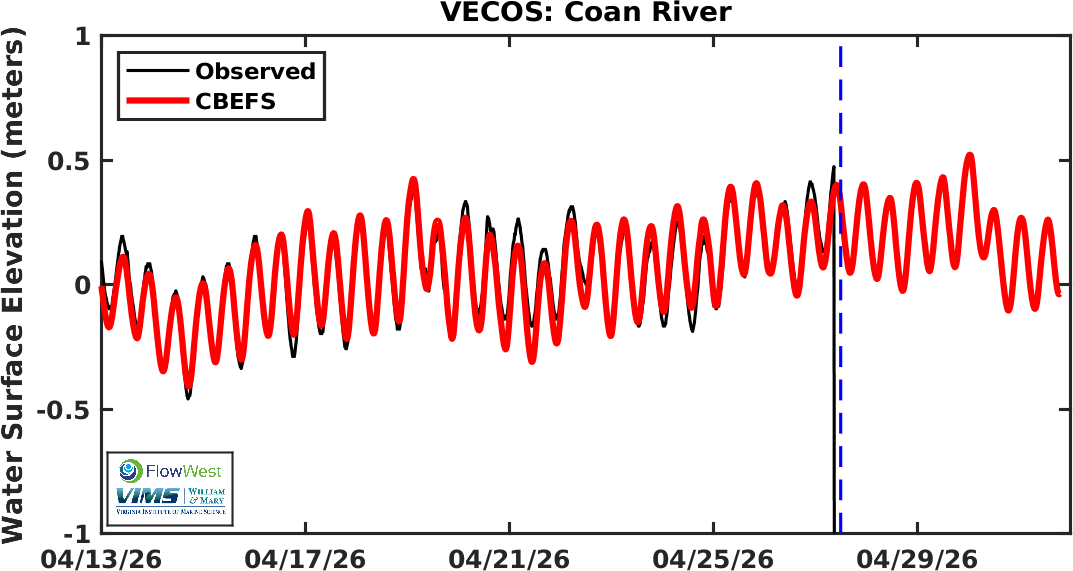
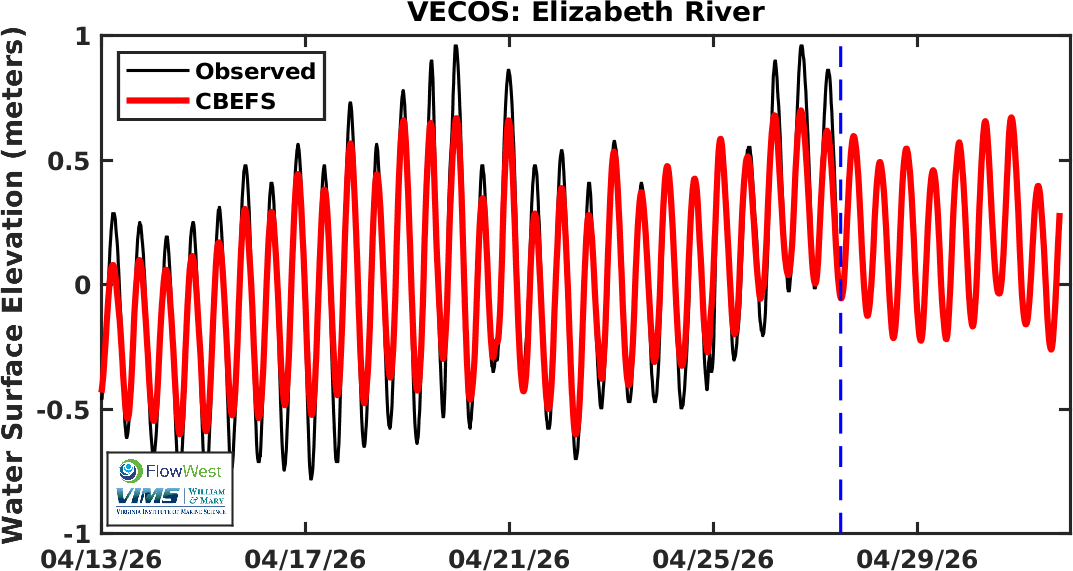
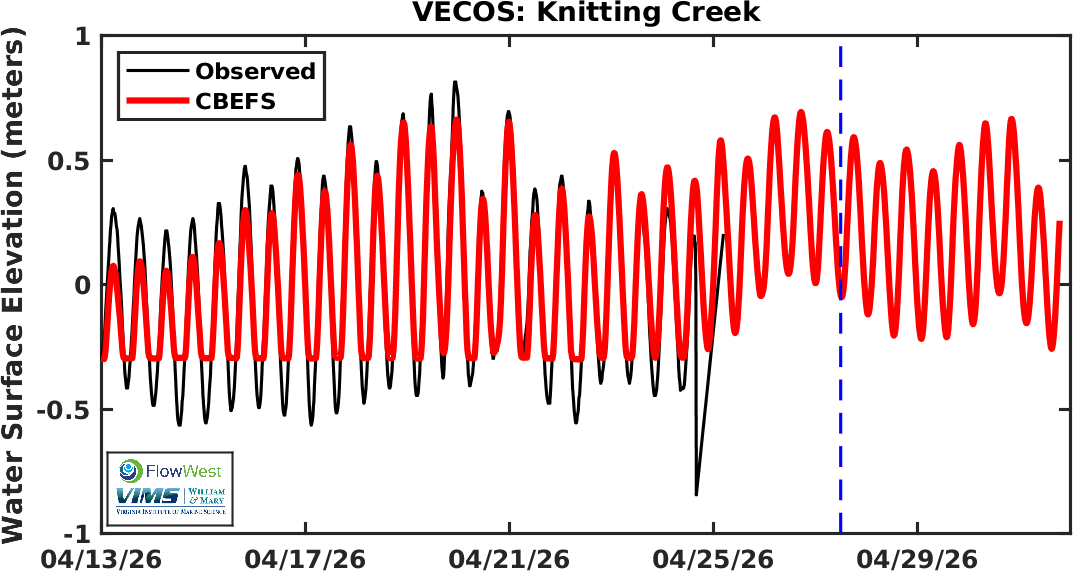
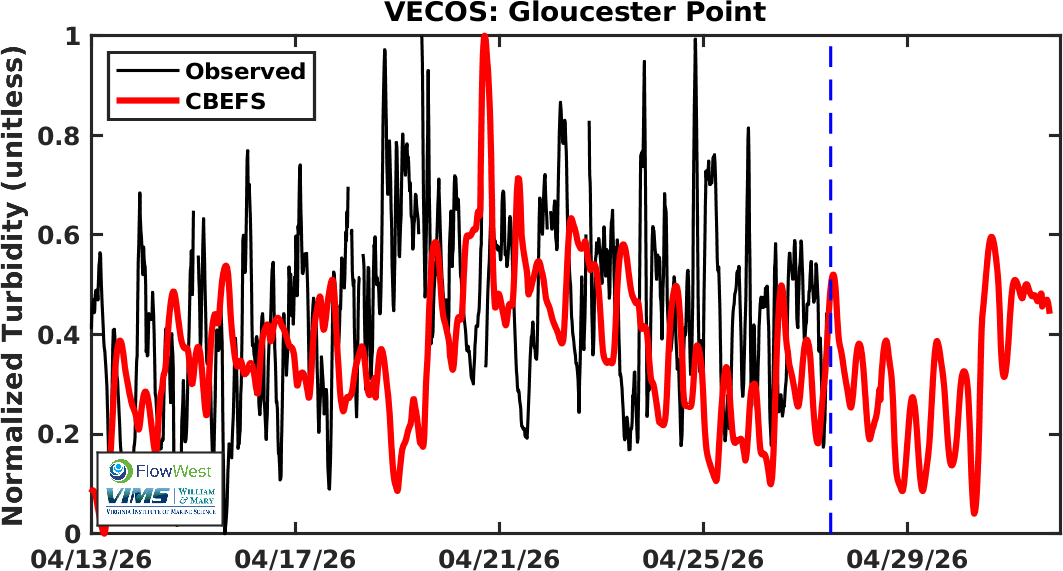
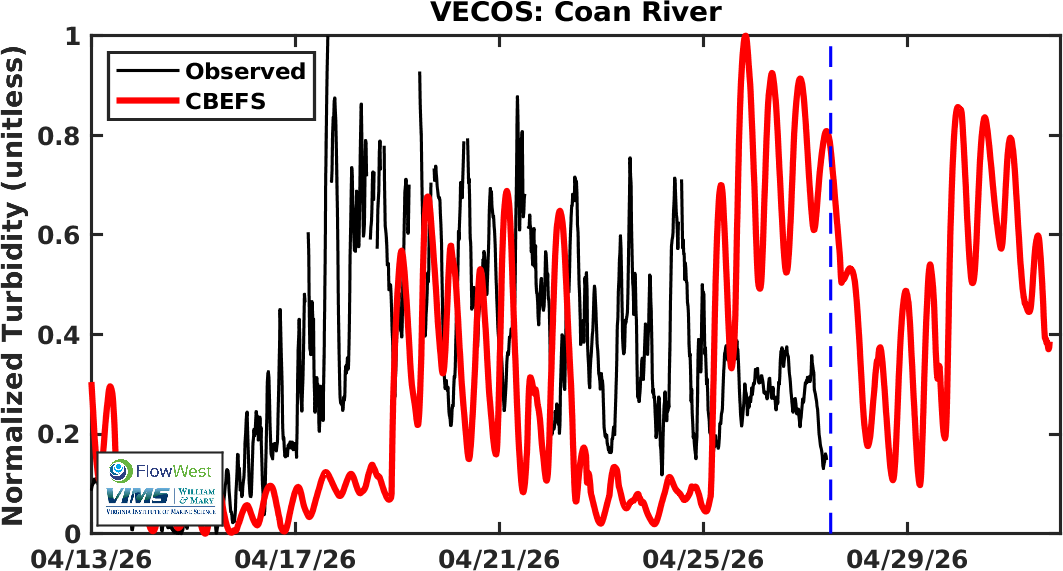
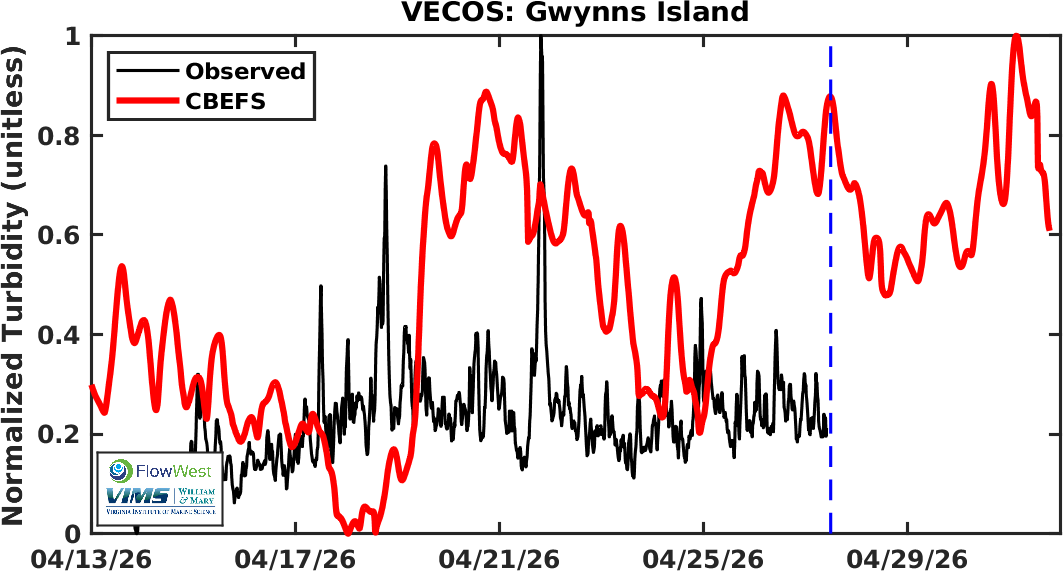
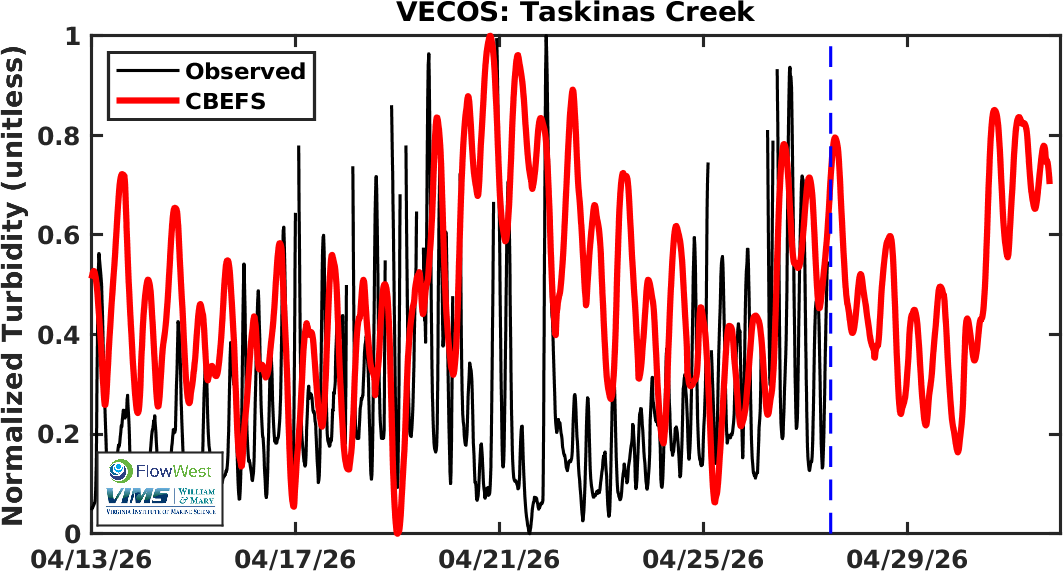
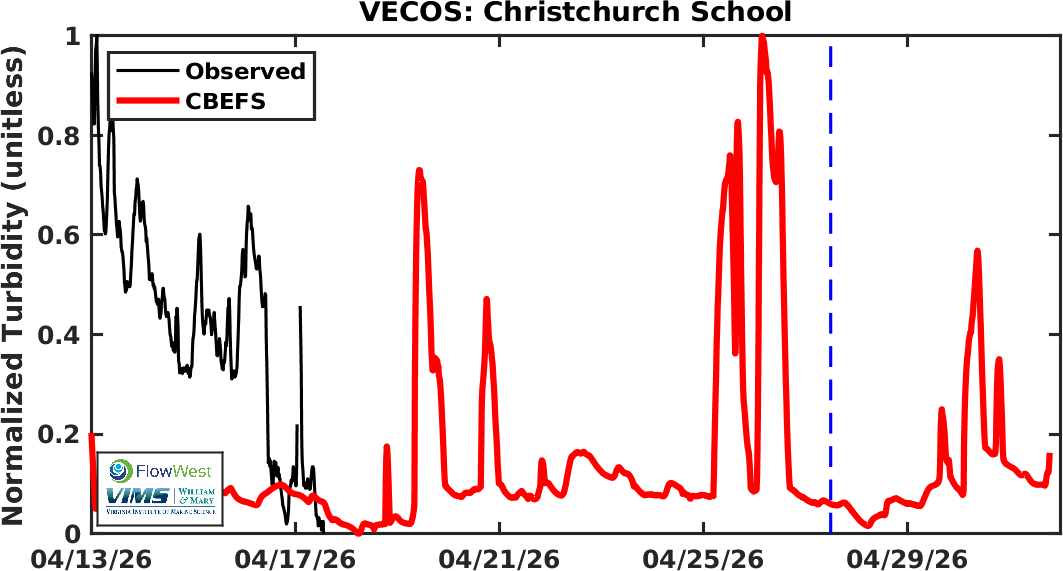
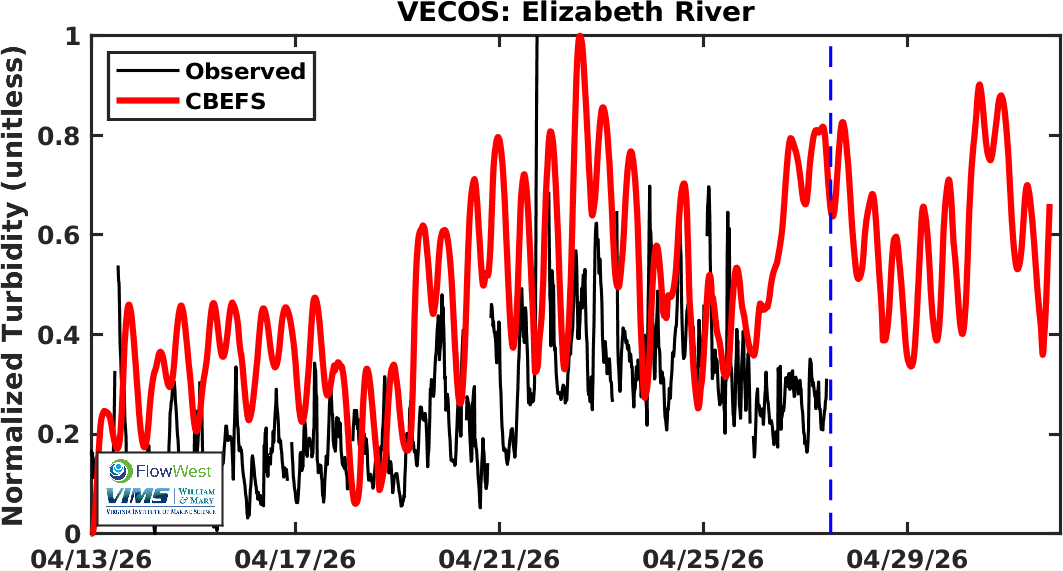
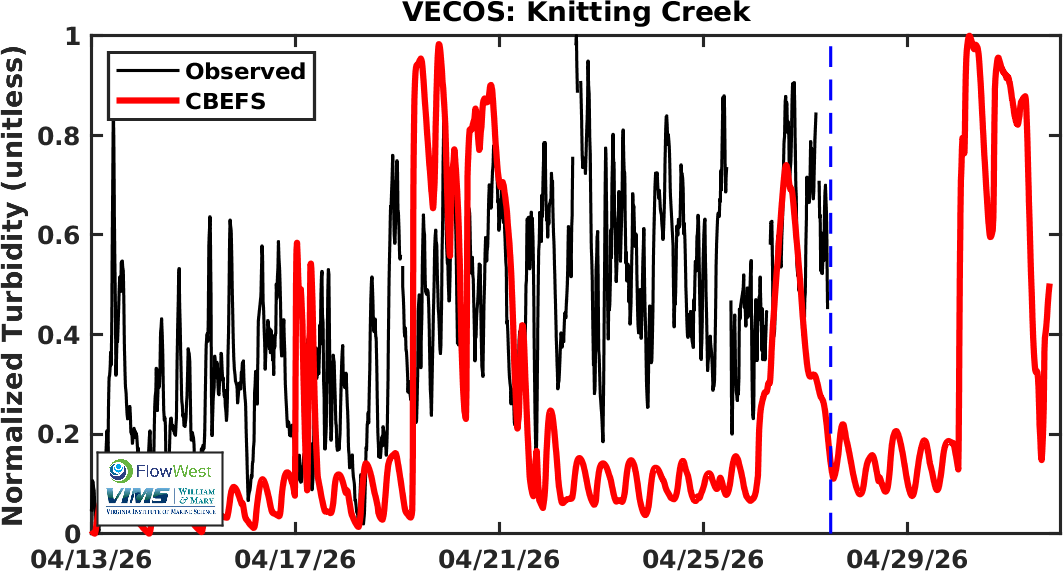
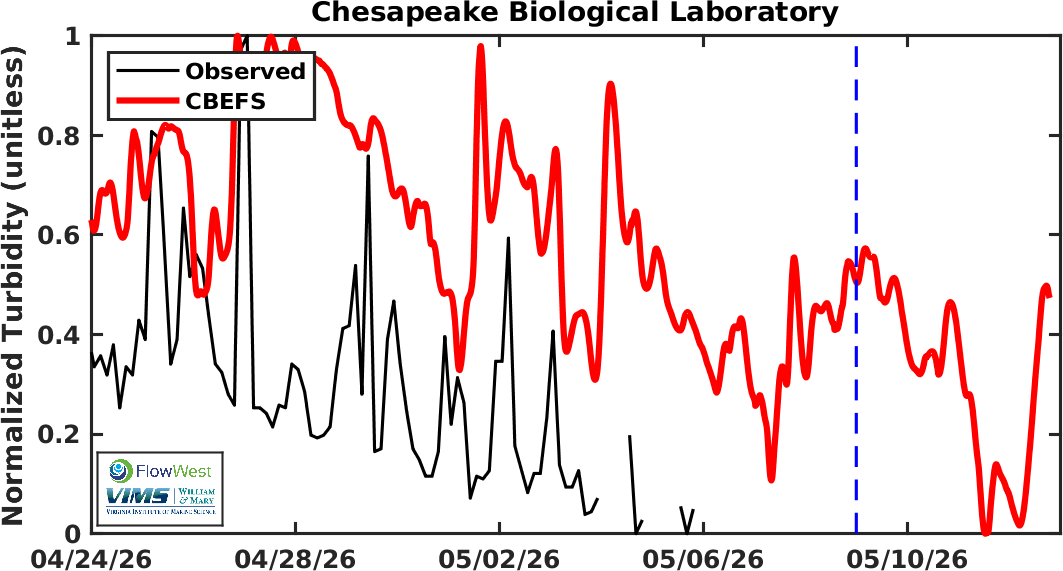
VECOS: Turbidity (Near Surface, Preliminary)These images show the CBEFS (red) and the observed (black) turbidity over the last 14 days and for the 5-day forecast. Note that VECOS data are collected as turbidity in NTU units. However, turbidity is an optical property of the water and cannot be directly simulated by CBEFS. As such, CBEFS "turbidity" is based on CBEFS Secchi depth calculated from CBEFS suspended sediment concentration and CBEFS amount of plakton in the water. Secchi depth is an alternate metric for water clarity than direct turbidity measurements. A 1-hour running mean is applied to the observed turbidity to smooth some of the very-short-duration variability that can occur in turbidity data. Observed turbidity and model-estimated Secchi depth are then normalized so they have the same range (e.g., from 0 [clearer water] to 1 [murkier water]). Turbidity observations also are prone to "biofouling" where growth (e.g., algae) on the sensor results in the appearance of higher turbidity than actually exists, further making model-data comparisons challenging. As such, these images are PRELIMINARY and should only be used for research purposes as appropriate methods for comparing CBEFS to oberved optical turbidity are still being devloped.
|
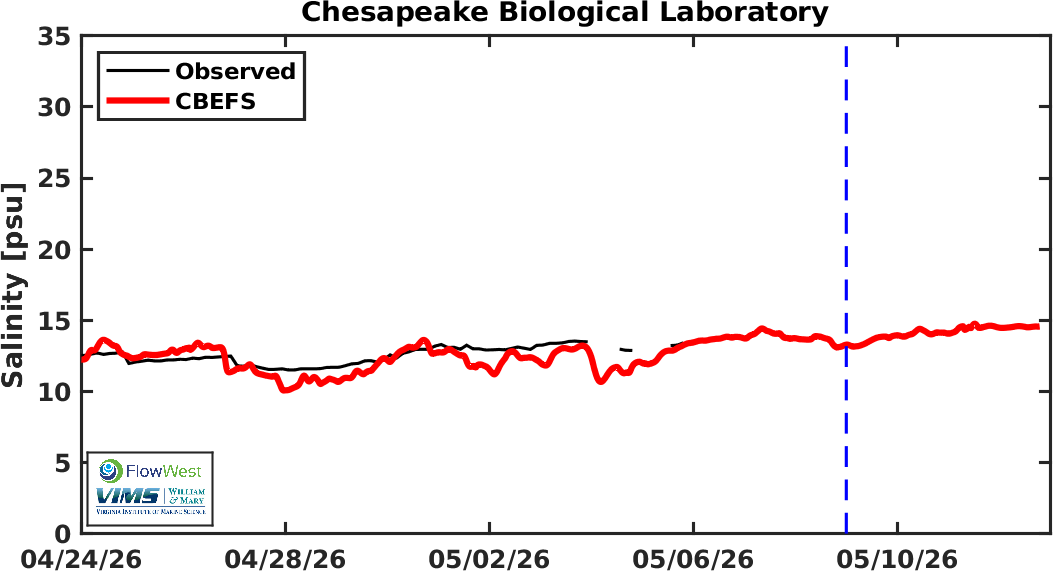
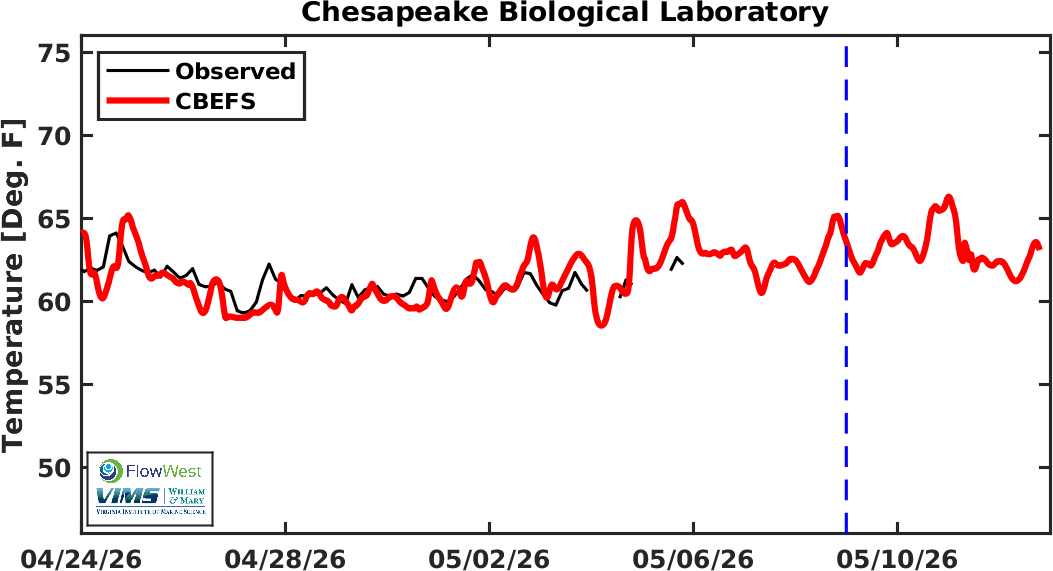
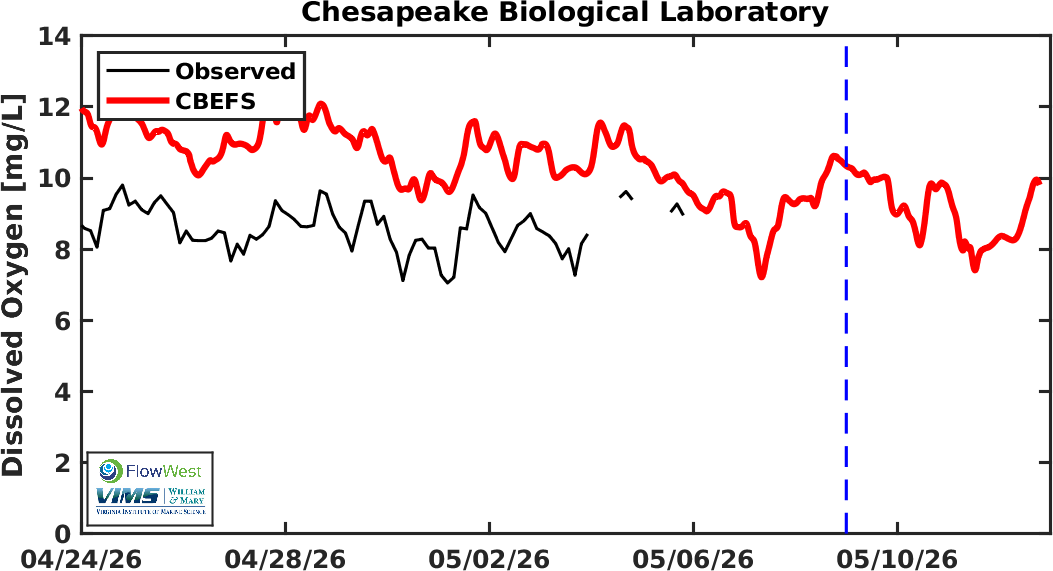
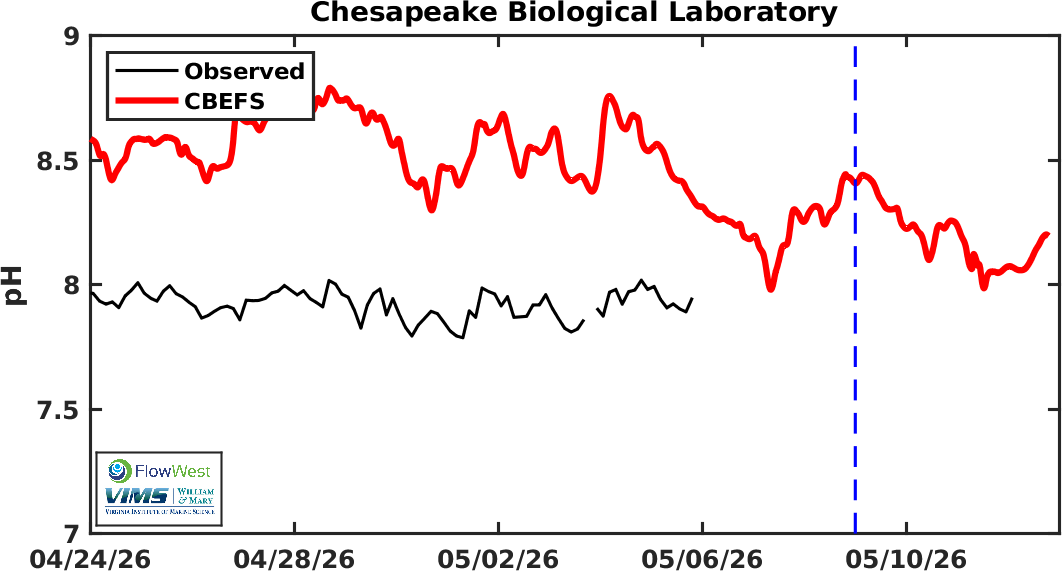
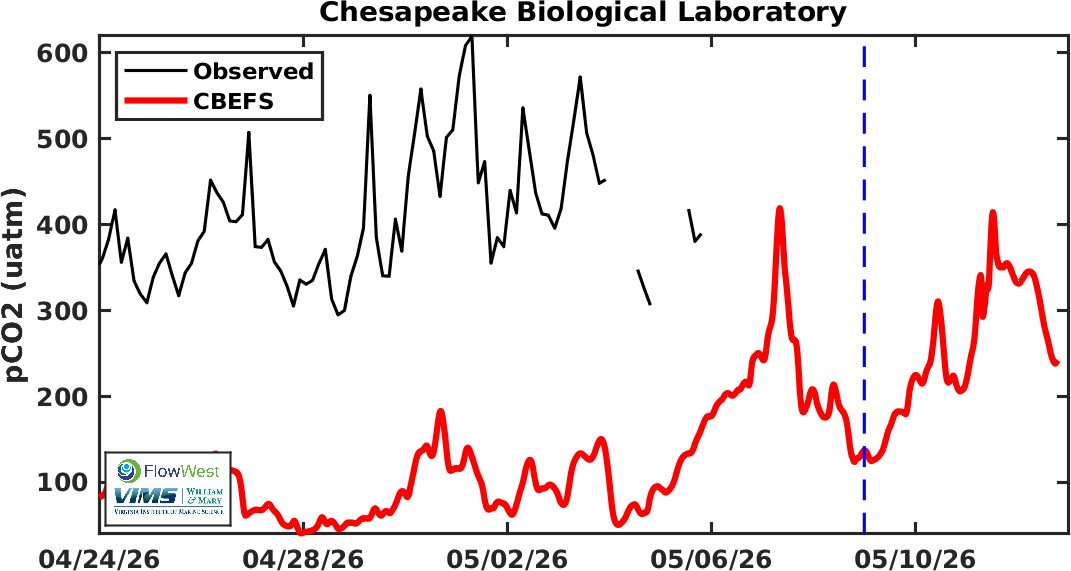
Chesapeake Biological Laboratory: Patuxent RiverThe Chesapeake Biological Laboratory is located where the Patuxent River meets the Chesapeake Bay and is the oldest publicly supported marine laboratory on the East Coast. Data from the end of their pier are available in real time for comparing CBEFS model forecasts to observed data. These images show the CBEFS forecasts (red) and the observed data (black) over the last 14 days and for the 5-day forecast. The current date and time is marked with a dashed vertical blue line; the dashed blue line moves throughout the day marking the time of day to the latest hour.
Note that CBIBS data are collected as turbidity in NTU units. However, turbidity is an optical property of the water and cannot be directly simulated by CBEFS. As such, CBEFS "turbidity" is based on CBEFS Secchi depth calculated from CBEFS suspended sediment concentration and CBEFS amount of plakton in the water. Secchi depth is an alternate metric for water clarity than direct turbidity measurements. Observed turbidity and model-estimated Secchi depth are then normalized so they have the same range (e.g., from 0 [clearer water] to 1 [murkier water]). Turbidity observations also are prone to "biofouling" where growth (e.g., algae) on the sensor results in the appearance of higher turbidity than actually exists, further making model-data comparisons challenging. As such, these images are PRELIMINARY and should only be used for research purposes as appropriate methods for comparing CBEFS to oberved optical turbidity are still being devloped.
|
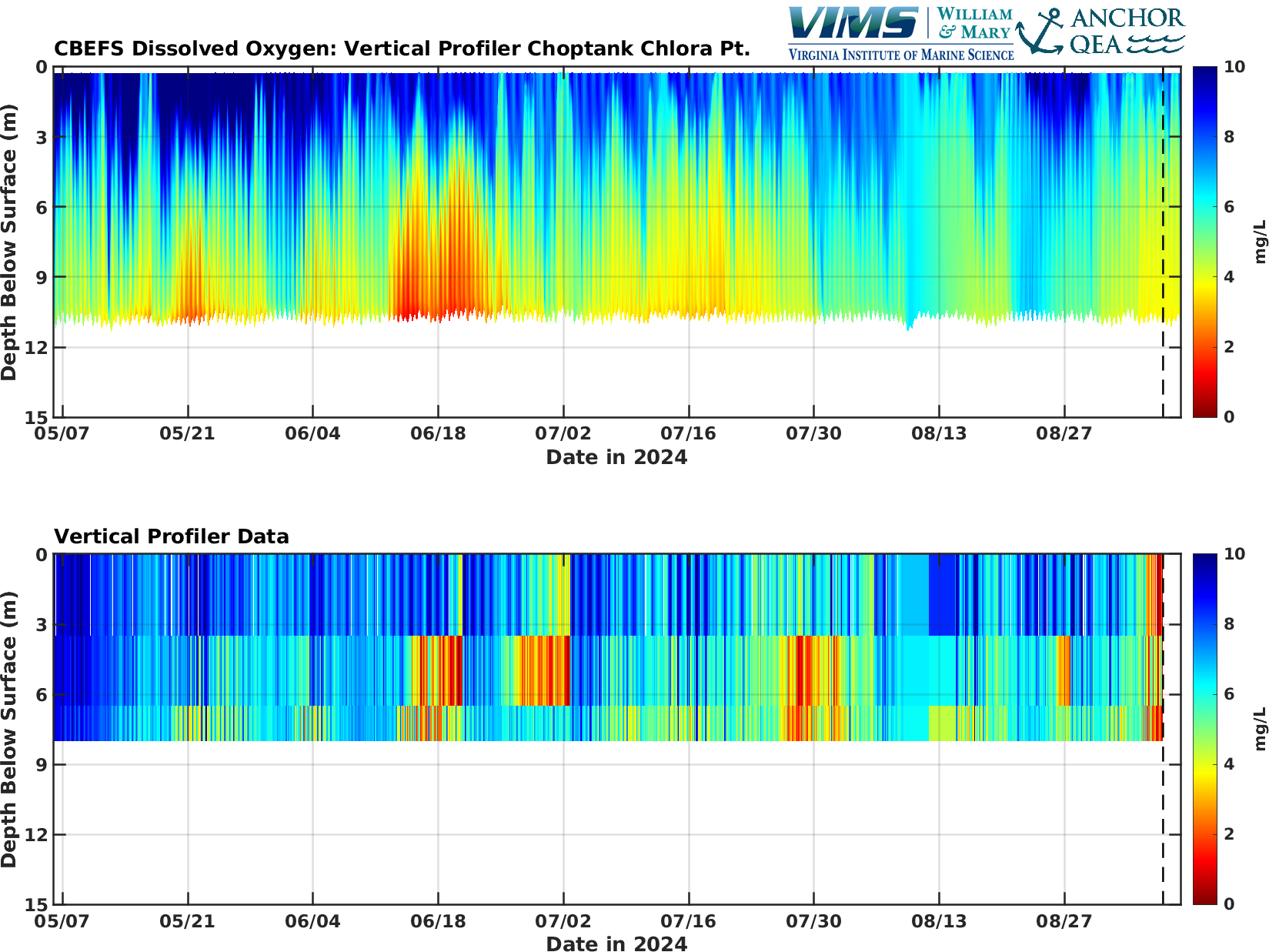
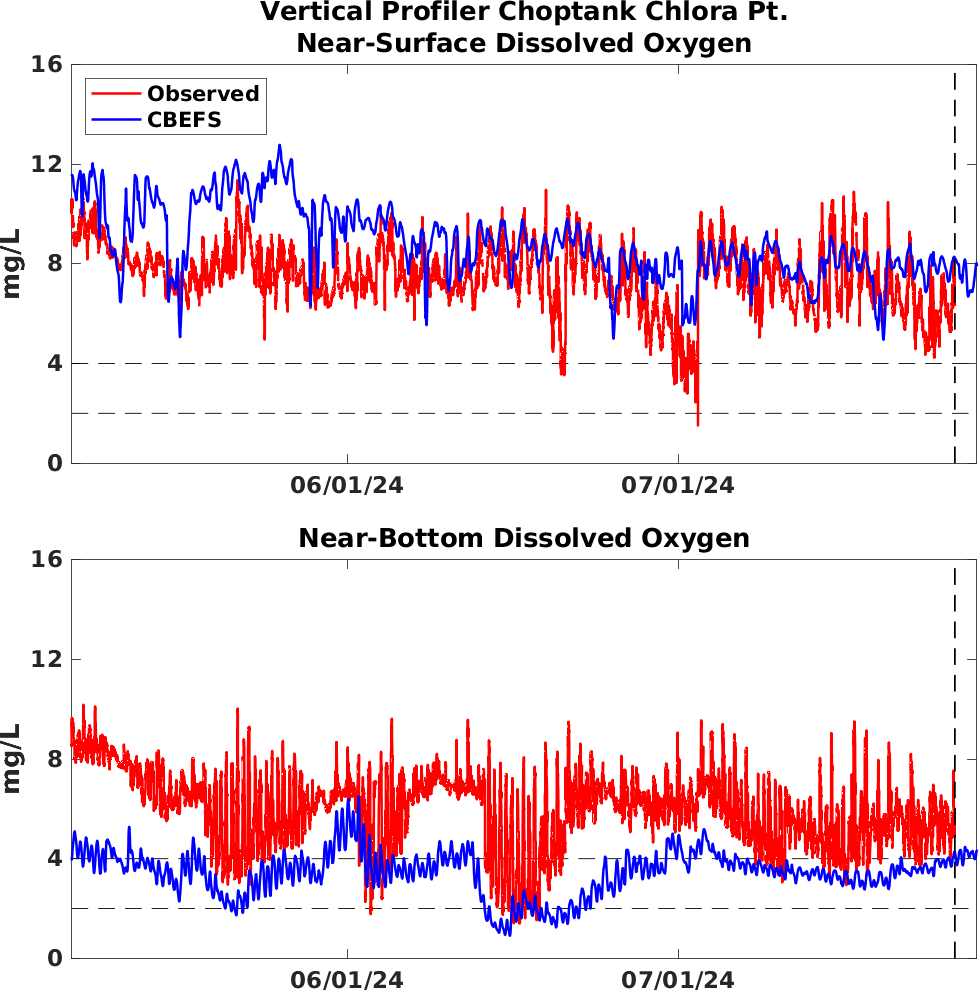
NOAA Vertical Profile Comparisons: Dissolved OxygenThis section compares modeled and observed conditions throughout the water column from near the water surface to near the sediment bed. NOAA has installed vertical arrays of sensors at six locations in the Bay to observe dissolved oxygen, salinity, and water temperature at a higher frequency than is available through the long-term Water Quality Monitoring Program data. These high-frequency data at multiple depths allow for the comparison of CBEFS model results to a relatively new type of data set; specifically allowing for the validation of tidal, daily, and weekly variation in the modeled environmental conditions. CBEFS is compared to the data using 2D plots showing time and depth and line plots showing the near-surface and near-bottom values.
----------------------------------------------------------------------------------------------------------------------
|
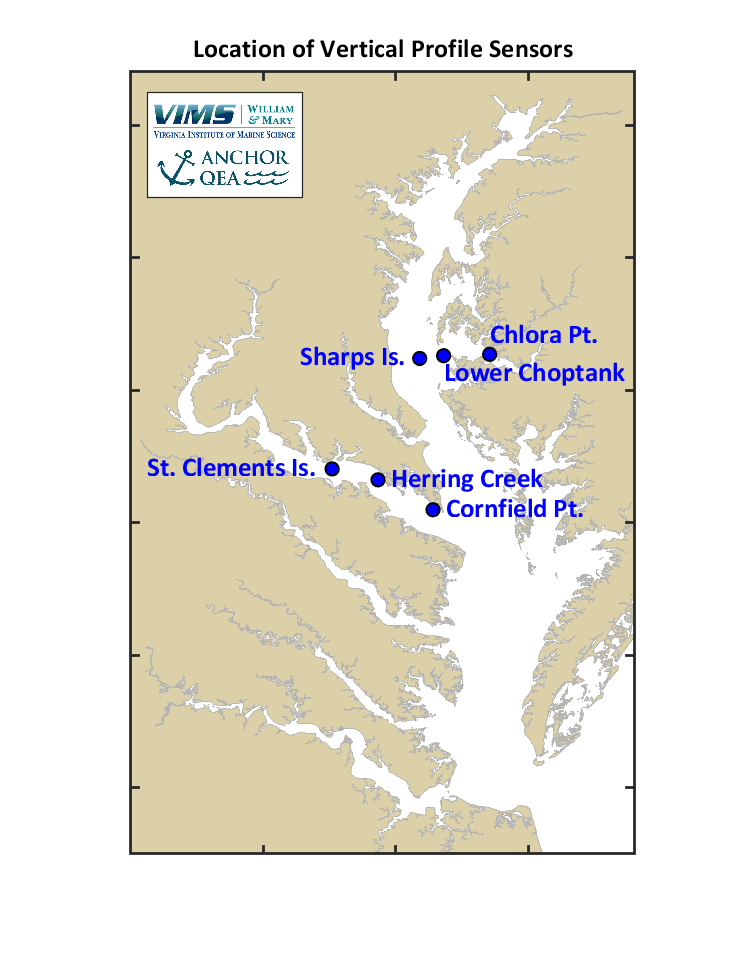
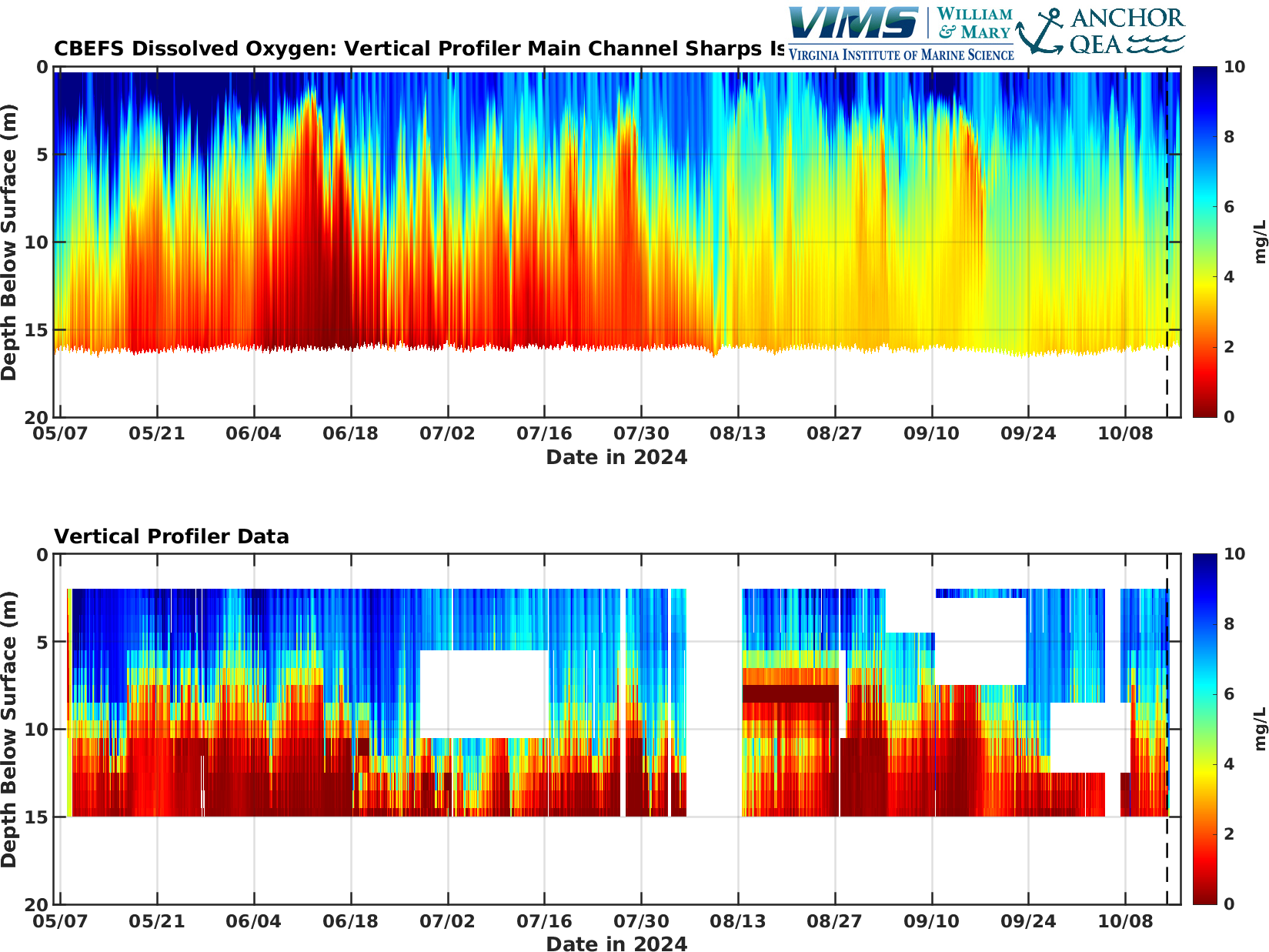
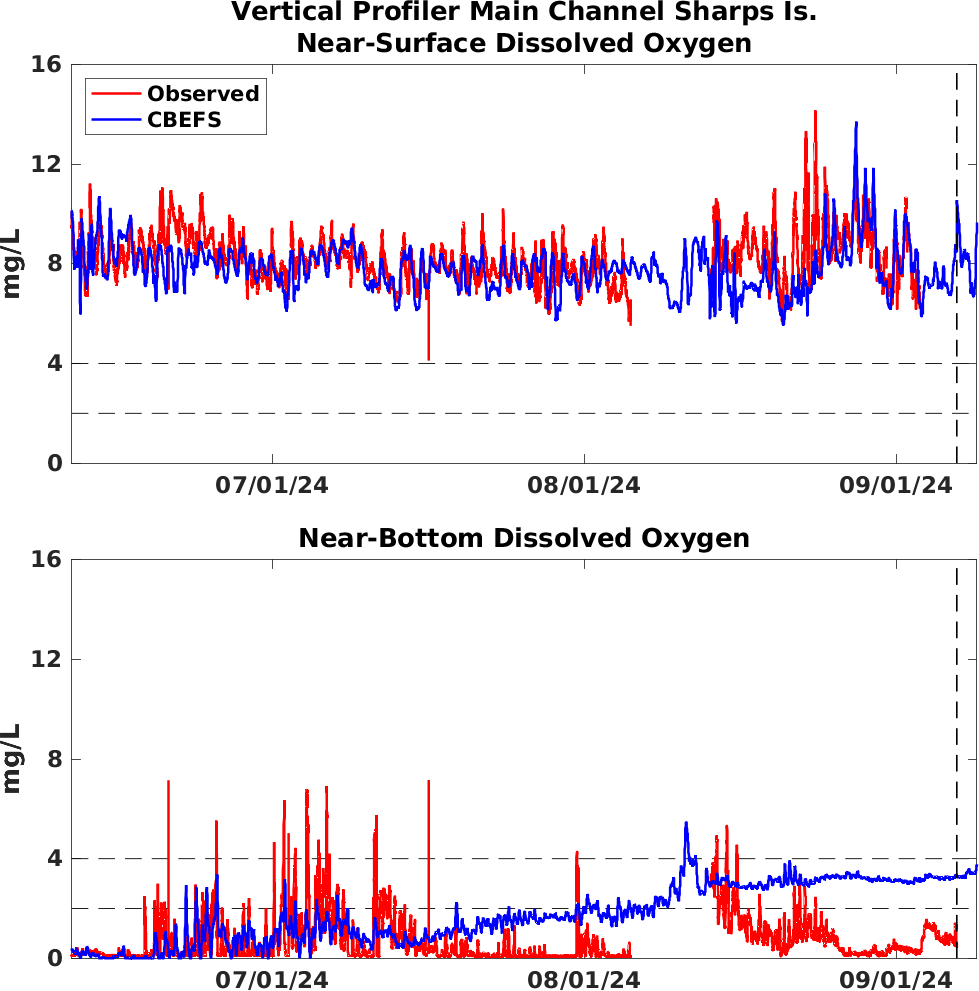
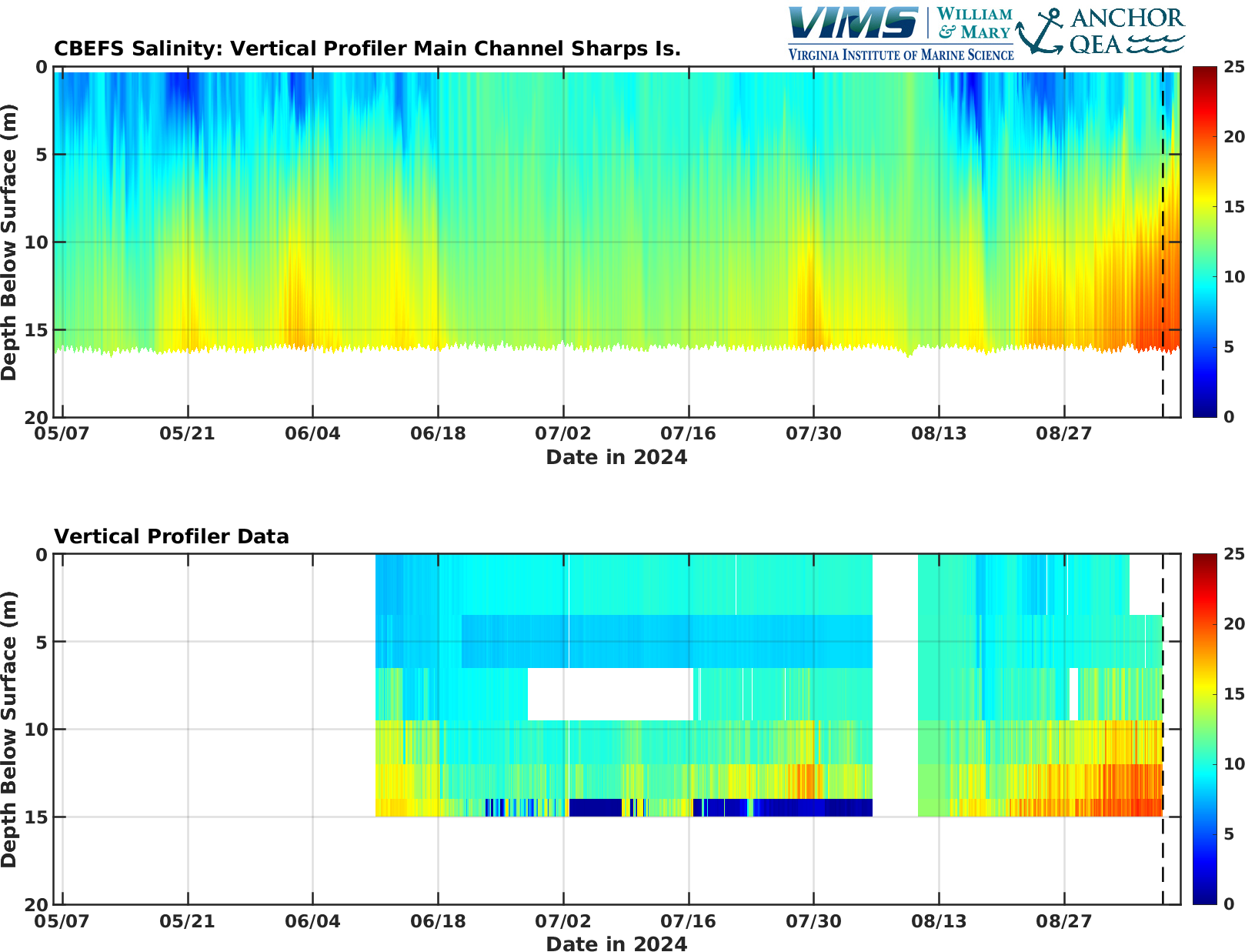
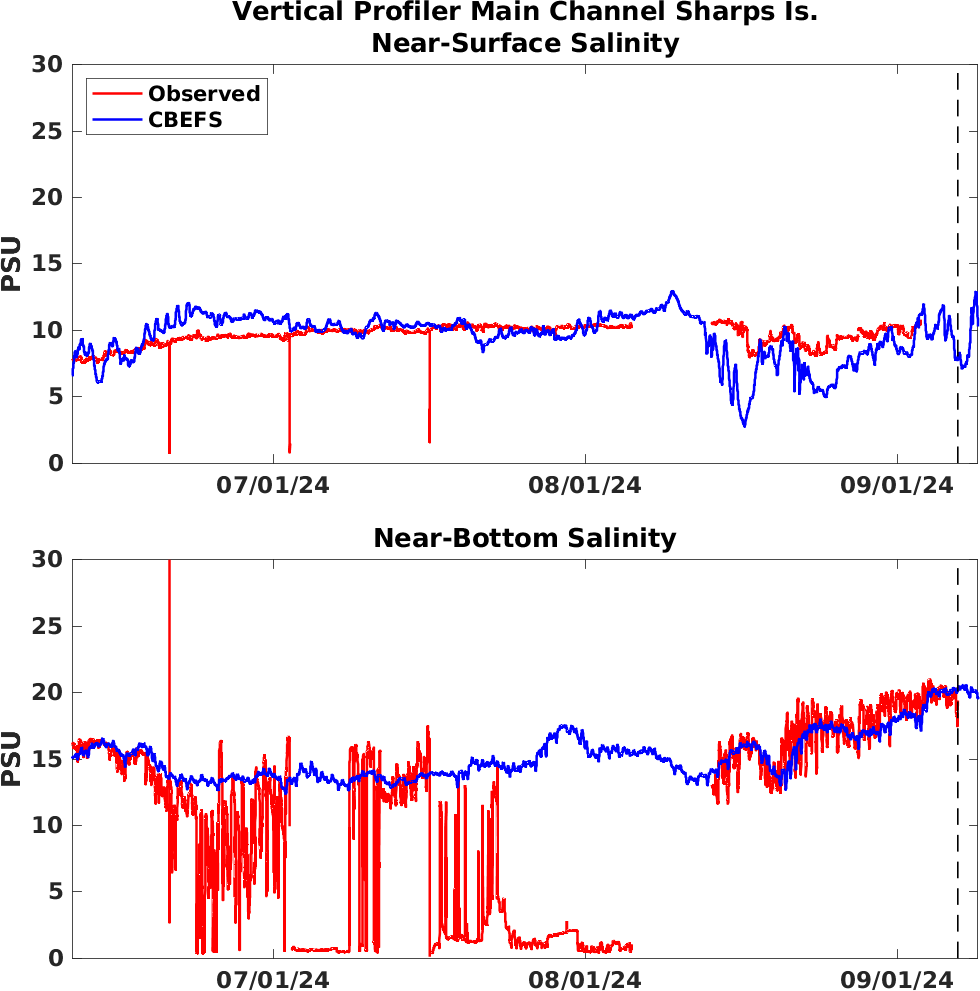
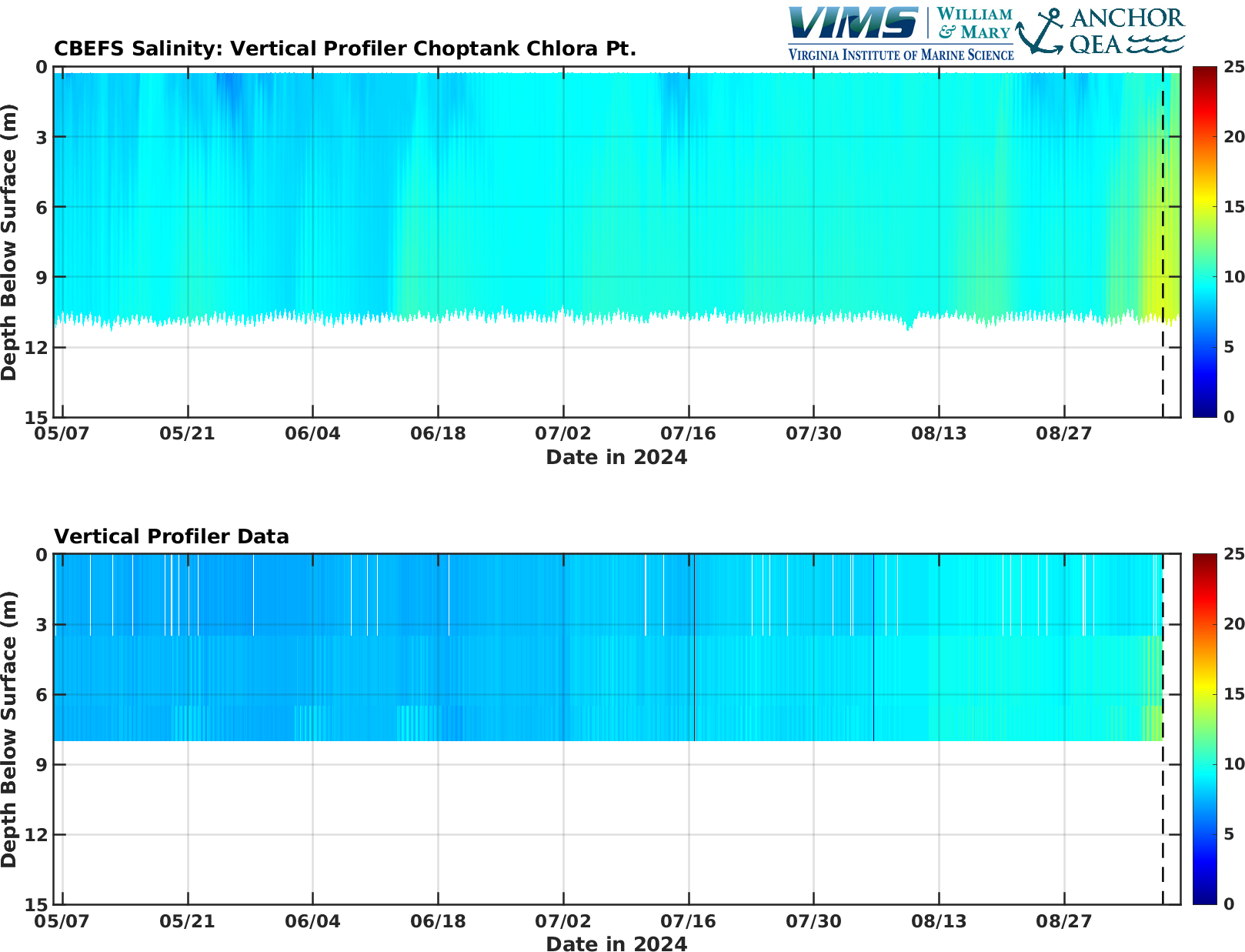
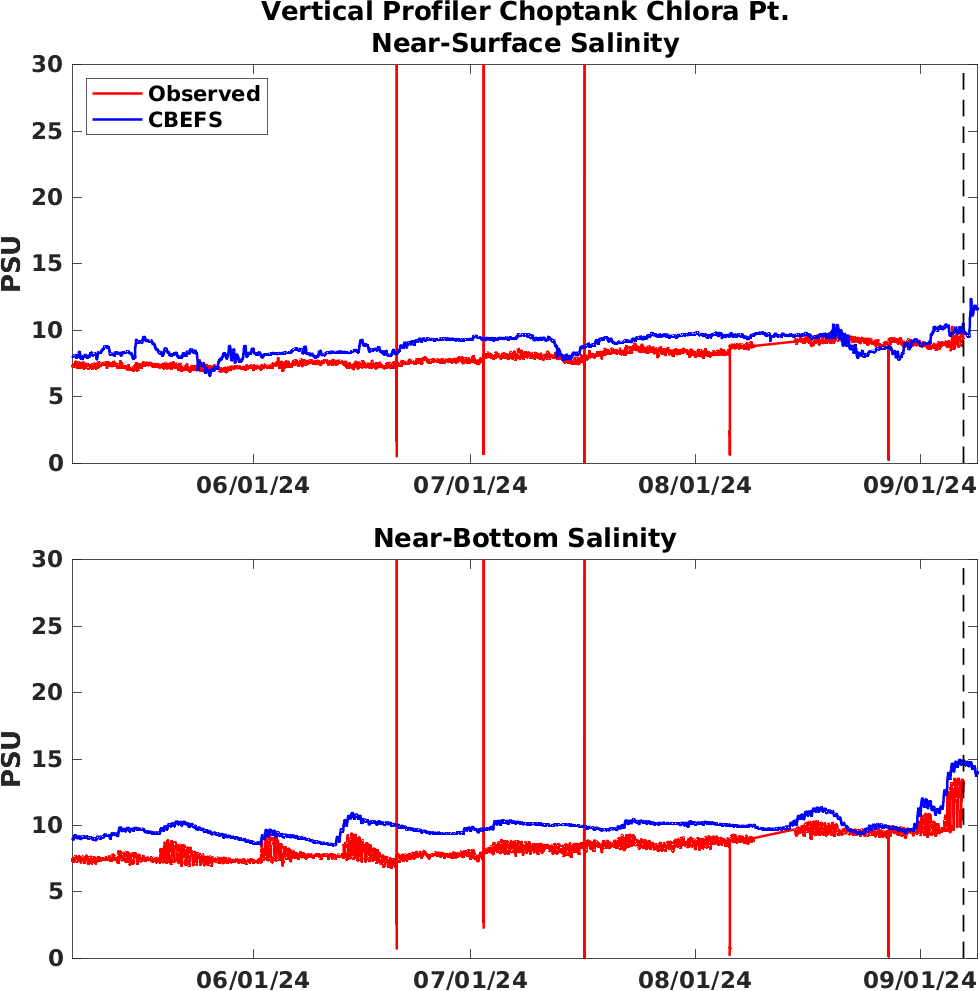
NOAA Vertical Profile Comparisons: Salinity*** NOTE: This dropdown and salinity model-data comparison is retained for research purposes. The salinity data is highly suspect and the model-data comparisons do not reflect the actual accuracy of the model at these locations. *** This section compares modeled and observed conditions throughout the water column from near the water surface to near the sediment bed. NOAA has installed vertical arrays of sensors at six locations in the Bay to observe dissolved oxygen, salinity, and water temperature at a higher frequency than is available through the long-term Water Quality Monitoring Program data. These high-frequency data at multiple depths allow for the comparison of CBEFS model results to a relatively new type of data set; specifically allowing for the validation of tidal, daily, and weekly variation in the modeled environmental conditions. CBEFS is compared to the data using 2D plots showing time and depth and line plots showing the near-surface and near-bottom values.
----------------------------------------------------------------------------------------------------------------------
|
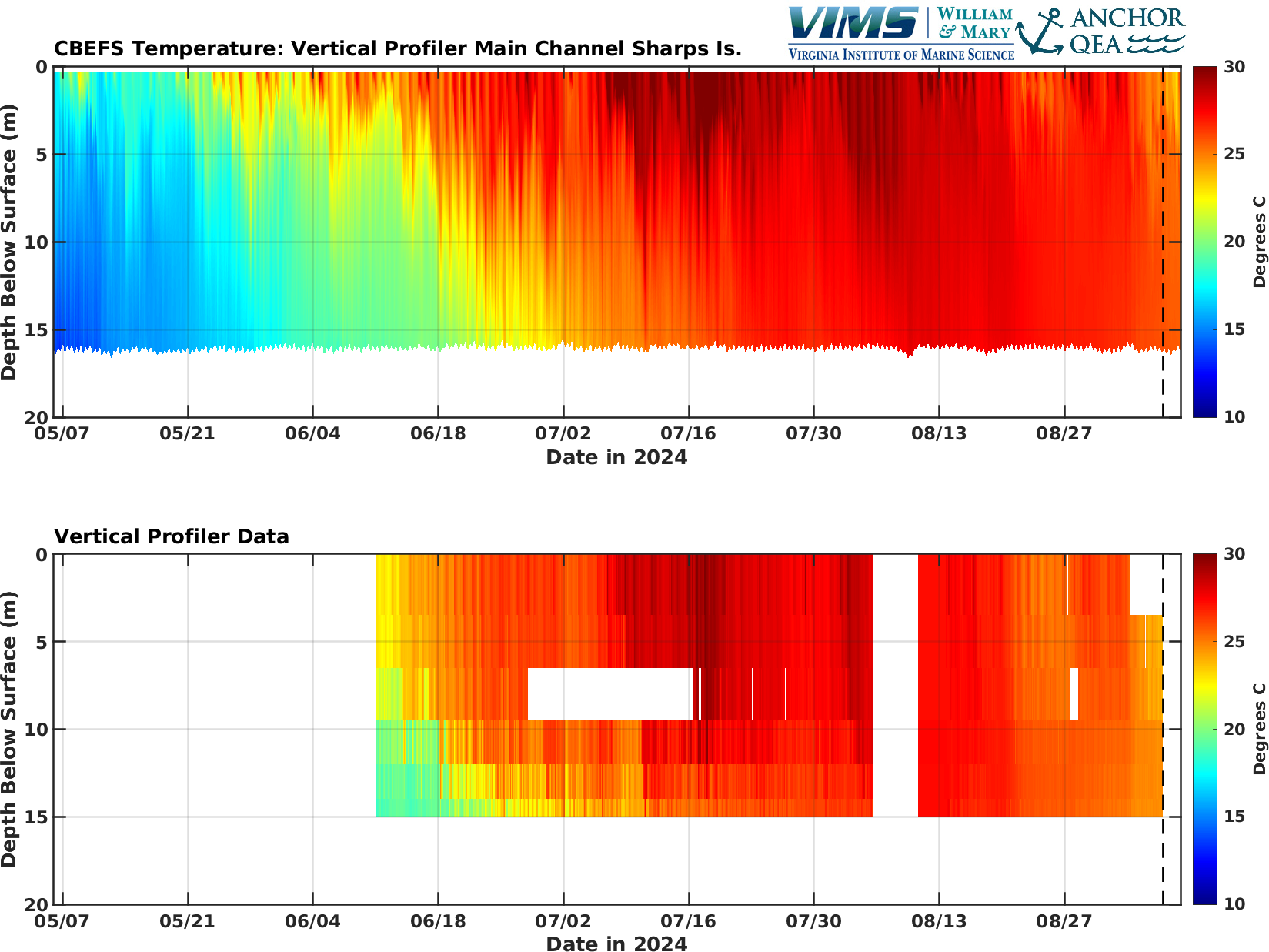
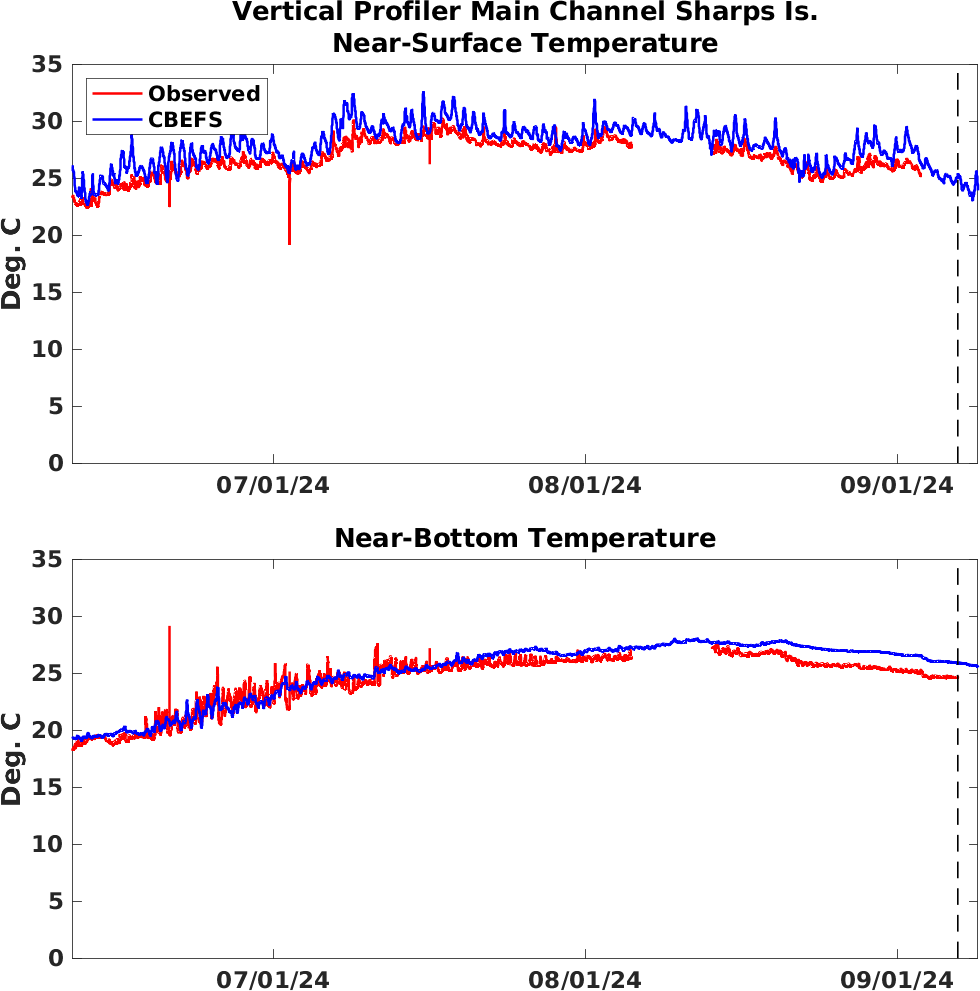
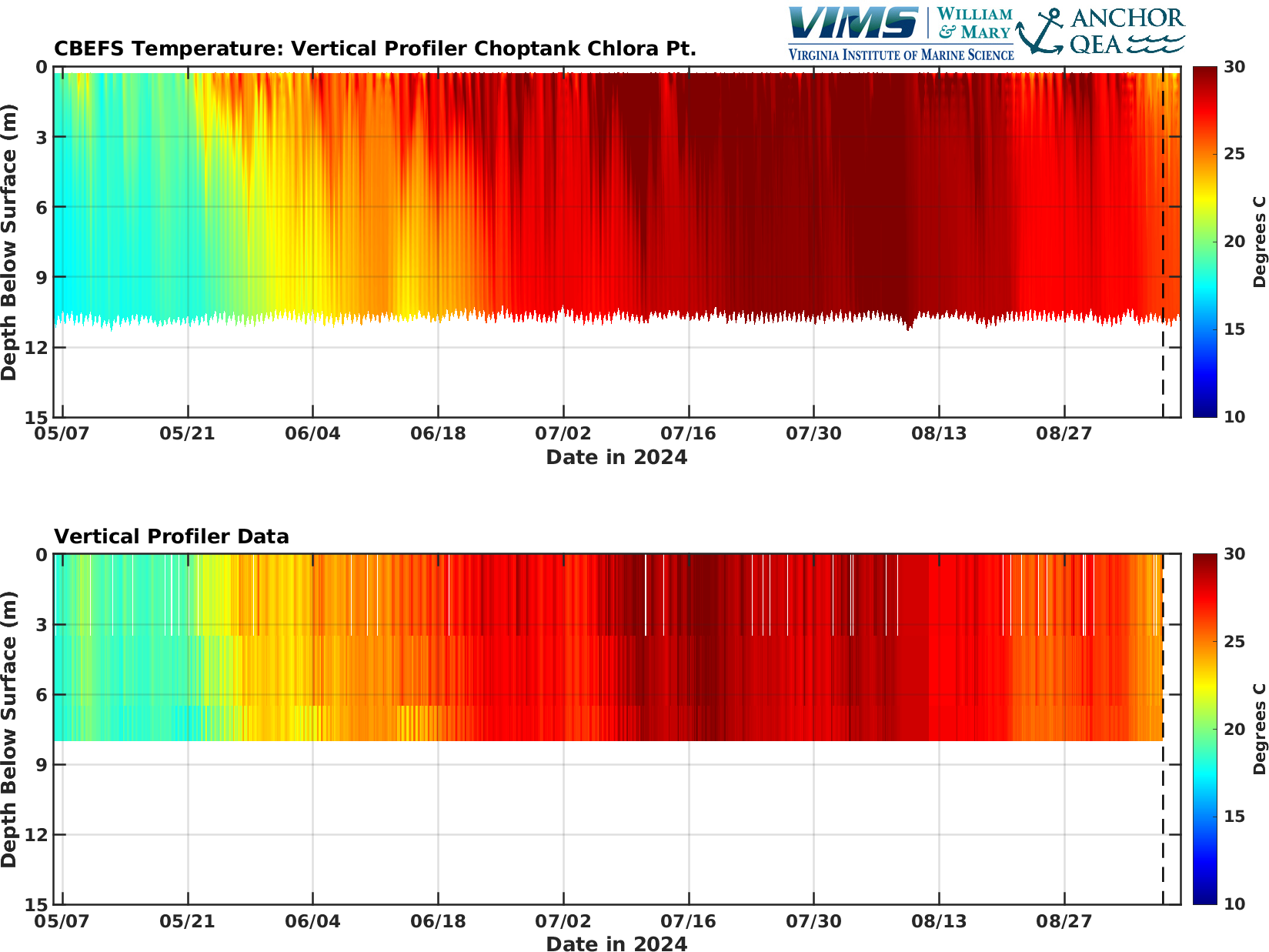
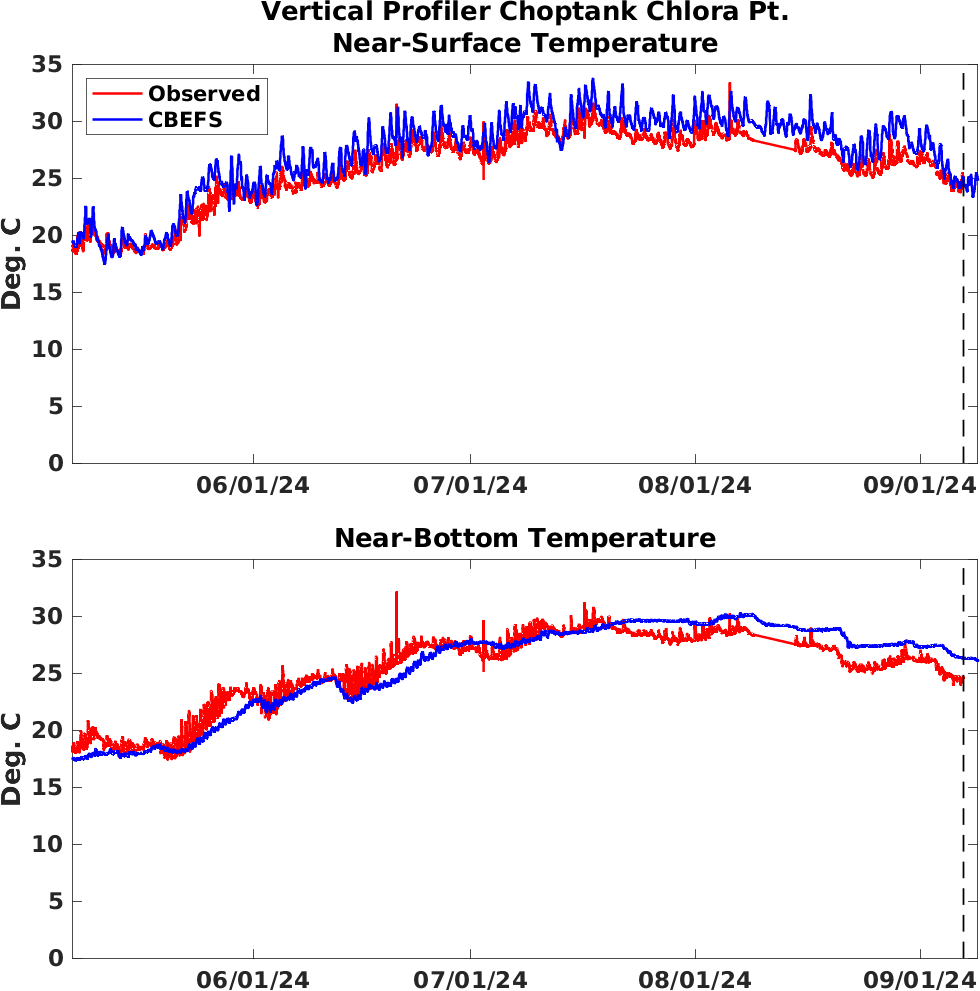
NOAA Vertical Profile Comparisons: Water TemperatureThis section compares modeled and observed conditions throughout the water column from near the water surface to near the sediment bed. NOAA has installed vertical arrays of sensors at six locations in the Bay to observe dissolved oxygen, salinity, and water temperature at a higher frequency than is available through the long-term Water Quality Monitoring Program data. These high-frequency data at multiple depths allow for the comparison of CBEFS model results to a relatively new type of data set; specifically allowing for the validation of tidal, daily, and weekly variation in the modeled environmental conditions. CBEFS is compared to the data using 2D plots showing time and depth and line plots showing the near-surface and near-bottom values.
----------------------------------------------------------------------------------------------------------------------
|
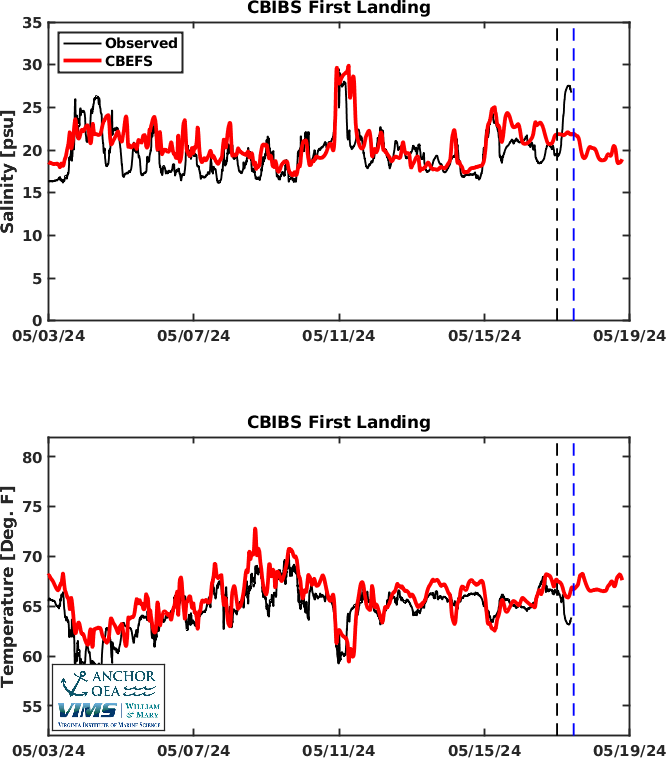
CBIBS Salinity and Temperature (Near Surface)These images show the CBEFS (red) and the observed (black) salinity and temperature over the last 14 days and for the 5-day forecast. Midnight last night (today) is marked with a dashed vertical blue line; the dashed blue line moves throughout the day marking the time of day to the latest hour. These images are used to visually determine how well the CBEFS values and the timing of increases or decreases matches the observed values.
----------------------------------------------------------------------------
----------------------------------------------------------------------------
----------------------------------------------------------------------------
----------------------------------------------------------------------------
----------------------------------------------------------------------------
----------------------------------------------------------------------------
----------------------------------------------------------------------------
---------------------------------------------------------------------------- |
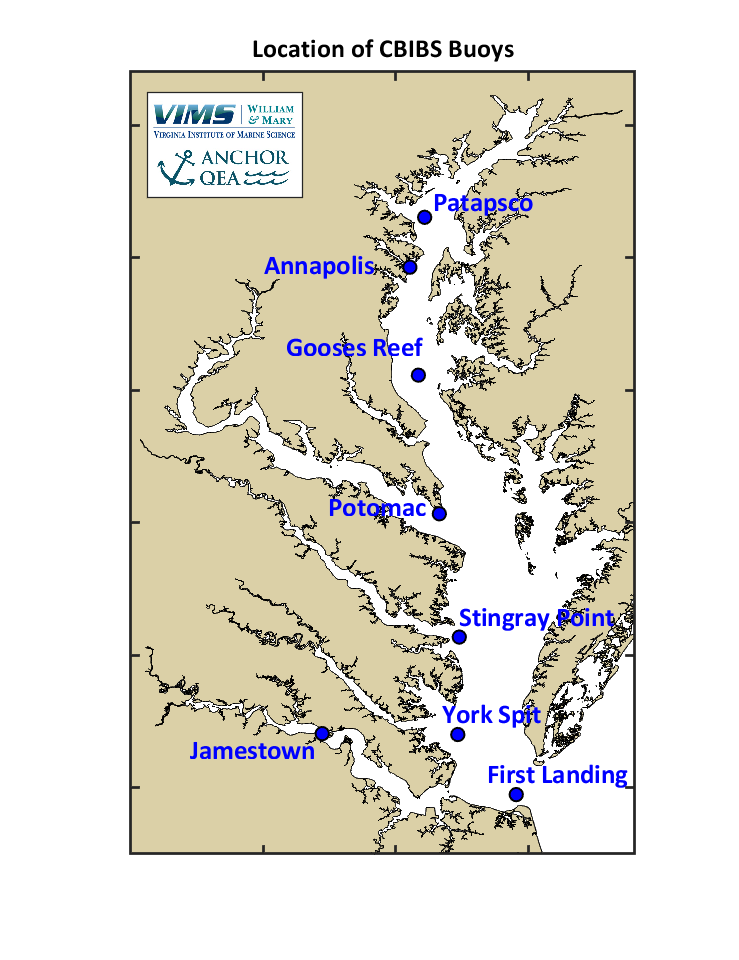
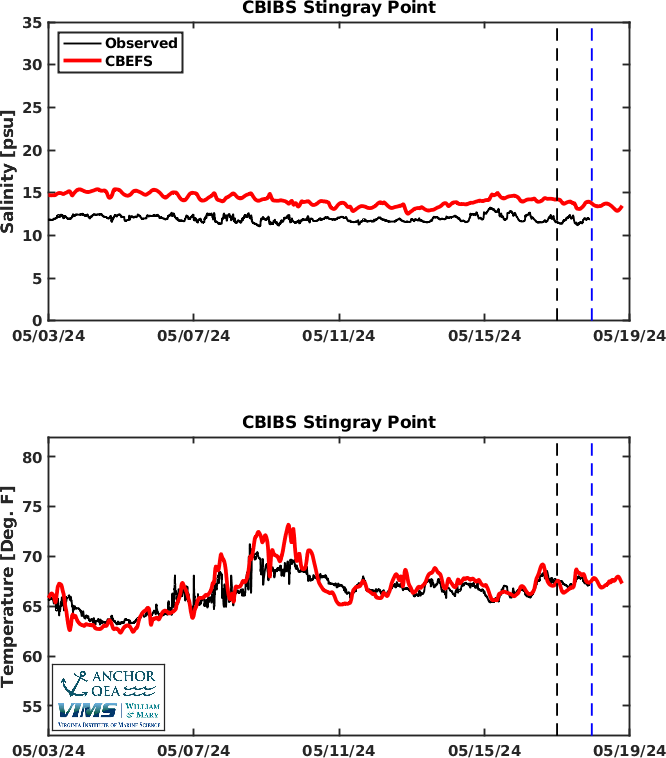
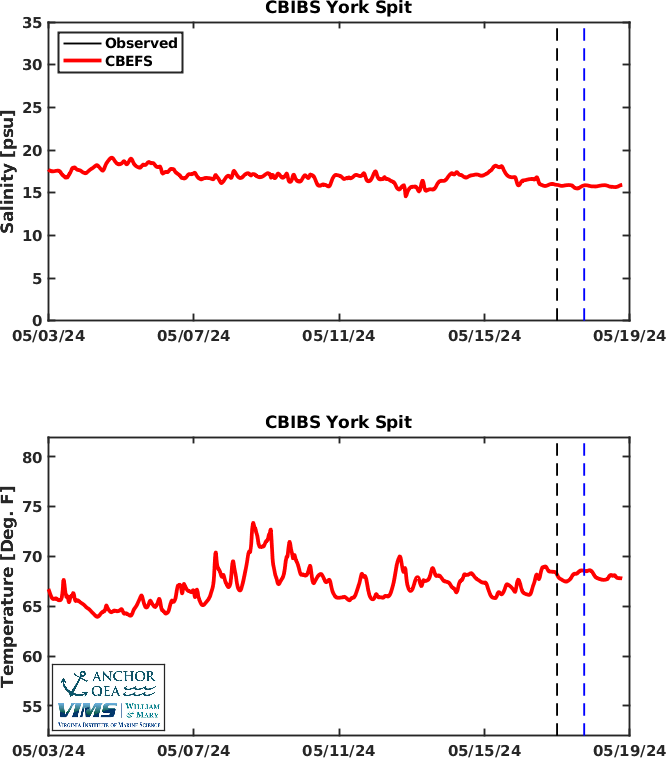
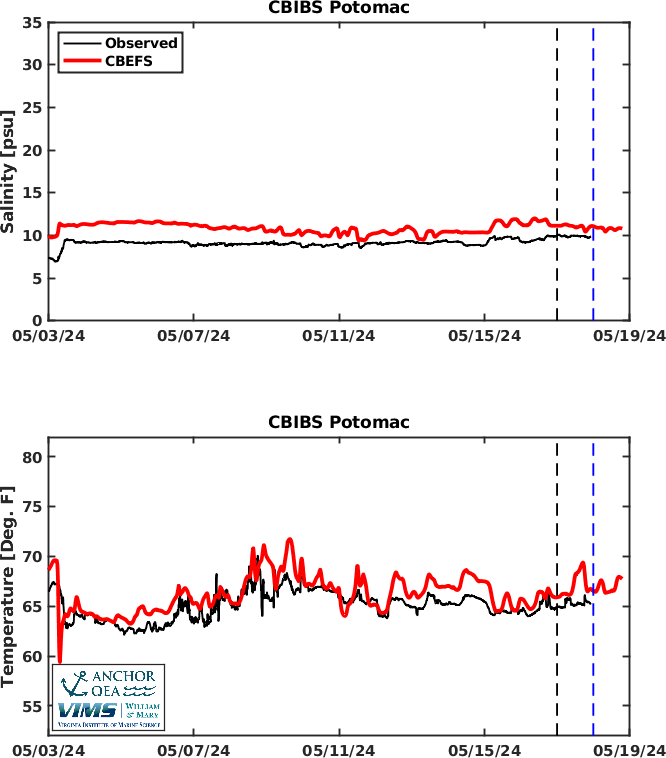
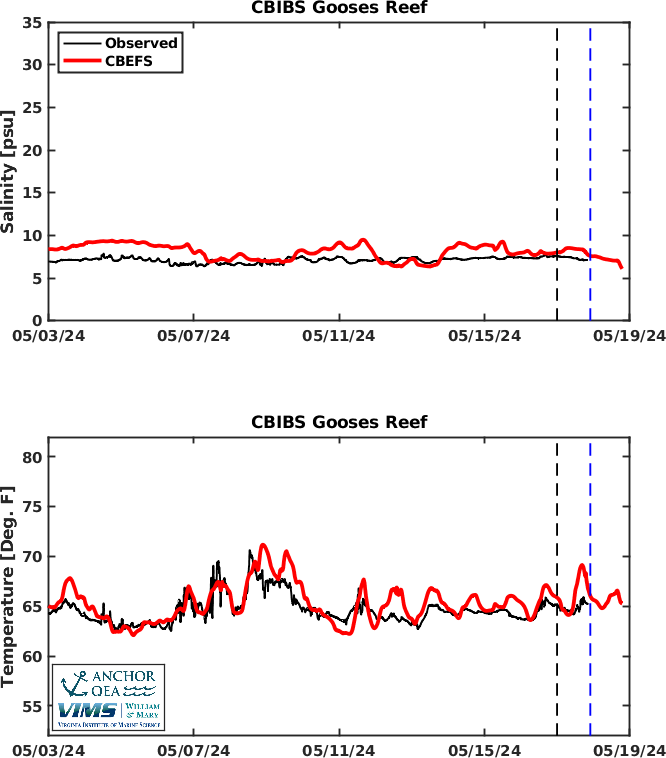
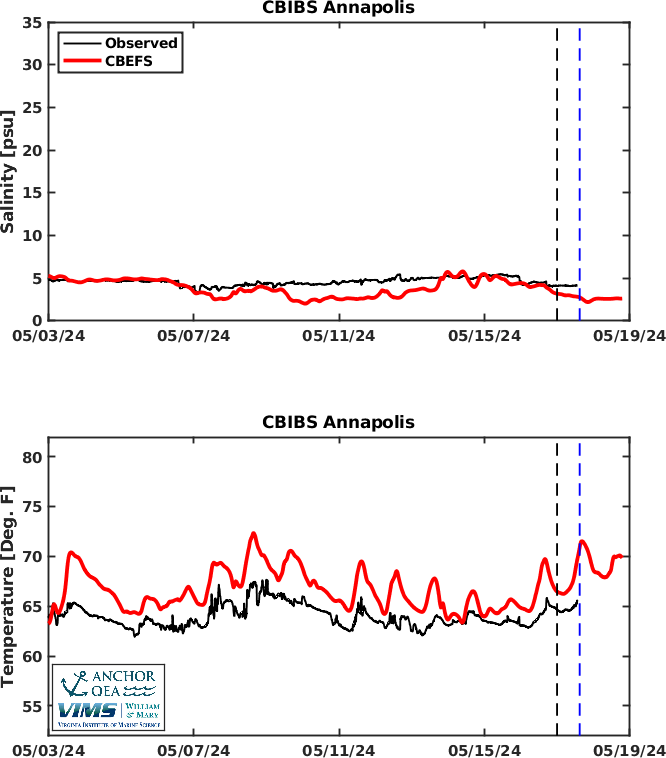
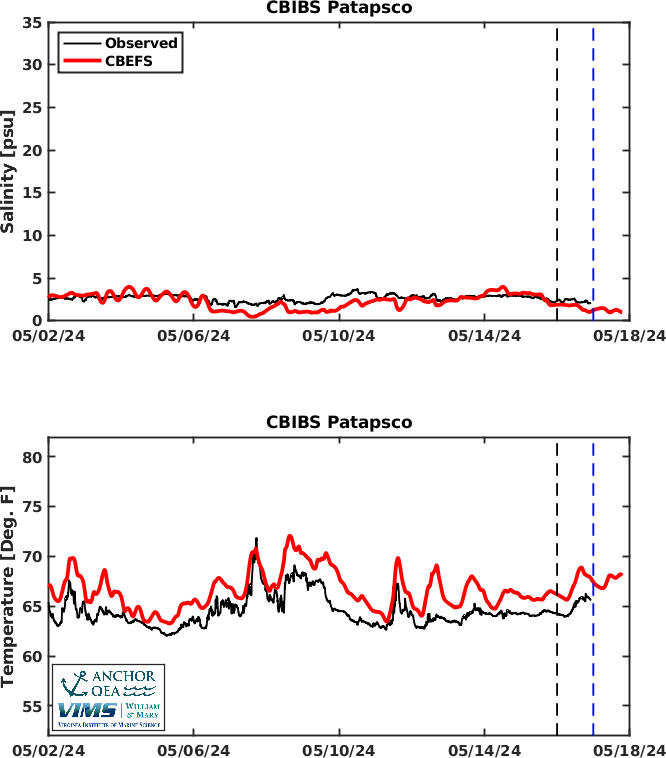
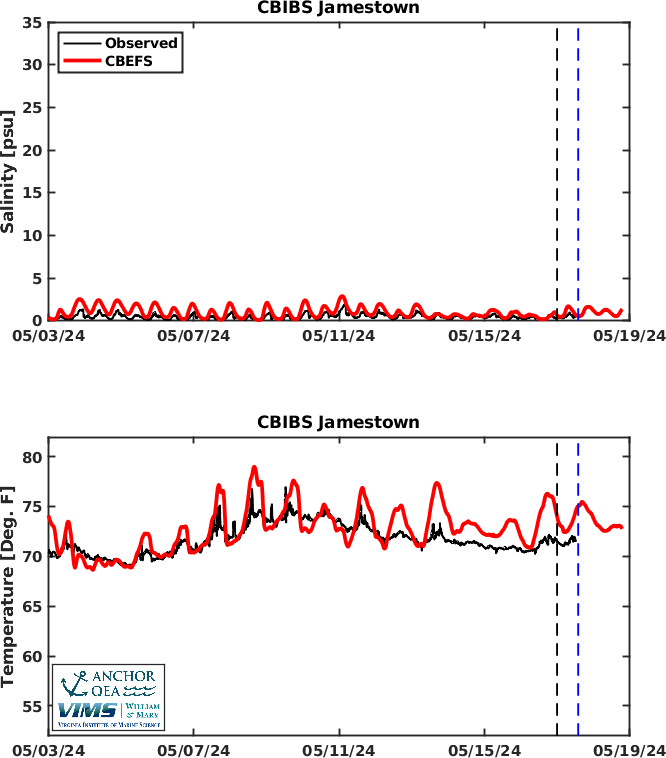
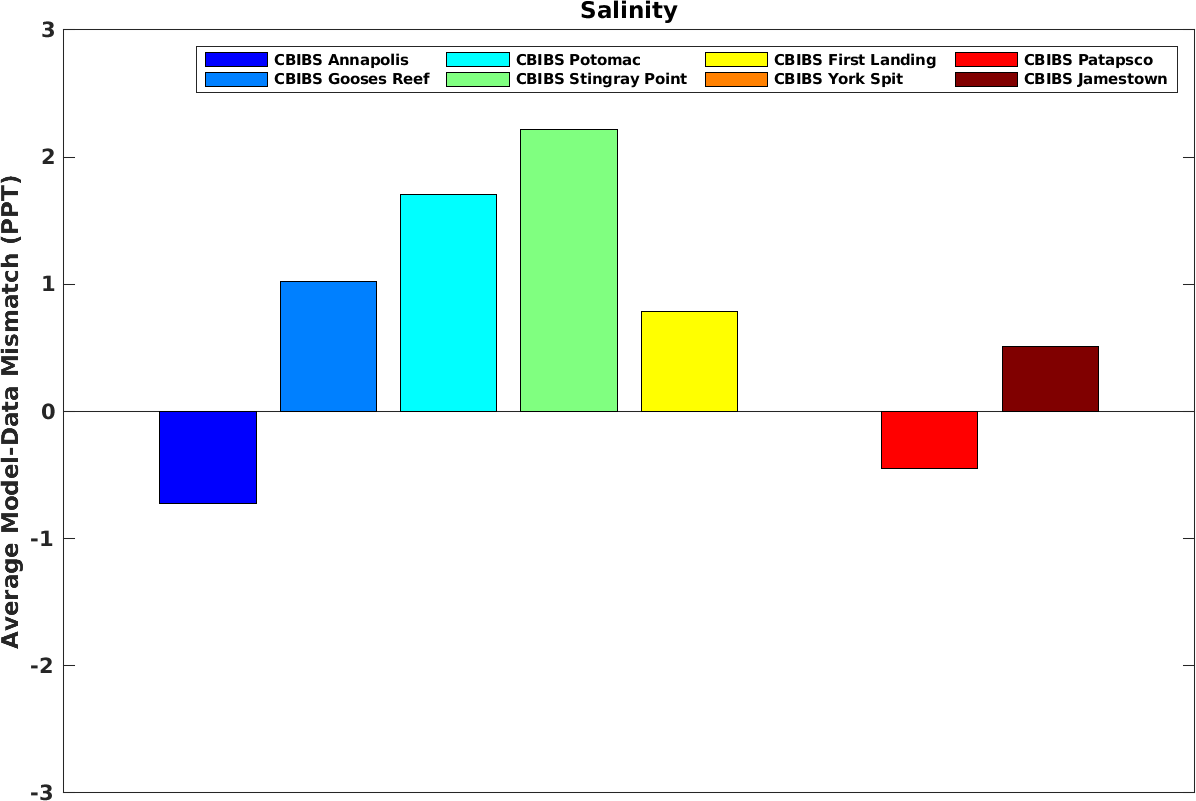
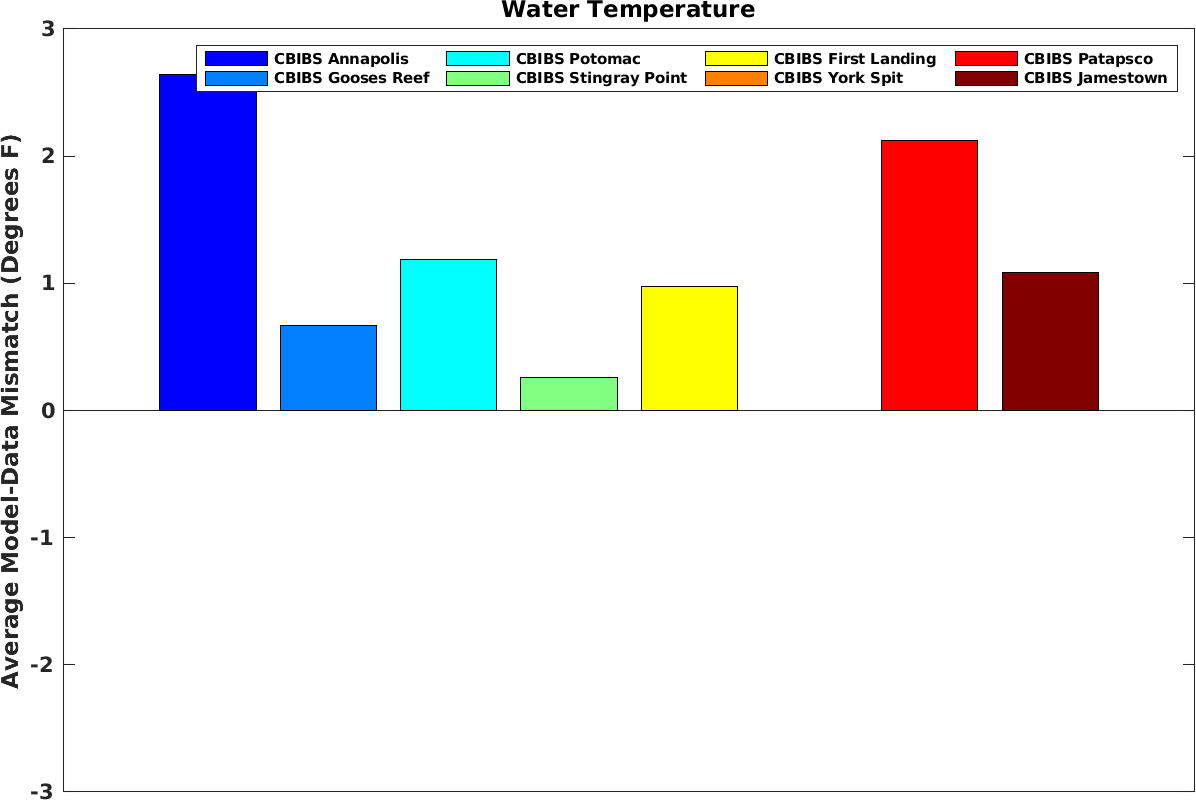
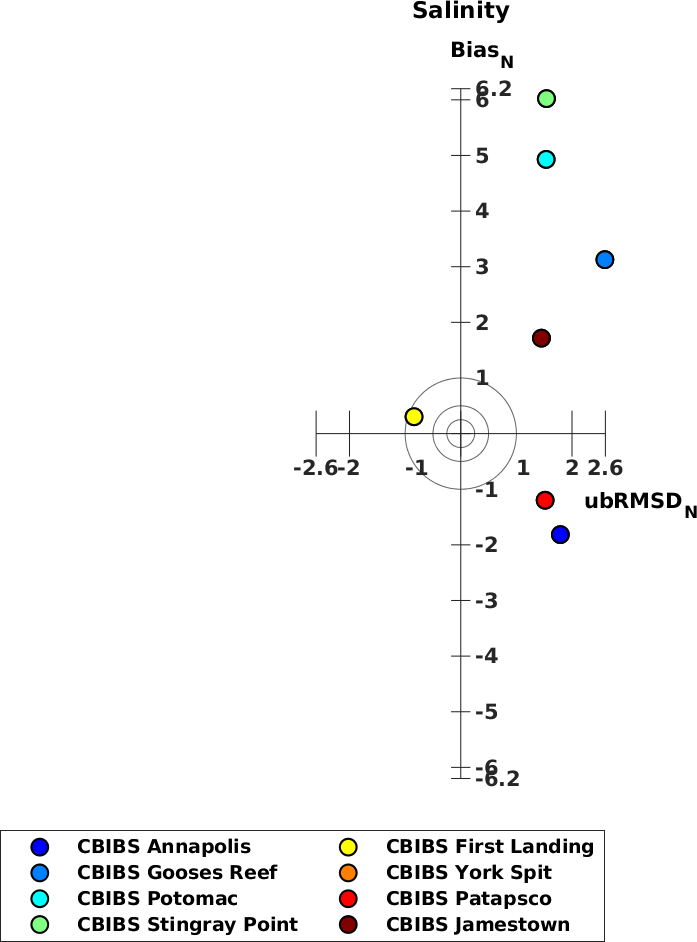
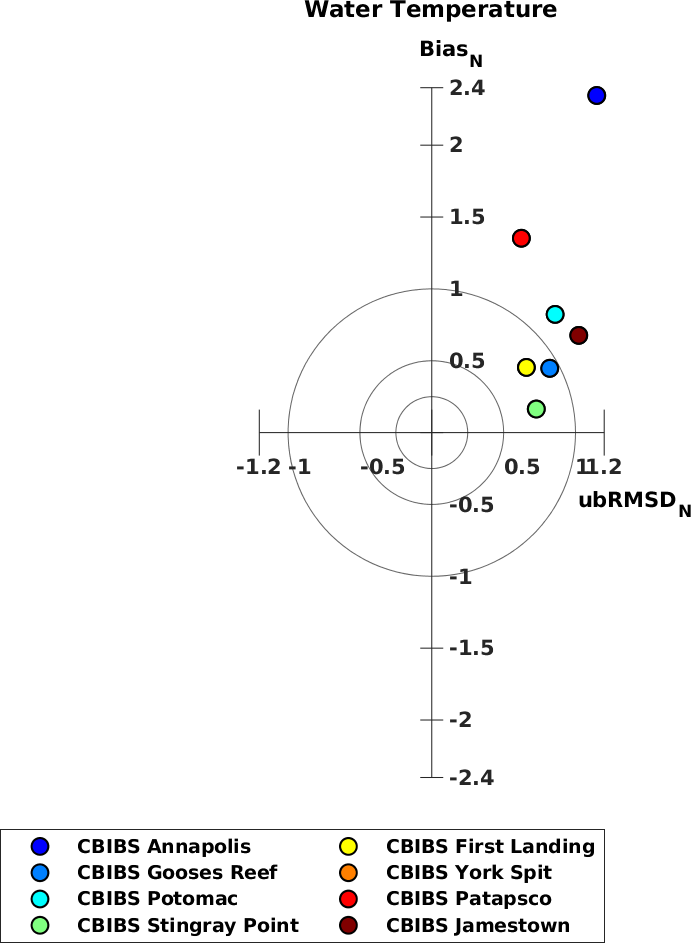
CBIBS: Average CBEFS Salinity and Temperature Accuracy (Near Surface)The first images provides the average difference between the CBEFS salinity and water temperature and the observed values at each location. The average difference is calculated over the last 12 days. These images are used to determine, on average, how well the CBEFS values matched the observed values. This final images are called "target diagrams" and statistically compare the CBEFS and observed values. The closer to the center of the bullseye the more accurate the CBEFS values were. Points plotting above the zero value (above the bullseye) show that the CBEFS values were on average larger than observed, below the bullseye shows the CBEFS values were on average smaller than observed. Points plotting to the left of the bullseye show the variability through time in the CBEFS values was less than observed, and to the right of the bullseye show the variability through time in the CBEFS values was more than observed.
|
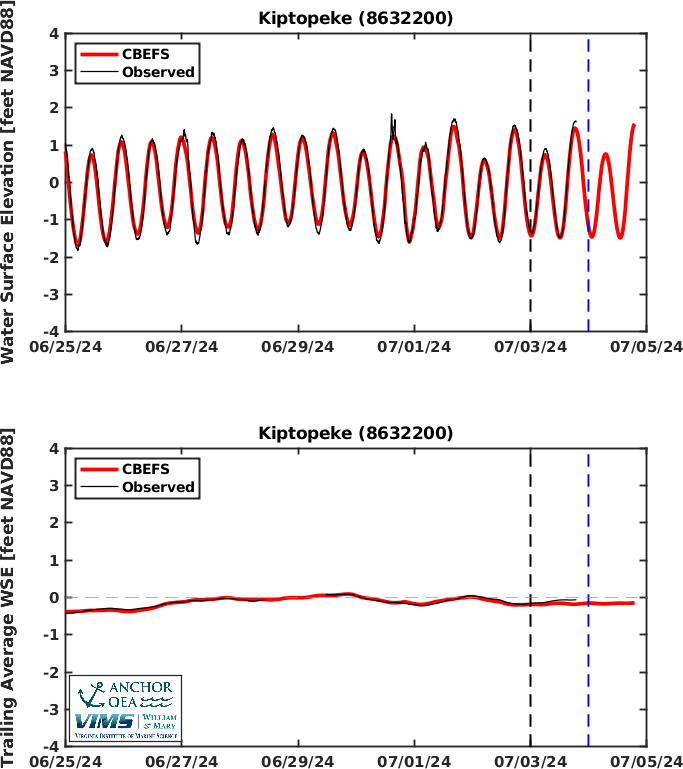
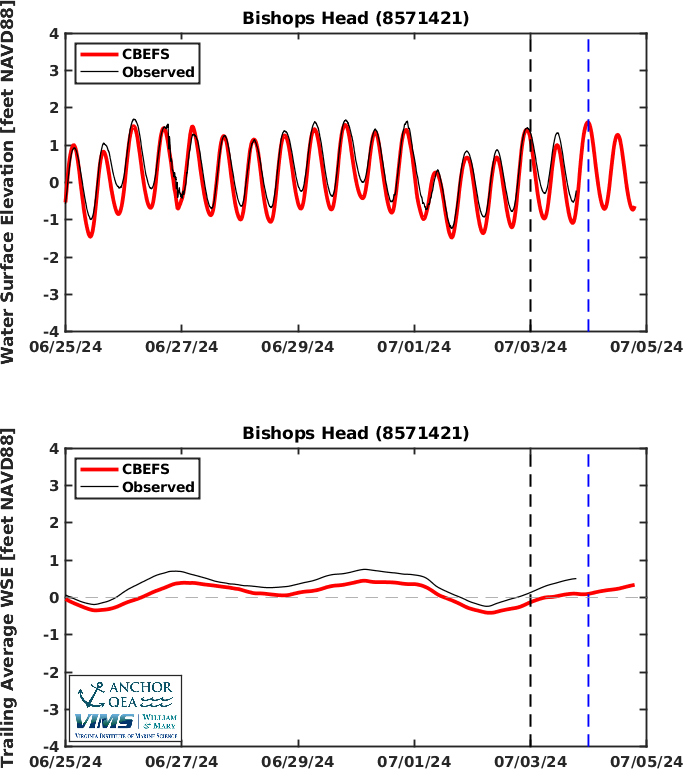
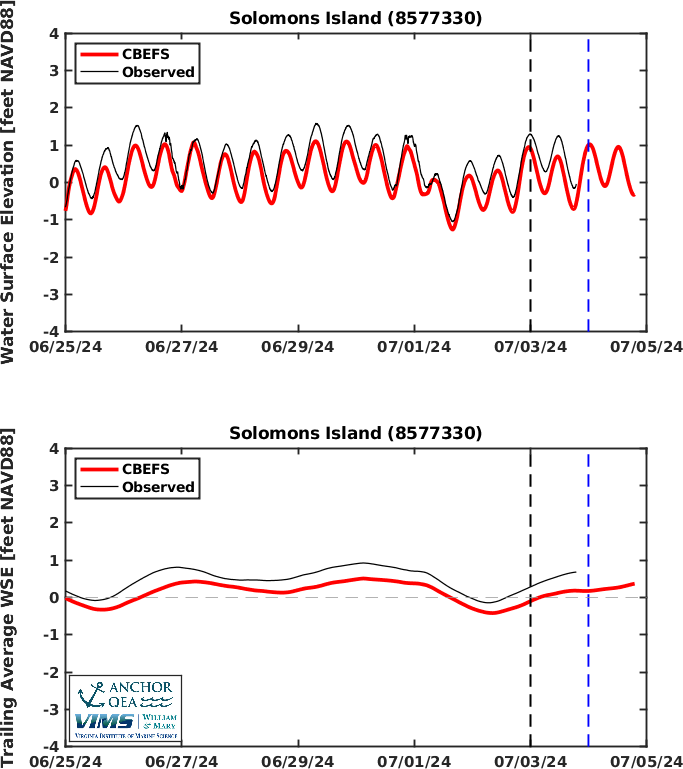
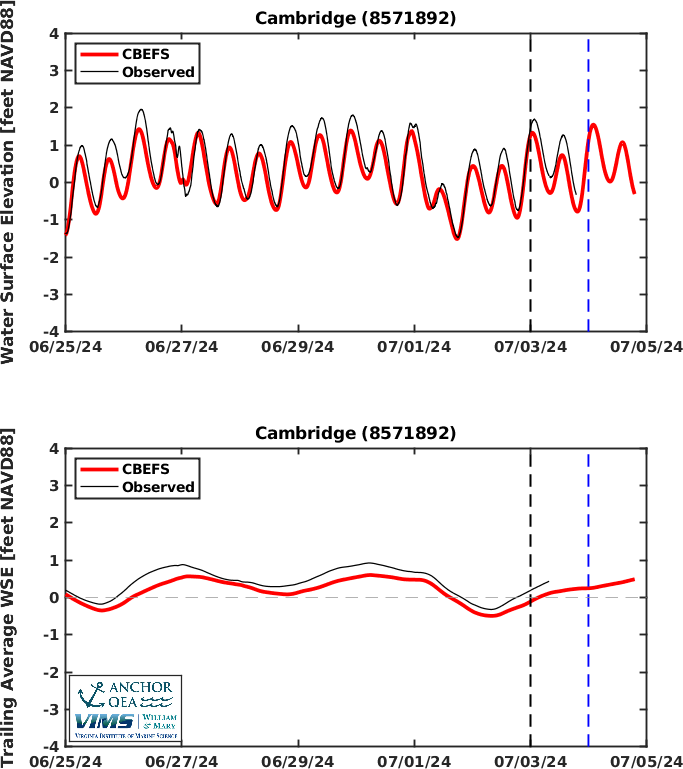
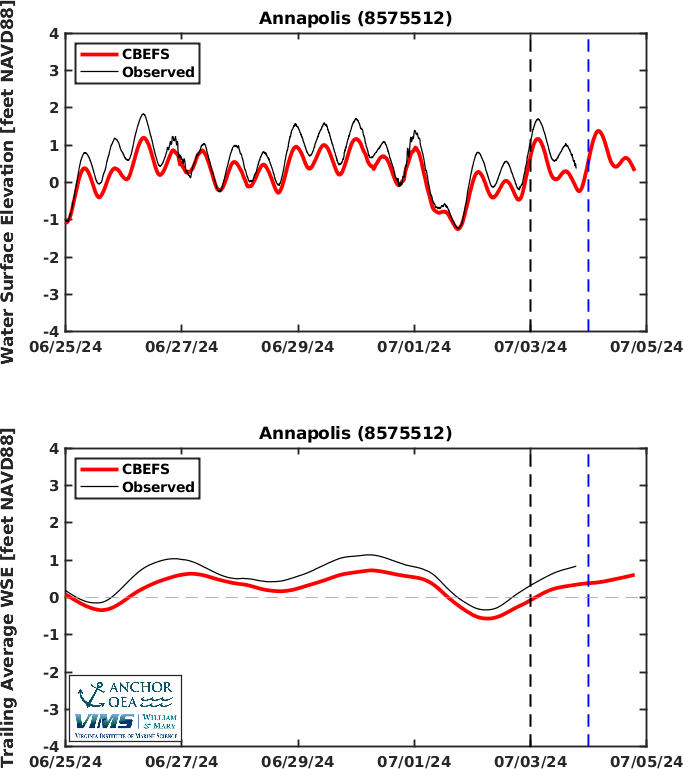
NOAA Water Level (Water Surface Elevation)These images show the CBEFS (red) and the observed (black) water level over the last 8 days and for the 5-day forecast. Midnight last night (today) is marked with a dashed vertical blue line; the dashed blue line moves throughout the day marking the time of day to the latest hour. The changes in water level through time are caused by tides propagating into the Bay from the Atlantic Ocean, storm surge from the ocean, and winds. These images are used to visually determine how well the CBEFS values and the timing of increases or decreases matches the observed values.
-------------------------------------------------------------------------------------------
-------------------------------------------------------------------------------------------
-------------------------------------------------------------------------------------------
-------------------------------------------------------------------------------------------
-------------------------------------------------------------------------------------------
-------------------------------------------------------------------------------------------
-------------------------------------------------------------------------------------------
-------------------------------------------------------------------------------------------
-------------------------------------------------------------------------------------------
-------------------------------------------------------------------------------------------
-------------------------------------------------------------------------------------------
|
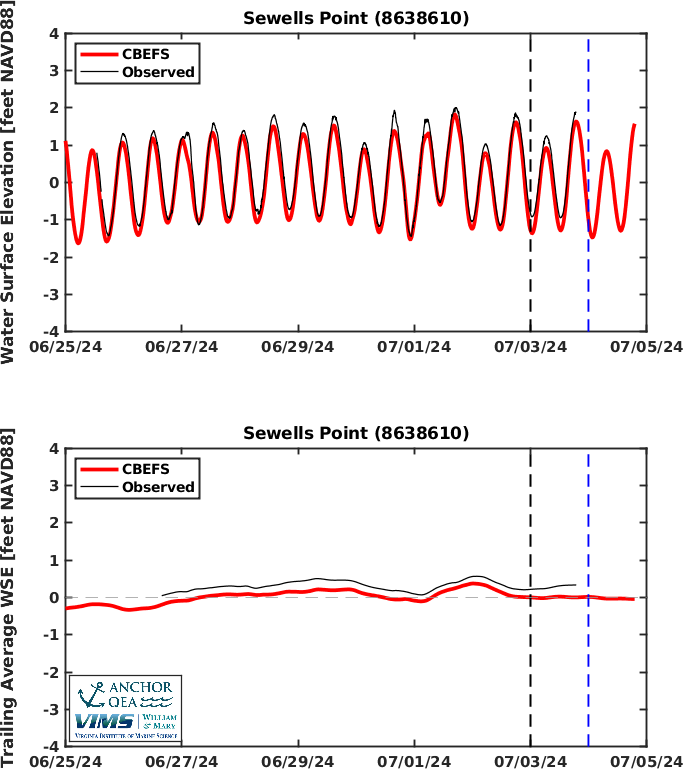
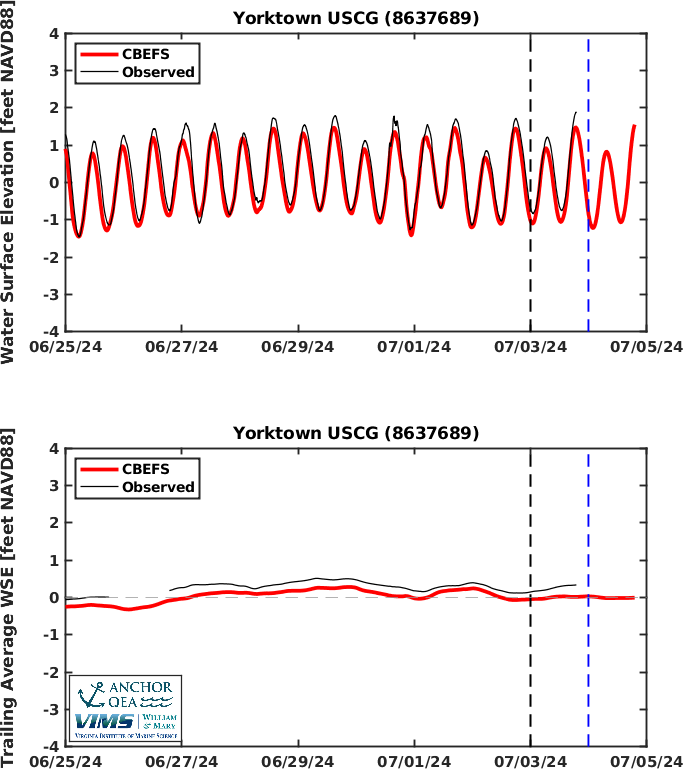
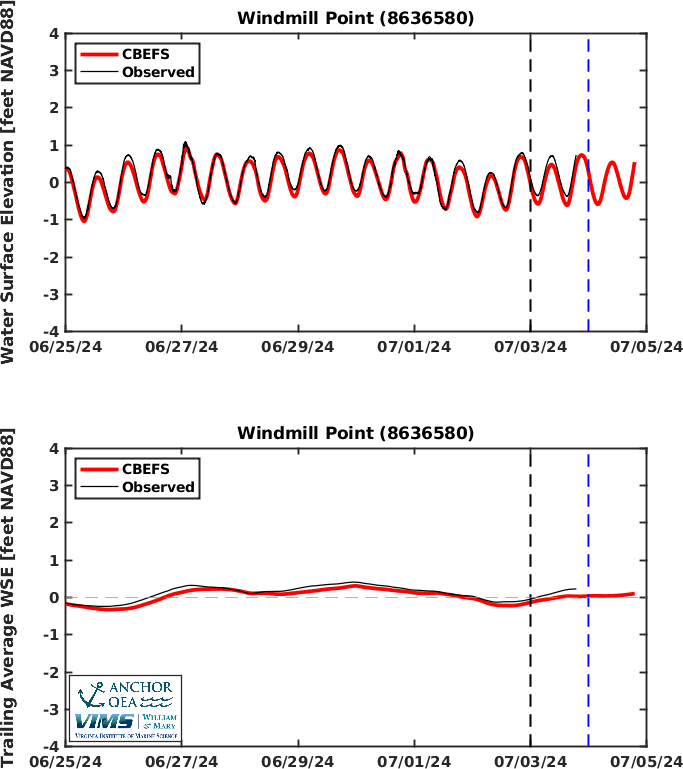
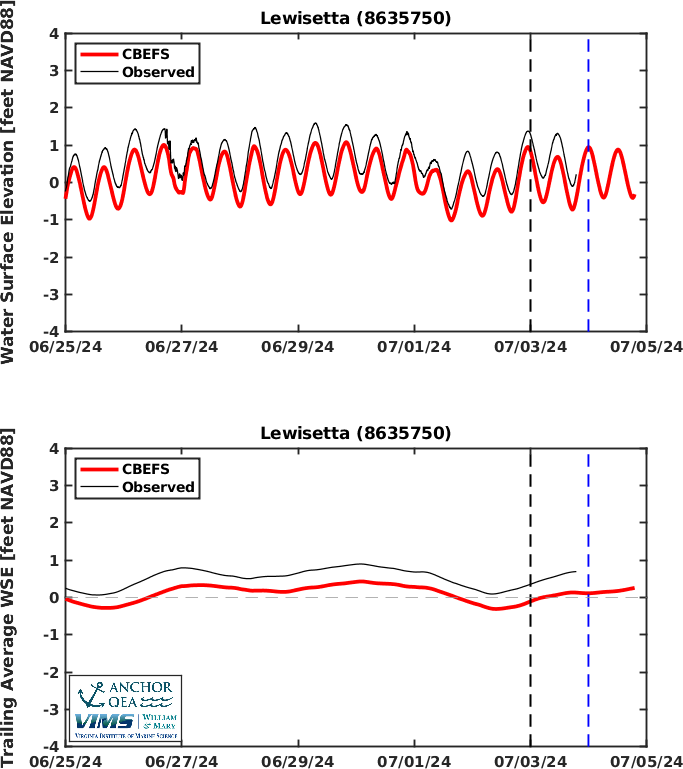
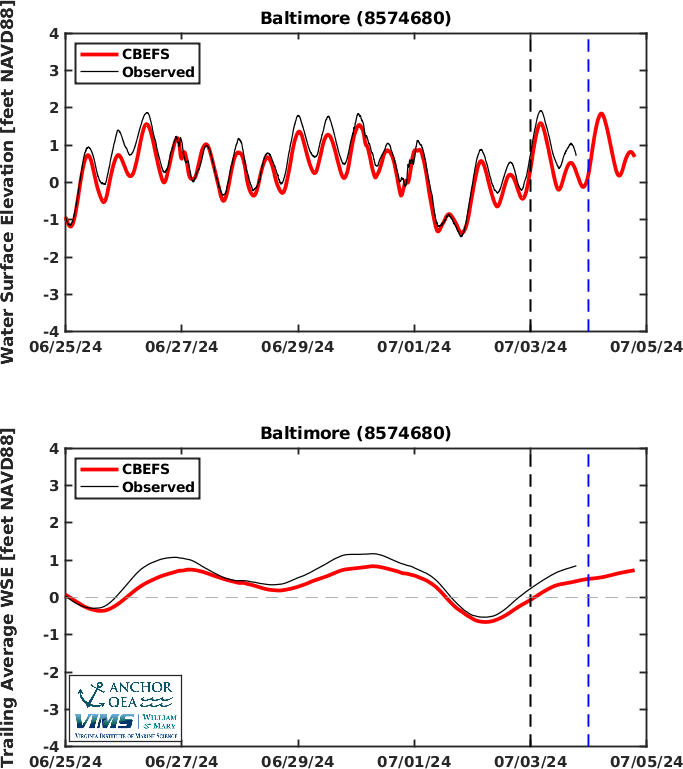
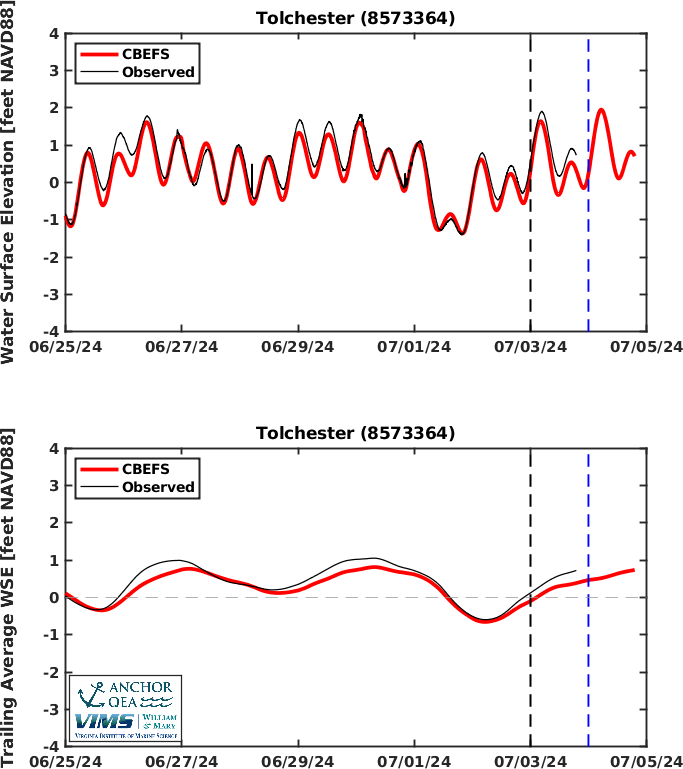
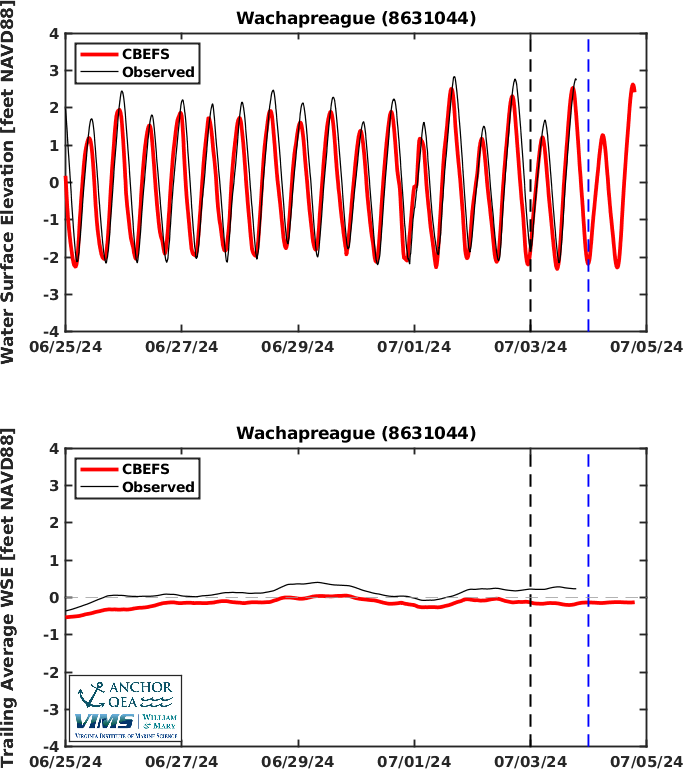
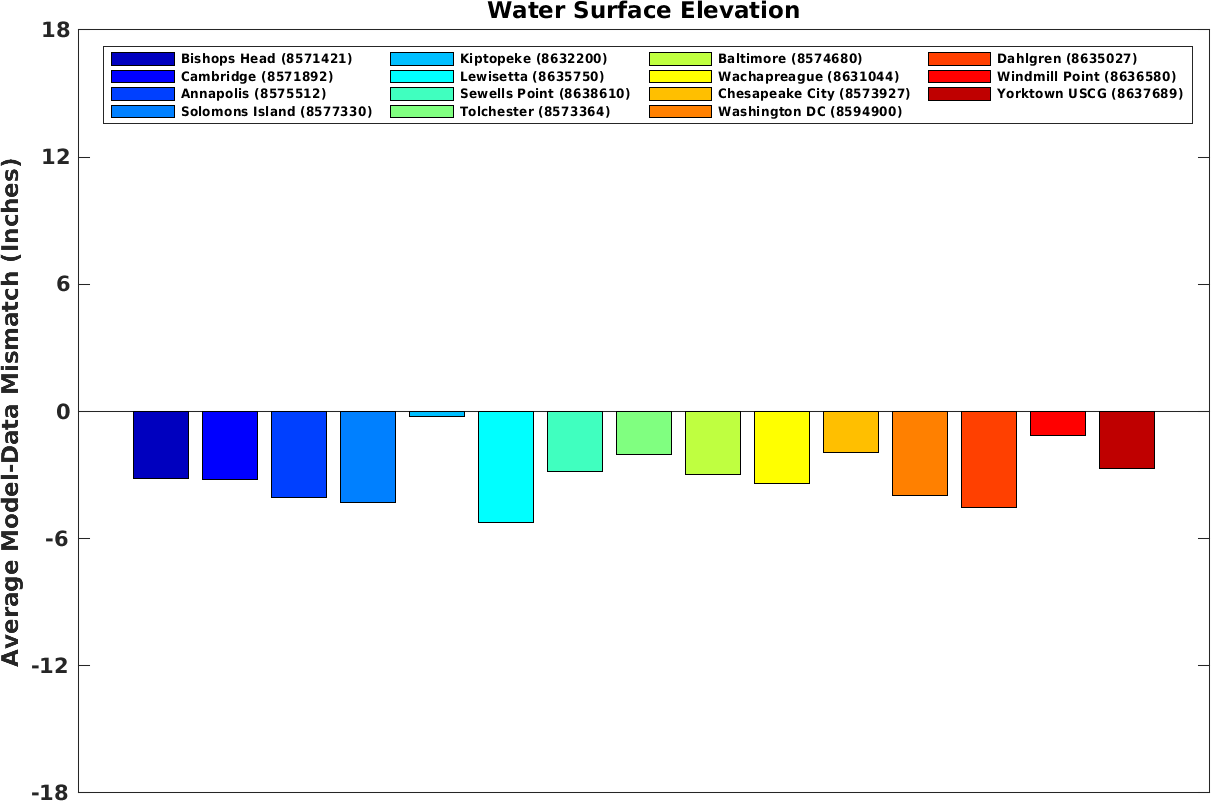
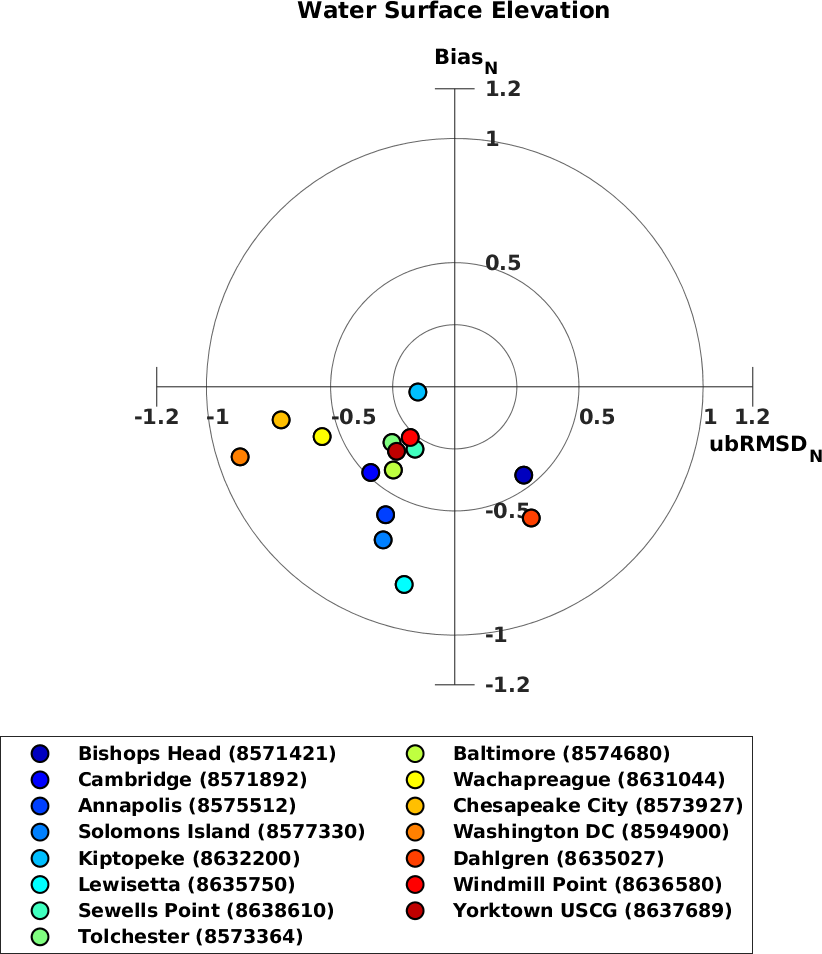
NOAA Water Level: CBEFS Average AccuracyThe first image provides the average difference between the CBEFS water level and the observed values at each location. The average difference is calculated over the last 8 days. These images are used to determine, on average, how well the CBEFS values matched the observed values. The final image is called a "target diagram" and statistically compares the CBEFS and observed values. The closer to the center of the bullseye the more accurate the CBEFS values were. Points plotting above the zero value (above the bullseye) show that the CBEFS values were on average higher than observed, below the bullseye shows the CBEFS values were on average lower than observed. Points plotting to the left of the bullseye show the variability through time in the CBEFS values was less than observed, and to the right of the bullseye show the variability through time in the CBEFS values was more than observed.
|