

Atlantic cod
Gadus morhua
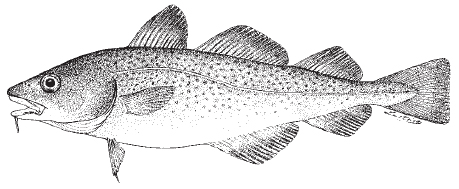
Information and species illustrations courtesy of the Food and Agriculture Organization of the United Nations (FAO).
SizeMaximum size to 2 m and about 90 kg, but average size only around 60 cm with weights averaging about 2 to 3 kg in western Atlantic. |
Diagnostic charactersLarge fish to 2 m, commonly from 30 to 100 cm, with elongated body and moderately deep caudal peduncle. Top of head lacking V-shaped ridge. Mouth large with lower jaw slightly shorter than upper jaw; teeth on vomer; chin barbel large. Long dorsal fin divided into 3 parts; anal fin in 2 parts, first anal fin short-based, less than 1/2 preanal distance; caudal fin well developed, truncate to forked; pectoral fins well developed, pointed; pelvic fins short, thoracic. Colour: variable, usually brownish to olive, or greyish to bluish dorsally, somewhat paler ventrally, belly often white, grey, or yellowish. |
Habitat, biology, and fisheriesPrimarily demersal, but becoming pelagic when feeding and spawning; found mostlyover continental shelf in 150 to 200 m, but recorded to much greater depths (over 600 m). Prefers cold waters of 0 to 5 degrees C, but found in waters as warm as 15 degrees C. A species of considerable economic importance, 141M t globally from 1950 to 2024, but stocks in western Atlantic severely depleted and commercial harvest for the most part curtailed. Marketed fresh, frozen, dried, salted, and smoked. |
DistributionA boreal North Atlantic species ranging from North Carolina to Greenland, Iceland, across northern Europe, into Barents Sea including Novaya Zemlya and Spitzbergen; uncommon south of New York and New Jersey and of no commercial importance in Area 31. |
CitationsCarpenter, K.E. (ed) Carpenter, K.E. (ed) Carpenter, K.E. (ed) |