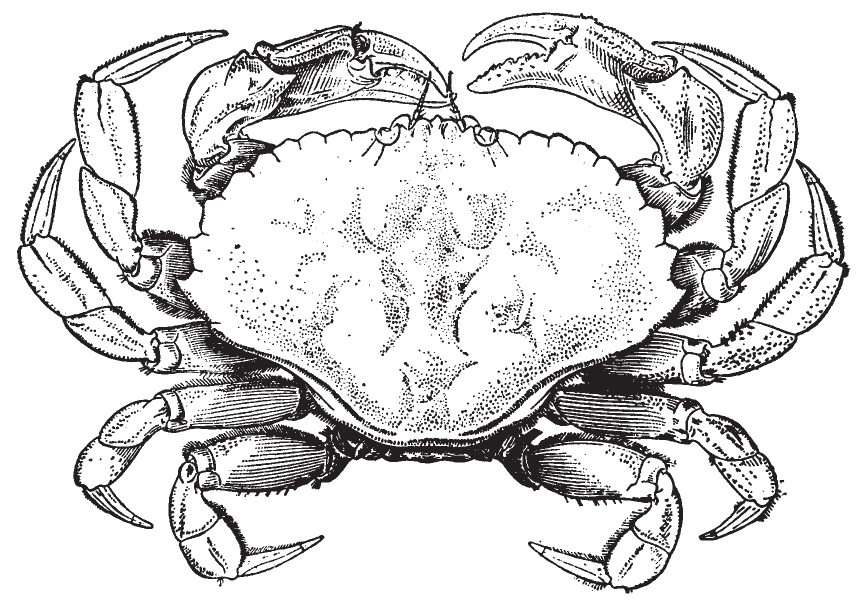
Information and species illustrations courtesy of the Food and Agriculture Organization of the United Nations (FAO).
Species Information
Size
Maximum width: male 135 mm; female 113 mm.
Diagnostic characters
Carapace approximately 2/3 as long as wide, convex, granulated; front with 3 teeth, middle one exceeding others and depressed (flattened dorsoventrally); anterolateteral margins (excluding inner orbital angles) divided into 9 lobes or teeth with edges granulate; notches between teeth continued on carapace as short, closed fissures giving teeth a pentagonal character. Pincers moderate-sized, shorter than second legs, ridges granulated, carpus with sharp inner dorsal spine. Colour: yellowish, closely dotted with dark purplish brown, becoming reddish brown after death.
Habitat, biology, and fisheries
This is basically a cold-water species centred in the region north of Area 31. It ranges in depth from the low-water mark to 575 m. Small to medium-sized crabs move into shallower depths, especially in winter, whereas larger ones occur in deeper water. Feeds mainly on molluscs, echinoderms, and other invertebrates. Mainly outer continental shelf and beyond, often caught along with lobsters. Caught with bottom trawls and lobster traps. Marketed fresh. Landings totaled 0.25M t globally from 1950 to 2024.
Distribution
From Labrador to off Miami, Florida. Southward (Carolinas) only in deep water.